

The tropics flaring to life as the monsoon approaches once again is helping to add some heat to this weekend’s heatwave over SA and Vic. The diagram below shows how air that originates in the tropics can be transported to southeastern Australia, and via a blocking high, add heat to southeastern Australian heatwaves. Note: here […]
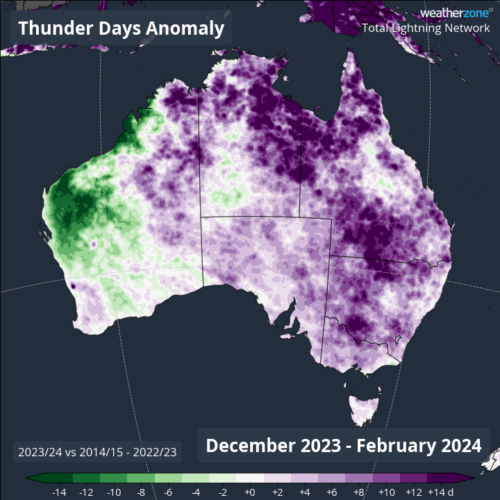
Large areas of Australia saw an above average number of lightning days this summer, with Melbourne, Canberra and Brisbane all seeing 5 to 6 extra storm days during the season. Australia always sees lots of lightning during summer as hot air, abundant moisture and ample atmospheric instability combine to create ideal conditions for thunderstorms. The […]

Perth just had its second hottest summer on record based on daytime temperatures, capping off the season with a remarkably warm February featuring a record-breaking number of 40°C days. The average maximum temperature in Perth this summer was 32.6ºC. This is roughly 1.7°C above the long-term average and the city’s 2nd highest summer maximum temperature […]

Brisbane just tossed and turned through its warmest summer on record based on overnight minimum temperatures, with the city also registering one of its top two warmest summers on record based on the mean temperature. A combination of abnormally high temperatures and atmospheric moisture made Brisbane feel abnormally hot and sweaty this summer. All three […]

Sydney is set to soar to 40 on the last day of summer, with parts of the city’s west likely to reach 39°C or 40°C, while the city should reach 35°C before a late cool change arrives. On Wednesday, temperatures topped 43°C in several spots in the Mallee region in Victoria’s northwest, while temps reached […]

A dangerous mixture of hot, dry and windy weather is causing catastrophic fire danger ratings in parts of western Victoria today. The term ‘catastrophic fire danger’ refers to the highest rating on the Australian Fire Danger Rating System, which has four tiers: Moderate High Extreme Catastrophic Each category corresponds to a range of values in […]

Parts of central and western Victoria have just endured their driest February in more than 30 years, priming the landscape for extreme to catastrophic fire danger this Wednesday. While December and January were abnormally wet for most of Vic, the tap has been turned off for the western half of the state during February. The […]

The hot air mass that helped create large fires in Victoria and Tasmania on Thursday will shift its focus to NSW on Friday, causing temperatures to spike in Sydney. Thursday was a dangerous day of heat and fire danger in southeastern Australia as a mass of hot air combined with strong and dry winds […]

A burst of very hot, dry and windy weather will cause extreme fire danger across parts of Vic, SA and Tas today, with temperatures predicted to reach the mid to high 30s in Melbourne and Hobart. A surge of northwesterly winds ahead of an approaching cold front will drive hot and dry air into southeastern […]
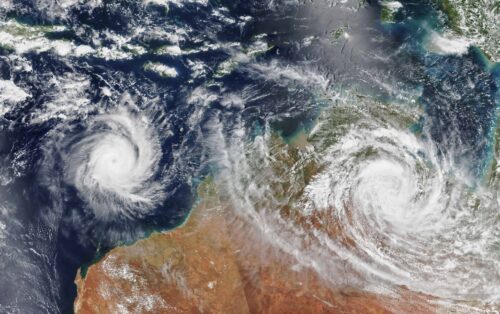
Australia’s tropical cyclone season is officially underway, but we may not see much activity for few months yet. The season runs from November to April, and for mining operators and businesses across northern Australia, 2026-27 is shaping up to be a season where the headline numbers and the real risk may not line up. On […]

A positive Indian Ocean Dipole is underway, but this one is unlikely to deliver the textbook dry spring and summer that businesses have come to expect from the pattern. The Bureau of Meteorology officially declared a positive IOD on Tuesday, October 27, which typically like El Niño can cause drier and warmer conditions over parts of […]
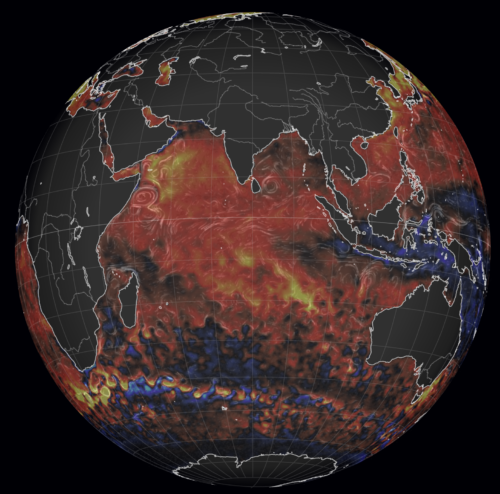
Waters off Indonesia have cooled in recent weeks, an indication that a positive Indian Ocean Dipole (IOD) event could be developing. It’s an important climate driver for Australia, and it could shape rainfall and temperatures heading into summer, with flow-on effects for farmers, energy and other industries. What is the Indian Ocean Dipole? The IOD […]

Leonora, WA, had its wettest September day on record earlier this month. Three weeks later, more than 1.3 million lightning pulses were detected within 800 km of the town in 48 hours. Why is a stalled trough delivering storms to mining country, and what it could mean for operations? The DTN Total Lightning Network detected […]