

A wet spring could be on the cards for large parts of Australia, with several models suggesting a negative Indian Ocean Dipole could develop in the Indian Ocean. A negative Indian Ocean Dipole (IOD) refers to a pattern of sea surface temperatures in the tropical Indian Ocean that causes more moisture-laden air to flow towards […]

Today marks the date of the winter solstice in the Southern Hemisphere, making it Australia’s shortest day of the year based on time between sunrise and sunset. The winter solstice is an annual occurrence that falls in late-June each year. It marks the moment Earth’s Southern Hemisphere reached its furthest tilt away from the Sun, […]
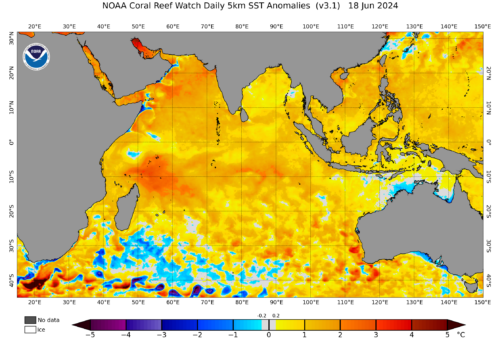
Early last month, we said that May would be a make-or-break month for the positive Indian Ocean Dipole (IOD) that could be forming this year. Turns out, it has most likely broken. A positive IOD occurs when the trade winds along the equator blow to the west instead of the east, causing an upwelling of […]

Australia has entered winter without any strong climate drivers influencing the country’s weather patterns. So, what can we expect to see across Australia during winter 2024? The term ‘climate drivers’ refers to patterns of sea surface temperatures and associated atmospheric conditions that influence Australia’s weather on a time scale of months to seasons. The main […]
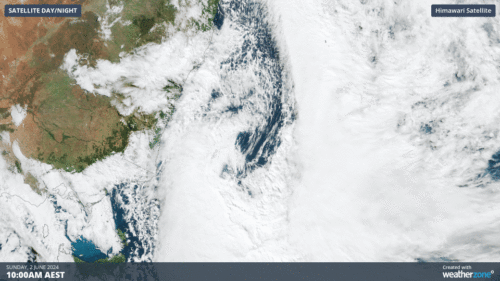
Sydney endured its second wettest June day on record on the weekend as a bombing low pressure system rapidly intensified off the NSW coast. The radar animation below shows heavy and persistent rain hammering central eastern NSW on the weekend. #Sydney‘s 142.6mm during the last 24 hours was the city’s heaviest daily rain in […]

May is on track to become the 14th consecutive month of record-breaking global ocean warmth, despite clear signs of La Niña emerging in the tropical Pacific Ocean. Global sea surface temperatures have broken records in every month since April 2023 and May is now on track to become the 14th consecutive month to set a […]

There are increasing signs that a positive Indian Ocean Dipole could develop this winter, increasing the chance of abnormally dry and warm weather in some parts of Australia over the coming months. What is the Indian Ocean Dipole? The Indian Ocean Dipole (IOD) is an index that measures the difference between sea surface temperatures […]

Australia can be the hottest place in the world at the height of summer, but in April 2024 the country was an island of abnormally cold weather amid a sea of record-breaking global heat. Data released this week by Berkeley Earth shows that Earth’s global average air temperature in April 2024 was 1.67 ± […]
The BoM has officially placed Australia on a La Niña watch, less than a month after El Niño was officially declared over. “There are some early signs that a La Niña might form in the Pacific Ocean later in 2024,” the BoM reported in its May 14 update. “As a result, the Bureau’s ENSO [El […]
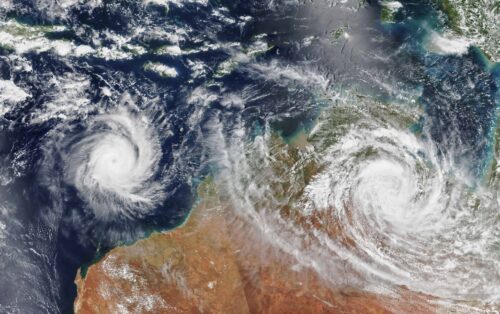
Australia’s tropical cyclone season is officially underway, but we may not see much activity for few months yet. The season runs from November to April, and for mining operators and businesses across northern Australia, 2026-27 is shaping up to be a season where the headline numbers and the real risk may not line up. On […]

A positive Indian Ocean Dipole is underway, but this one is unlikely to deliver the textbook dry spring and summer that businesses have come to expect from the pattern. The Bureau of Meteorology officially declared a positive IOD on Tuesday, October 27, which typically like El Niño can cause drier and warmer conditions over parts of […]
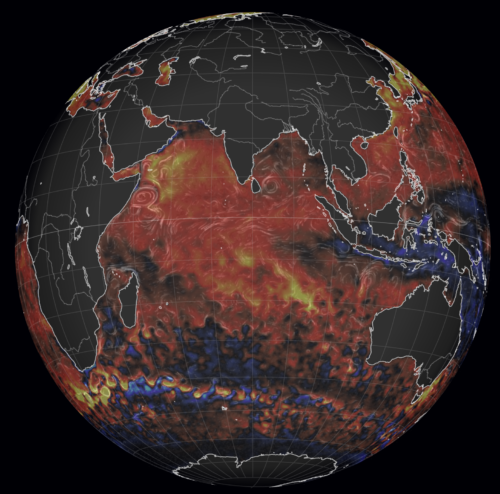
Waters off Indonesia have cooled in recent weeks, an indication that a positive Indian Ocean Dipole (IOD) event could be developing. It’s an important climate driver for Australia, and it could shape rainfall and temperatures heading into summer, with flow-on effects for farmers, energy and other industries. What is the Indian Ocean Dipole? The IOD […]

Leonora, WA, had its wettest September day on record earlier this month. Three weeks later, more than 1.3 million lightning pulses were detected within 800 km of the town in 48 hours. Why is a stalled trough delivering storms to mining country, and what it could mean for operations? The DTN Total Lightning Network detected […]