
Prosper in a dynamic world
Search

Australia’s shortest day of the year is here

Today marks the date of the winter solstice in the Southern Hemisphere, making it Australia’s shortest day of the year based on time between sunrise and sunset.

The winter solstice is an annual occurrence that falls in late-June each year. It marks the moment Earth’s Southern Hemisphere reached its furthest tilt away from the Sun, which causes:

  • The Southern Hemisphere’s shortest day of the year (longest day of the year for the Northern Hemisphere) based on daylight hours
  • The Sun to sit at its lowest point in the sky when viewed form the Southern Hemisphere (highest point for Northern Hemisphere viewers)
  • Recurrent discussions about the ‘official’ start of winter in Australia – while Australia’s meteorological winter starts on June 1, the solstice marks the beginning of the astronomical winter.
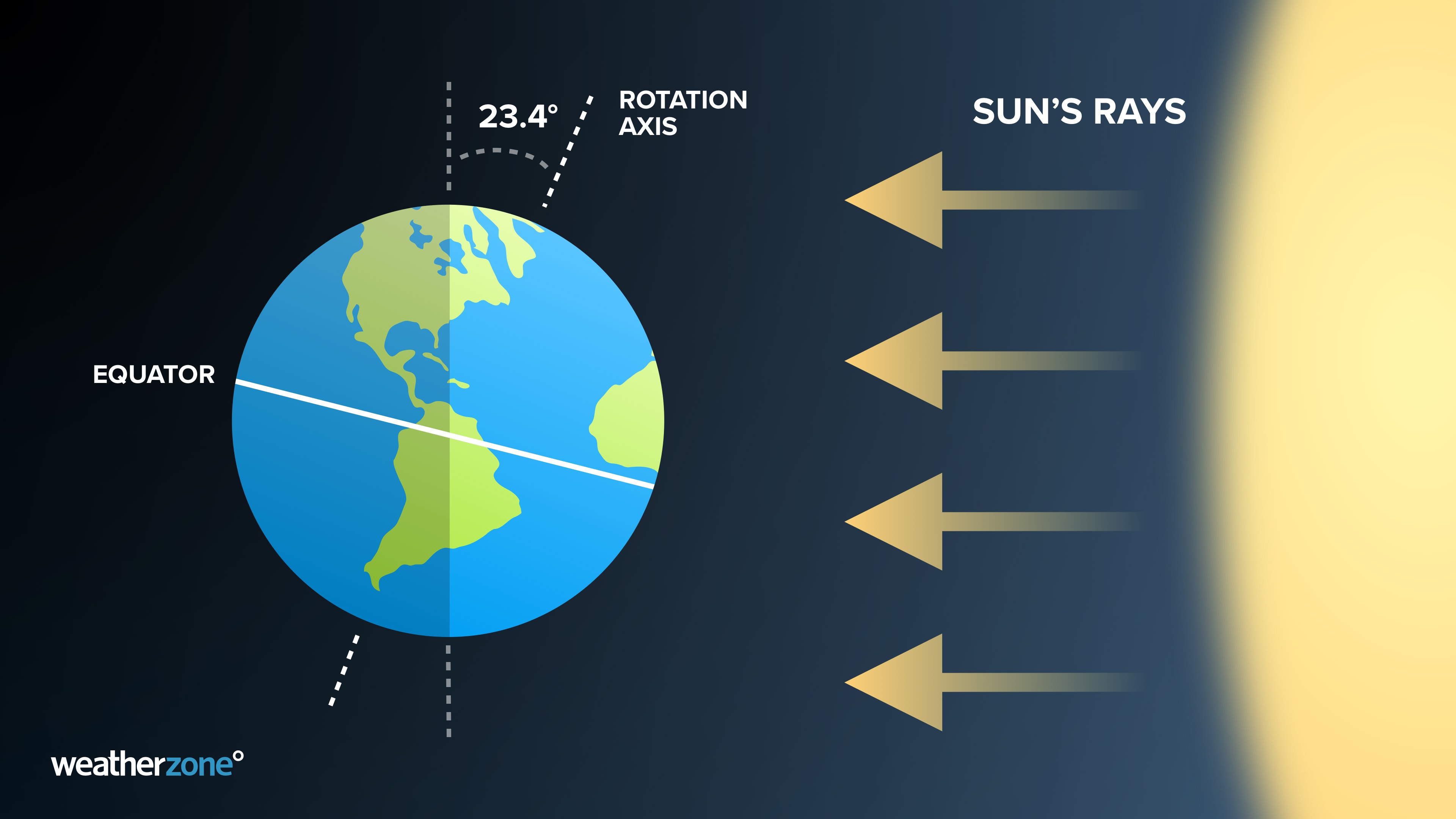
Orientation of Earth relative to the Sun at the winter solstice in June.

Image: Orientation of Earth relative to the Sun on the date of the winter solstice.

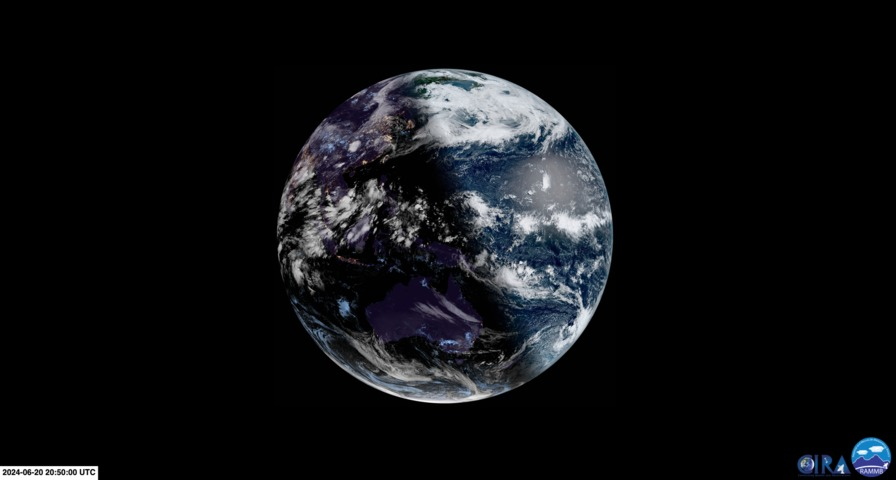
This year’s winter solstice occurred at 6:51am AEST on June 21, which was 8:51pm on June 20 based on Coordinated Universal Time (UTC). While the winter solstice is a moment in time, the day it falls on is also commonly referred to as the solstice.

Daylength on Friday, June 21, will range from about 9 hours and 1 minute in Hobart to 11 hours and 23 minutes in Darwin. Sydney will have just under 10 hours between sunrise and sunset and Melbourne’s day will last just over nine and a half hours.
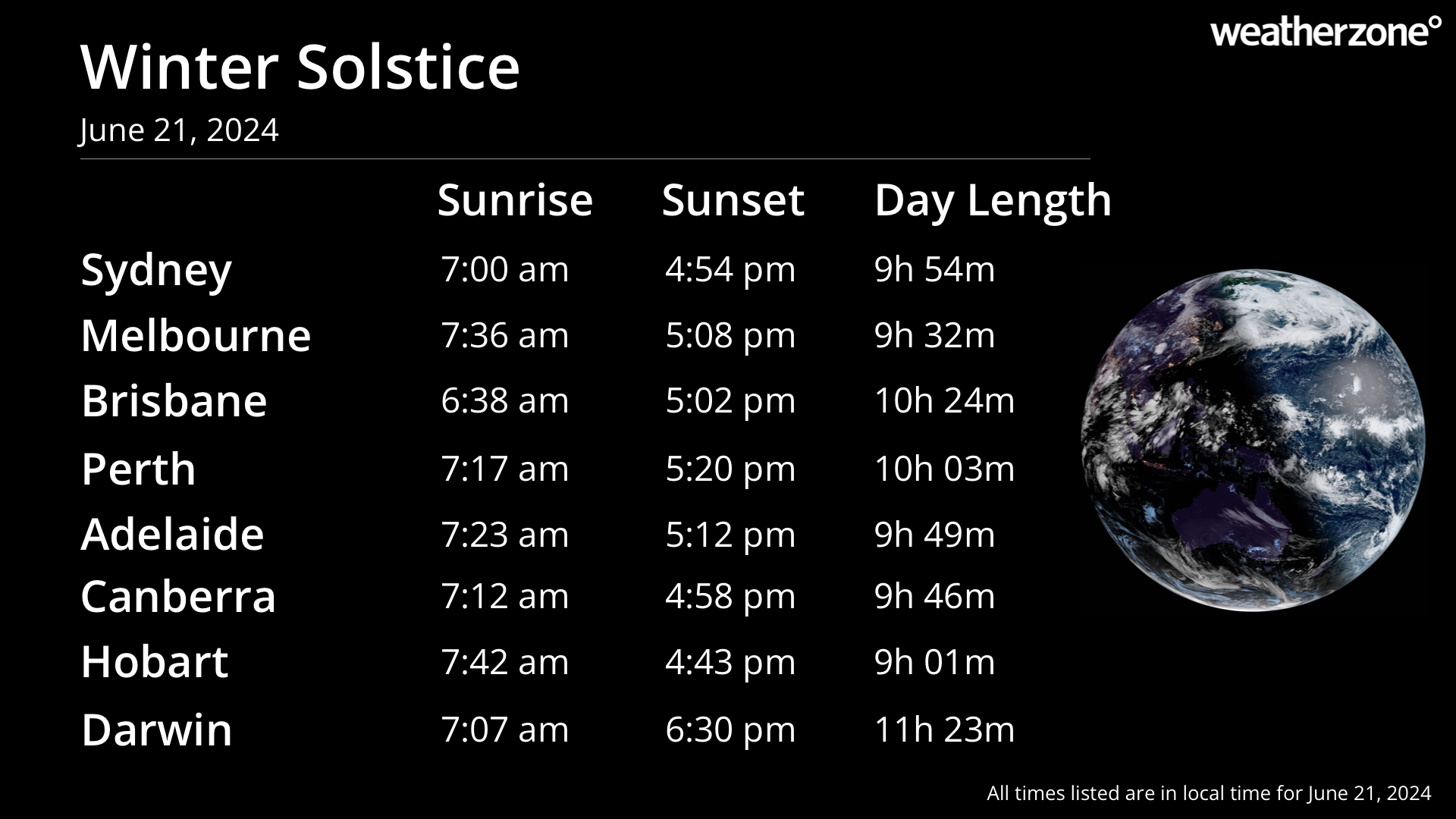
Sunrise, sunset and day length times for Australia's capital cities on the 202 winter solstice.

Image: Approximate sunrise, sunset and day length times for Australia’s capital cities on the date of the 2024 winter solstice.

Following today’s winter solstice, days will start getting longer and nights will get shorter in Australia. This trend will continue for the next six months until the summer solstice in late December.


Latest news

Satisfy your weather obsession with these news headlines from around the nation, and the world.

The 2026 Indian Southwest Monsoon onset is expected in the next two weeks, but Indian businesses could experience a drier than normal monsoon

The Indian Southwest Monsoon will reach India in the next two weeks, but a developing El Niño could signal a drier than normal monsoon for Indian businesses and industries. Southwest monsoon onset over southern India in the next two weeks The Indian Meteorological Department (IMD) is responsible for tracking the advance and retreat of the […]

Rapid El Niño signal accelerating risk for Australian businesses

El Niño–favourable conditions are gathering pace across the tropical Pacific, with key ocean indicators approaching threshold levels and early atmospheric responses emerging.  While uncertainty remains around final El Niño strength, historical analogues show that even weak events can generate widespread impacts, including reduced rainfall, warmer daytime temperatures, increased frost risk, elevated fire danger, reduced tropical cyclone activity, and more. Industries including […]

Australia’s 2025–26 Cyclone Season: Slightly Above Average, Dominated by Severe Systems

Australia has just experienced a highly impactful tropical cyclone season, with more than 60% of systems reaching severe intensity, causing widespread disruption and damage to communities and multiple industries across northern Australia.  The 2025–26 Australian tropical cyclone season officially ran from 1 November 2025 to 30 April 2026. During this six-month period, Australia saw 11 tropical cyclones, with nine […]

What does a ‘super El Niño’ mean for Australia’s businesses?

There are signs that a very strong, or ‘super’ El Niño could develop in the tropical Pacific Ocean later this year. So, what does this mean for Australia’s weather during the second half of 2026? El Niño on the horizon The tropical Pacific Ocean is currently in a neutral state, meaning neither El Niño nor […]

