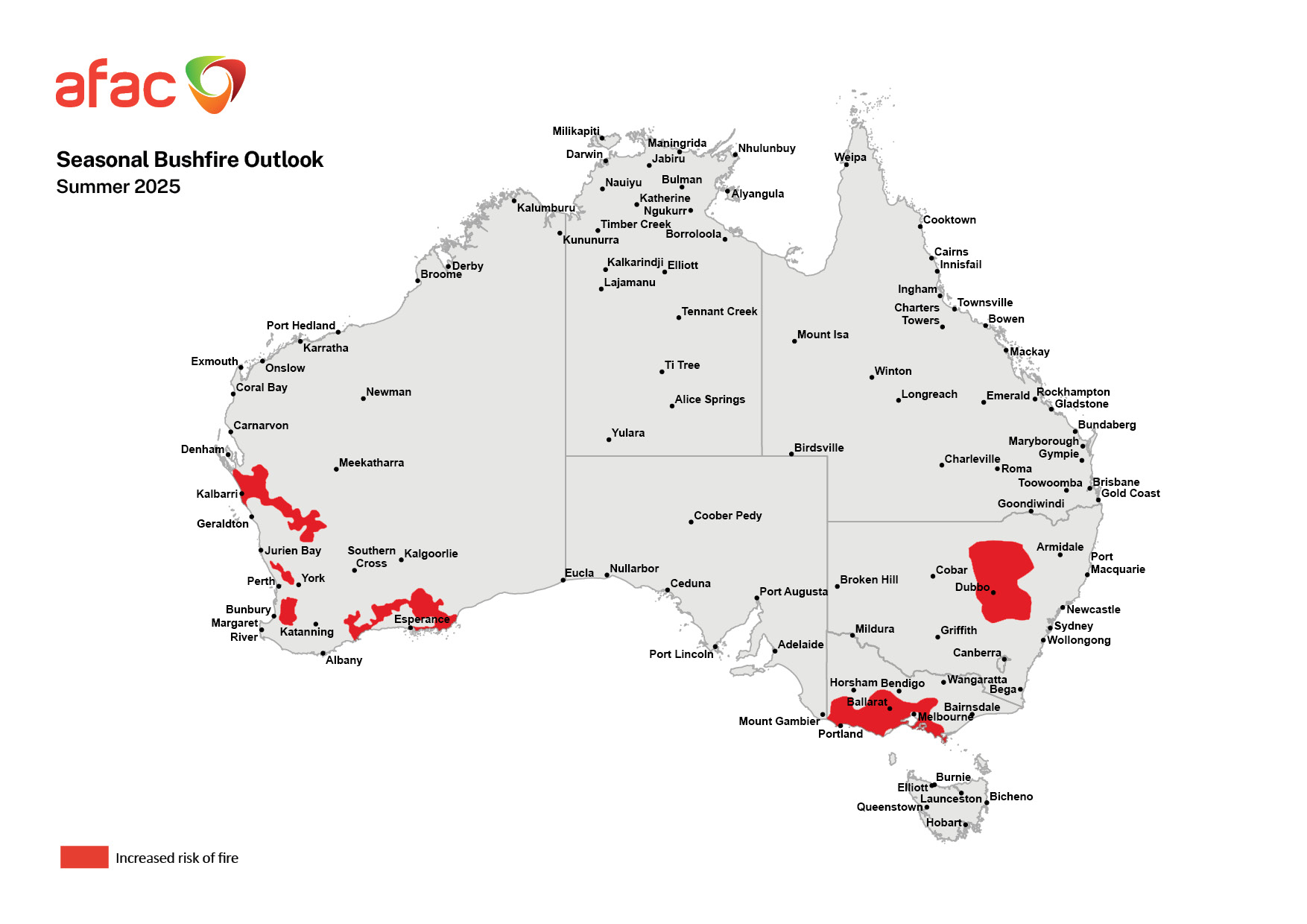
The Australian and New Zealand Council for fire and emergency services (AFAC) identified western and southern WA, Victoria and inland NSW as key regions that are at risk of heightened bushfire risk this summer.
Parts of Australia have experienced severe soil moisture and rainfall deficiencies over the past months and years, while high fuel loads (grass, bush and forest) combined with hot and dry weather, should drive elevated fire danger over the coming 2025-26 summer.

Image: The AFAC Seasonal Bushfire Outlook for the 2025-26 summer highlighting key regions of increased risk of fire in the coming months. Source: AFAC.
Key regions that could see “an increased number of significant bushfires occurring in the outlook period compared to average” include parts of:
- western and southern WA
- central northern NSW
- southwest, western, central, north central and southwest Gippsland in Victoria
Overall, much of Australia should experience a warmer than normal summer. Rainfall outlooks for the coming season mostly promote wetter than normal conditions for northern and eastern Australia as a result of weak La Niña conditions in the Pacific Ocean, and very warm sea surface temperatures off Australia’s east and north coasts. Elsewhere should see either normal, or drier than normal conditions over the coming three months.
Western Australia and the Northern Territory
Parts of western and southern WA are highlighted by the AFAC outlook with an increased risk of fire during the coming summer. This follows healthy wet season rainfall during the cooler months which has allowed the fuel loads to grow, combined with a forecast for hotter than normal, and drier than normal conditions over the coming months. This hot and drying trend will allow fuels to dry, increasing the risk of more significant fires, especially during the mid-to-late summer.
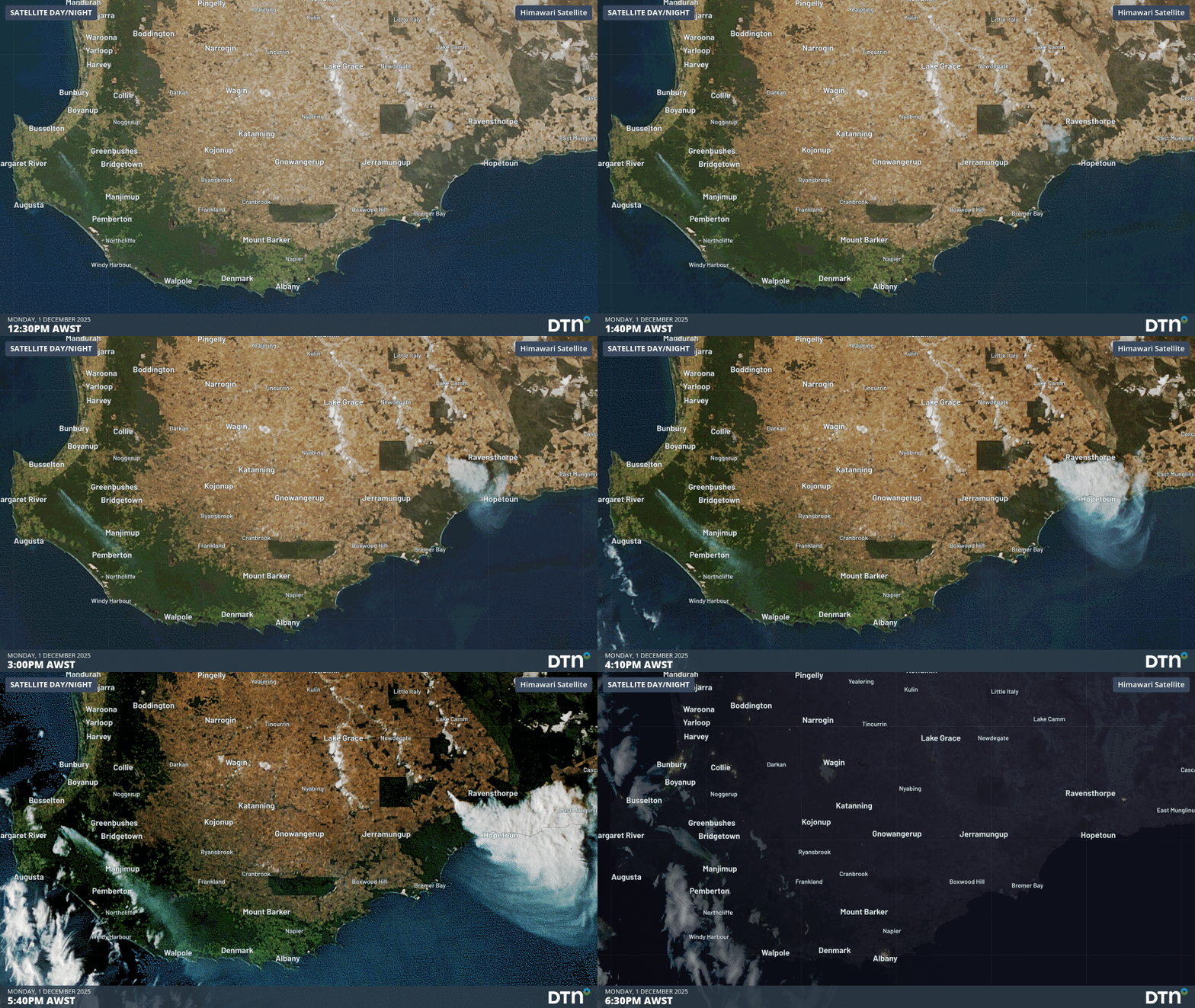
Image: Smoke dissipating from active fire over WA’s southwest and south on Monday, December 1, 2025.
Northern WA and the NT are generally expecting normal risk of fire during the summer months, especially with a wetter than normal outlook for the northern Australian wet season. However, parts of the Pilbara, Gascoyne, WA interior and NT interior could still see periods of increased fire activity following a very dry period during the dry season. This is more likely during the early summer with hot and windy conditions, ahead of intrusions of the Australian monsoon.
South Australia, Victoria and Tasmania
Southeastern Australia has benefited from recent rainfall increasing the soil moisture and leading to some vegetation growth. However, the winter and spring rainfall received wasn’t enough to offset the severe rainfall deficits that have plagued much of the region over the past two years.
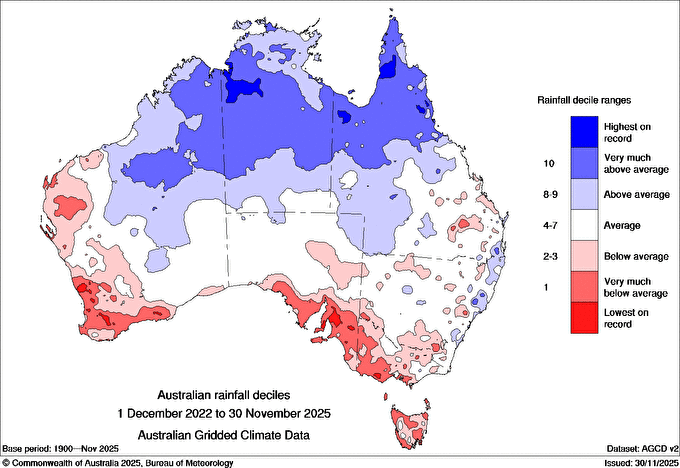
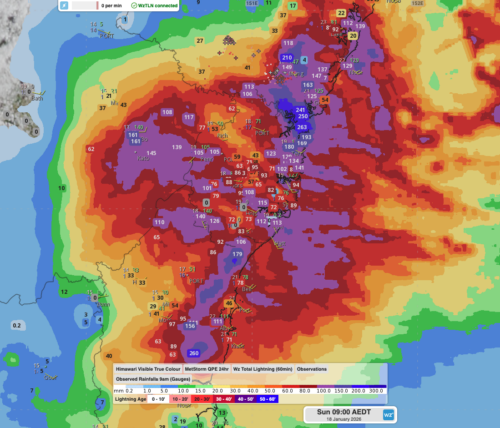
Image: rainfall deficits across Australia over the last two years. Source: Bureau of Meteorology.
These lingering rainfall deficiencies, combined with a forecast for warmer than normal summer, and normal-to-below average rainfall, could lead to a significant risk of increased fire activity over the latter half of summer. AFAC highlights broad parts of Victoria experiencing this increased risk, notably forest and woodland areas of the south-west, Otways, Mornington Peninsula, southwest Gippsland, Kinglake and Yarra Ranges, and Elidon.
While AFAC’s outlook keeps South Australia and Tasmania within the normal risk of fire this summer, rapid drying of soil moisture and forest, grass and crop fuels could lead to increasing fire risk late in the season. Notably, parts of SA’s Riverland, North East Pastoral, Mount Lofty Ranges and Mid North regions, and Tasmania’s southwest and southeast, could be at risk if very dry, hot and windy conditions become more prevalent this summer.
New South Wales and Queensland
Spring weather was disrupted by a sudden stratospheric warming event leading to stronger cold fronts crossing southern and eastern Australia. While this event brought healthy rainfall to southern states, NSW and Queensland have experienced a number of very hot, dry and windy spells over the past months, helping dry out the landscape and bringing bursts of elevated fire danger.
Read more: How this sudden stratospheric warming event has disrupted Australia’s weather
Hot, dry and windy bursts of elevated fire danger are expected again during December for NSW and southern and central Queensland. As the summer evolves, impacts of this stratospheric warming should ease, and the effects of very warm oceans off the East Coast will increase the probability of wetter than normal conditions, especially across eastern NSW and Queensland. Western and central parts of these states further from this moisture source could see fire risk persist well into summer, with AFAC focusing on central northern NSW in their outlook.
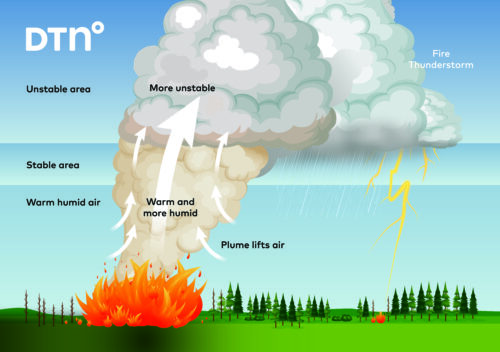
A combination of warmer than normal temperatures, and moisture from these warm oceans, have and will continue to bring increased thunderstorm activity across the region this summer. Lightning has the potential to ignite fires, especially across dry landscape, as they have done a number of times this season.
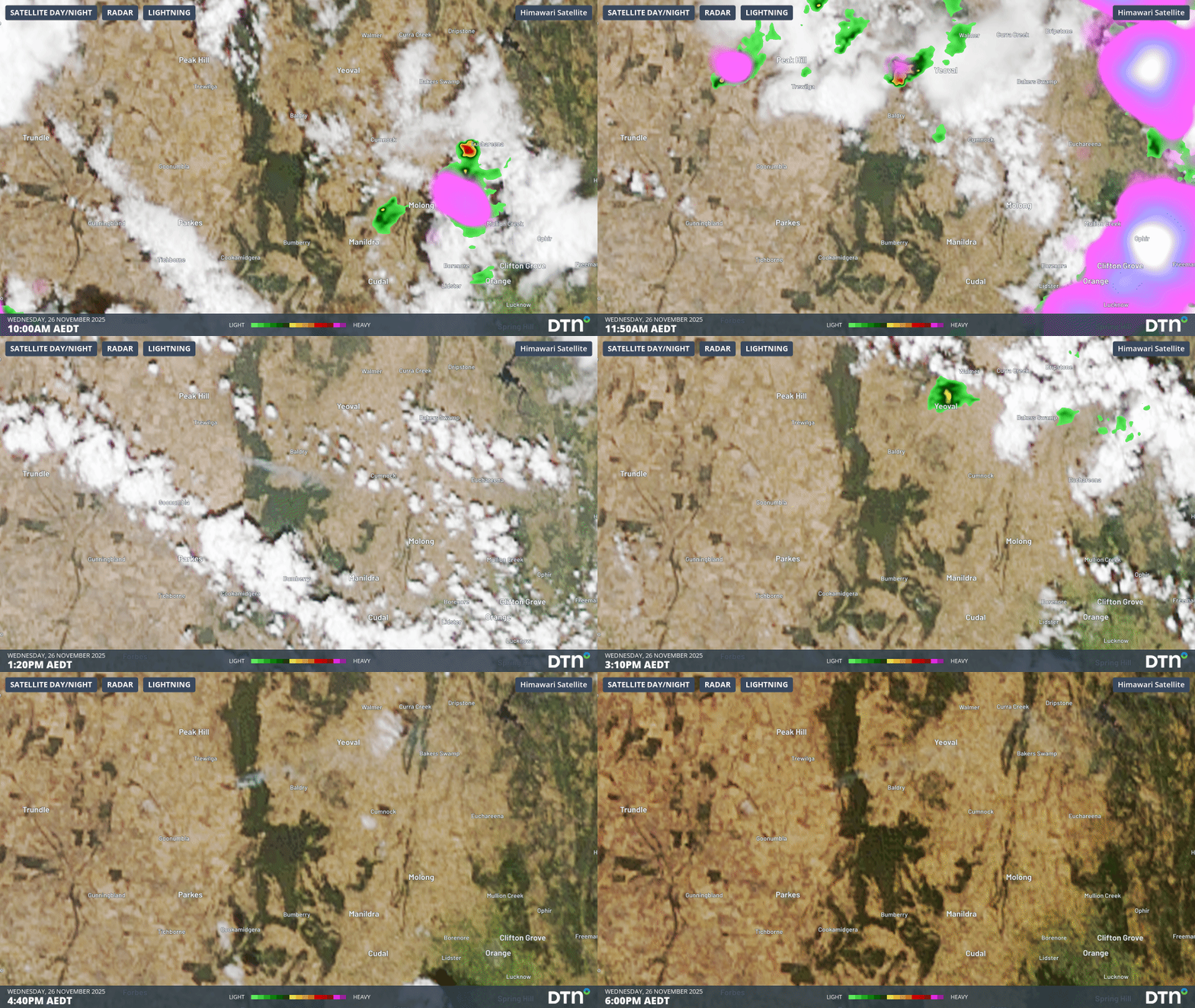
Image: A series of thunderstorms igniting a fire over central NSW, north of Parkes, on Wednesday, November 26, 2025.
Northern Queensland is transitioning into its wet season, bringing with it subduing of fire danger and vegetation growth, which is normal for this time of year.
What is “normal fire risk”?
Peak fire danger seasons are different across Australia, as seen in the image below.
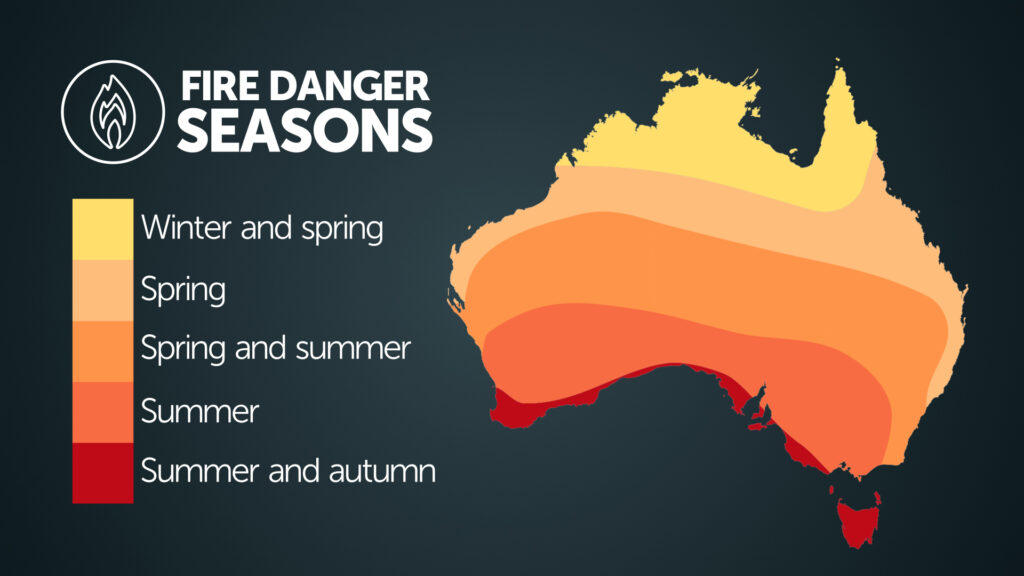
Image: Peak fire danger seasons across Australia. Source: Australian Institute for Disaster Resilience
Northern Australia experiences its worse fire risk across the back half of the dry season, when the landscape has dried and strong dry winds blow from the interior. Much of Queensland and northeast NSW fire danger peaks during spring following the dry winter, and as temperature and thunderstorms ramp up, but ahead of the wet and humid summer. Southern Australia typically experiences the worse fire danger during summer with hot and dry airmasses moving over from the interior.
It’s important to note that normal fire risk does not mean no fire risk. Under the wrong conditions, vegetation can dry rapidly, and fire weather can be extremely erratic, leading to impactful fires, even in “normal fire risk” zones.
Communities, industries and other stake holders across Australia should remain careful and vigilant of fire weather forecasts throughout the coming season.
How DTN APAC Services Fire-Prone Outdoor Industries
Working in often challenging conditions across high-risk outdoor operations including forestry, emergency services, mining, rail, and utilities, our consolidated weather services ensure full situational awareness for you and your team.
DTN APAC serves fire-prone outdoor industries, delivering trusted weather data and severe weather alerting to maintain safety, protect your assets and underpin your operational planning.
Reinforce your Prevention, Preparedness, Response and Recovery (PPRR) efforts with our tailored services.
Prevention: Utilise our seasonal outlooks and daily forecasting to identify and implement prevention measures. Understand the climate risks affecting your operations. Calculate optimal timing for maintenance activities, vegetation management, and scheduled shutdowns.
Preparedness: Gain understanding of bushfire risk in the days, weeks and months leading up to peak fire season. Use DTN APAC’s seasonal outlooks and 14-day forecasting to plan workforce deployment, equipment positioning, and preventative operations such as controlled burns or asset maintenance.
Response: We deliver fire danger forecasts and provide nowcasting and forecasting of severe weather events, including thunderstorm/lightning detection and alerting, to give you full situational awareness of emergency conditions likely to impact your operations and infrastructure.
Recovery: Assess the weather risks affecting post-incident recovery and restoration processes. Utilise post-event analysis reports to support insurance claims, evaluate operational response effectiveness, and inform future risk management strategies.
We work to bring you full situational awareness so you can mitigate risk, ensure workforce safety, and maintain operational continuity across your outdoor assets.
Learn more about our large range of industry leading products and services or email us at sales.apac@dtn.com
See our Case Study on how Tasmania Fire Service (TFS) improved lightning detection and continued optimising preparations for challenging fire seasons ahead with DTN APAC’s full suite of solutions.