
Prosper in a dynamic world
Search

Melbourne’s warmest day since March

Melbourne is basking is spring-warmth today, ahead of a 10°C temperature drop tomorrow.

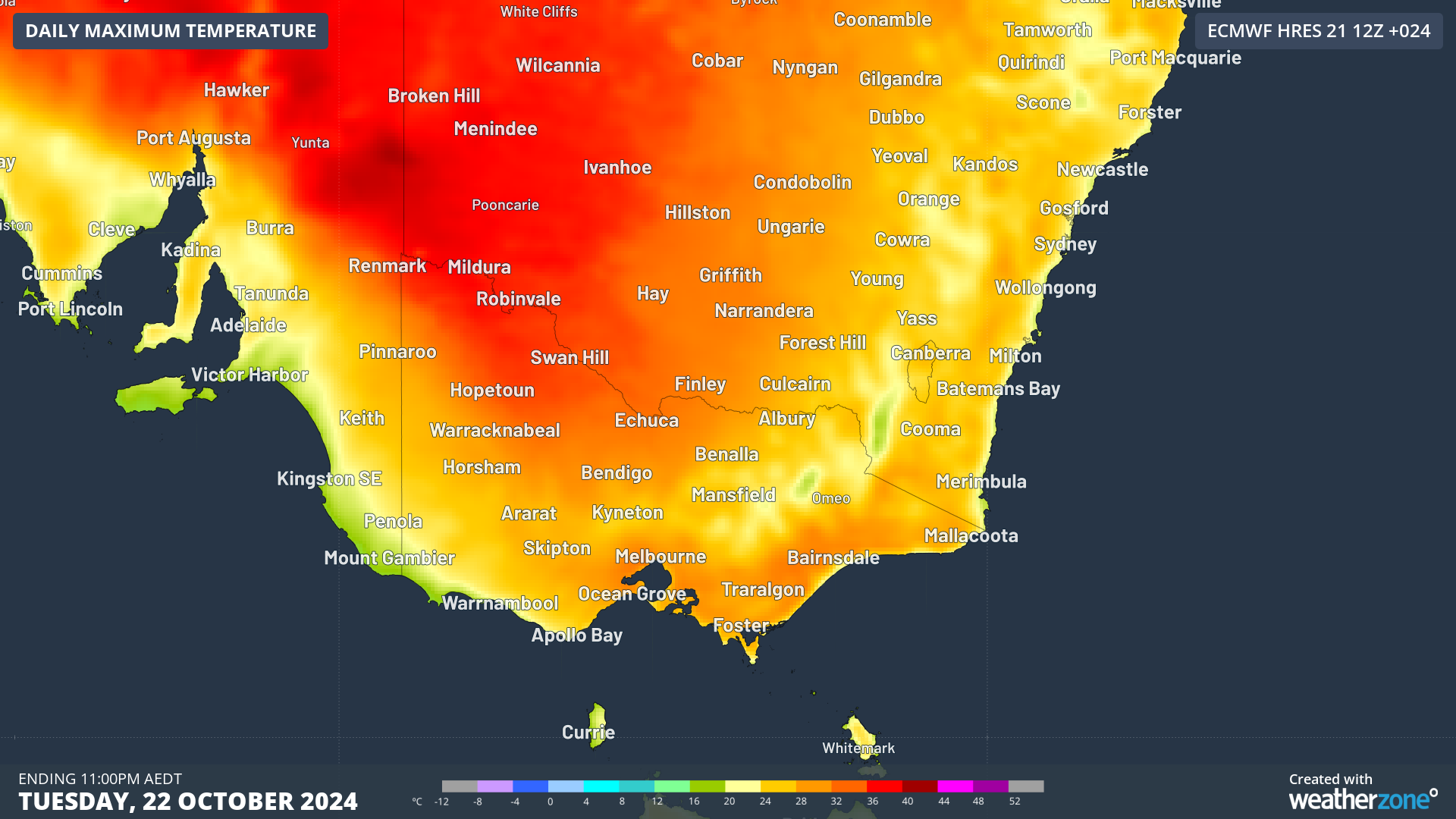
The cities maximum is forecast to be 32°C on Tuesday afternoon, making it Melbourne’s warmest day in seven months and the first time the mercury has reached 30°C since March 18.

Temps will also top 30°C across much of Victoria, with a state high of 36°C expected at Mildura, as a relatively short-lasting tongue of warm air pushes across the state ahead of an approaching cold front.
A southerly change is forecast to reach Melbourne around 4 to 6pm local tonight, bringing some relief to the city in the evening.

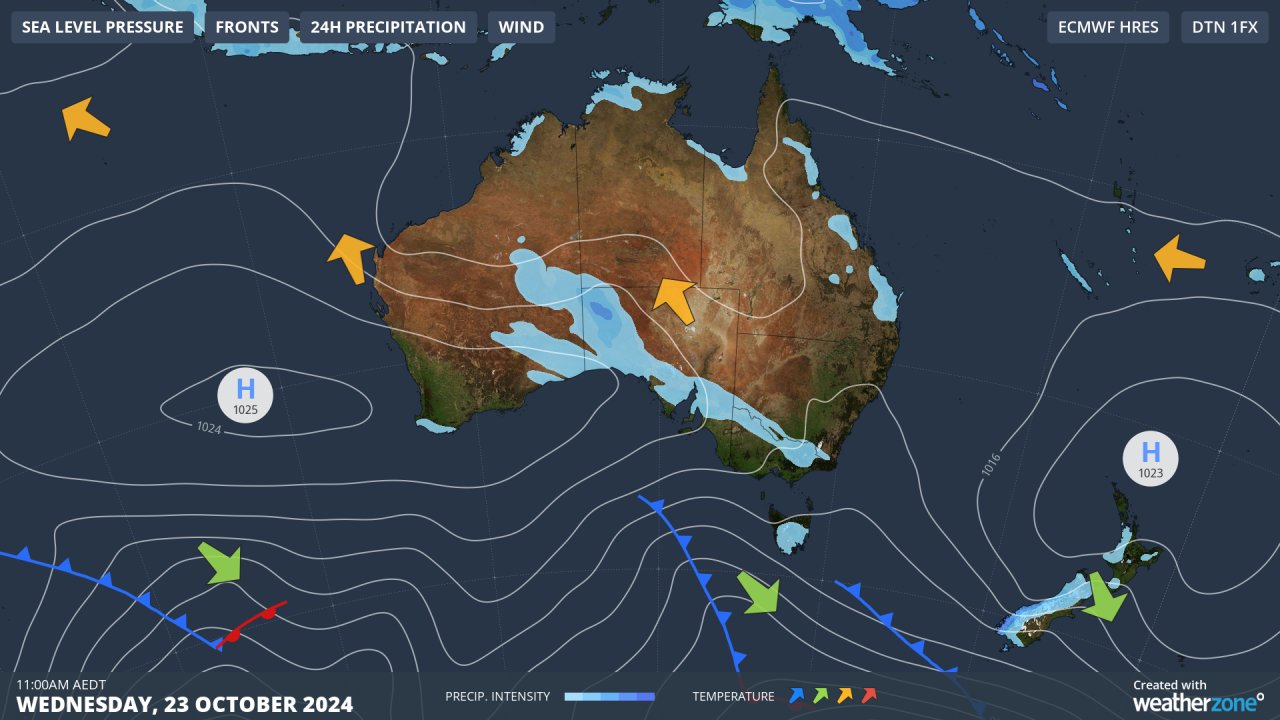
There’s not a whole lot of bite to that front. As Wednesday’s synoptic chart shows, the front will barely clip southern Victoria – although it will score a direct hit on Tasmania where a little midweek snow can be expected at the highest elevations.

But winds will still swing around to a southerly aspect and push much cooler air onto the mainland, especially later in the working week.
Melbourne maximums will dip to 21°C on Wednesday as a few mostly light showers sweep through, then to a much cooler 16°C and 17°C on Thursday and Friday respectively.

Weatherzone Business has grown to become the outright leader within the Australian energy market, serving wind, solar, hydro, trading, utilities and network companies.

You can’t control the weather, but you can gain precision insights to optimise your response. What lights us up is providing your energy business with tailored weather information to reduce your risk and keep you moving ahead of the curve. 

Our services cover all aspects – from wind and solar generation to demand forecasts, wholesale markets to retail so, no matter where your company sits, we have solutions for you. We have worked closely with market participants to create products that meet the evolving needs of the sector, aiming to increase safety and profitability for our customers. 

Benefit from the timely delivery of accurate weather information, allowing informed and effective decision-making. To find out more visit our contact page or email us at apac.sales@dtn.com.
Latest news

Satisfy your weather obsession with these news headlines from around the nation, and the world.

From Kimberley to northern NSW: Bushfire outlook flags risk for resources sector this winter

Bushfire risk doesn’t usually make headlines in June, but AFAC’s winter seasonal outlook is putting mining and resources operators on alert from the Kimberley to the NSW.  Australia’s official seasonal bushfire outlook for winter 2026 was released by AFAC on Thursday, May 28. The outlook predicts increased fire risk across the northern parts of the Great Sandy Desert and surrounds […]

The signal was there weeks earlier: forecasting one of the year’s biggest wind events

In mid-May 2026, DTN APAC meteorologists flagged a strengthening Southern Ocean pattern in model guidance, signalling an extended run of record-challenging wind conditions across the NEM.  Nearly three weeks later, NEM wind generation climbed from around 1.5GW to more than 9GW, supplying roughly one-third of the grid and coming within 1GW of the all-time generation record.  The event highlighted […]

The 2026 Indian Southwest Monsoon onset is expected in the next two weeks

The Indian Southwest Monsoon will reach India in the next two weeks, but a developing El Niño could signal a drier than normal monsoon for businesses and major industries across the country. Southwest monsoon onset over southern India in the next two weeks The Indian Meteorological Department (IMD) is responsible for tracking the advance and […]

Rapid El Niño signal accelerating risk for Australian businesses

El Niño–favourable conditions are gathering pace across the tropical Pacific, with key ocean indicators approaching threshold levels and early atmospheric responses emerging.  While uncertainty remains around final El Niño strength, historical analogues show that even weak events can generate widespread impacts, including reduced rainfall, warmer daytime temperatures, increased frost risk, elevated fire danger, reduced tropical cyclone activity, and more. Industries including […]