Prosper in a dynamic world
Search

Is the volcanic ash passing over QLD impacting aviation?


A cloud of volcanic ash and gas can be seen passing over QLD today, turning the sky red and disrupting flights in the region. 

A large plume of ash and gas was ejected into the atmosphere on Saturday when the Hunga Tonga Hunga Ha’apai erupted near Tonga. 

Since then, the volcanic cloud has been travelling through the stratosphere towards Australia. 

The satellite images below show the cloud of ash/gas passing over QLD on Monday. 

Video: Visible satellite imagery showing the ash cloud move from east to west over QLD on Monday. 

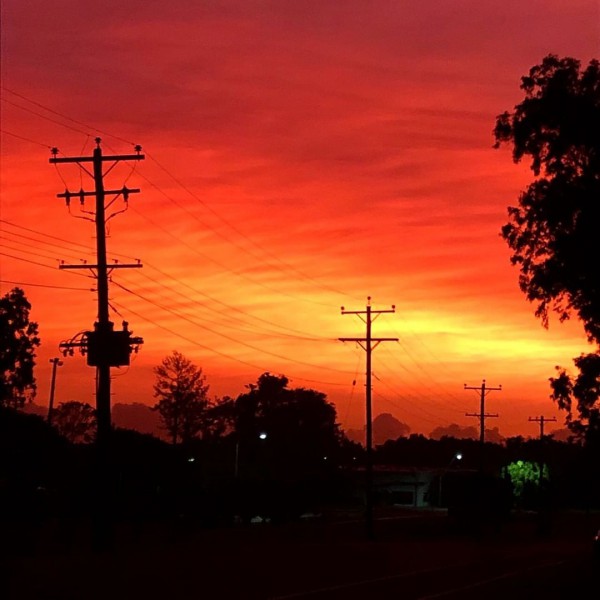
The ash cloud is travelling more than 40,000 feet (around 12km) above sea level, which means it’s too high up in the atmosphere to directly impact Queensland. The ash cloud is however causing flight disruptions in Australia and brought an eerily beautiful sunrise across Queensland on Monday morning.  

MicrosoftTeams-image (190)

MicrosoftTeams-image (187)


MicrosoftTeams-image (186)

Images: Volcanic sunrise in Cairns on Monday morning, as light from the rising sun illuminated the underside of a volcanic ash cloud passing over QLD. Source: Russ Reynolds (top), @gumguy_cns/Instagram (middle) and @globalgourmetqldcairns/Instagram 

How does volcanic ash disrupt aviation?  

Volcanic ash is composed of fine rock, minerals, glass and gas which can cause a loss of thrust and/or engine failure in aircraft. For this reason, volcanic ash can be life-threatening to aircraft passengers and pilots. 

Volcanic ash warnings are issued so aircraft can avoid this deadly cloud. When the ash cloud is thick and unavoidable, aircraft can be grounded for days, causing passengers and cargo to remain stuck at their location. 

Fortunately, aircraft flying across Queensland on Monday will be able to avoid the ash cloud by flying below it. Typically, domestic aircraft fly between 30,000 and 40,000 feet and the ash cloud is located between about 42,000 and 63,000 feet. 

However, there may be some minor disruptions to flight schedules as restrictions are applied to certain flight levels over QLD. For more information on Weatherzone’s aviation services, please contact us at apac.sales@dtn.com.
Latest news

Satisfy your weather obsession with these news headlines from around the nation, and the world.

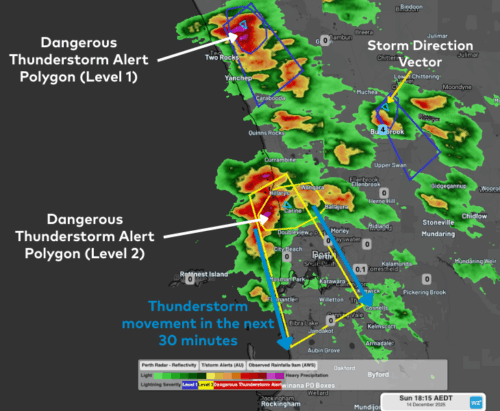
DTN Dangerous Thunderstorm Alerts in action with severe thunderstorms disrupting Perth industries

Severe thunderstorms impacted southwest WA and the Perth region on Sunday, December 14, 2025, triggering Dangerous Thunderstorm Alerts (DTA) by DTN for industries and businesses in the region. DTN operates Dangerous Thunderstorm Alerts (DTA) which alert businesses and industries to thunderstorms based on intensity and movement. These alerts provide advanced notice of thunderstorms moving into […]

How Australian East Coast port and maritime operations could be disrupted by tropical cyclones over the next two weeks

Port and maritime operations across Australia’s East Coast could be disrupted by increased tropical cyclone activity in the Coral Sea and southwest Pacific Ocean over the next two weeks. Meteorologists reference a large selection of Numerical Weather Prediction (NWP) models to forecast weather. A number of these NWP models are forecasting the development of tropical […]

Extreme fire danger and severe heatwave conditions spreading across SA, Victoria and NSW

Hot, dry and windy weather causing elevated fire danger and severe heatwave conditions are sweeping across southeastern Australia over the next three days, driving high energy demand and disruption to operations. Clear skies associated a large and slow-moving high pressure system have allowed hot air to build up over parts of northern, western and central […]

Heightened bushfire risk during the 2025-26 summer for WA, Victoria and NSW in latest AFAC Outlook

The Australian and New Zealand Council for fire and emergency services (AFAC) identified western and southern WA, Victoria and inland NSW as key regions that are at risk of heightened bushfire risk this summer. Parts of Australia have experienced severe soil moisture and rainfall deficiencies over the past months and years, while high fuel loads […]