Today, March 23, is World Meteorological Day and this year’s theme is ‘Early Warning and Early Action’. With weather extremes having an immense impact on human lives, the environment, and the global economy, early warnings and accurate forecasts are becoming increasingly important.
Improving forecasts, amplifying weather extremes and evolving user-expectations are changing the role of the modern-day meteorologist to focus on weather impacts and risk communication.
Weather extremes in a changing climate
According to the World Meteorological Organization (WMO), “over the past 50 years, there were more than 11 000 reported weather, climate and water-related disasters, resulting in just over 2 million deaths and US$ 3.64 trillion (AU$ 4.87 trillion) in economic losses.”
Droughts and tropical cyclones have claimed the most lives and caused the most economic damage across the globe during the last 50 years. With both of these extreme weather phenomena common in Australia, this puts our country at the front line of extreme weather impacts.
Unfortunately, some global weather extremes are becoming more frequent and intense in response to our changing climate. According to the WMO and Intergovernmental Panel on Climate Change (IPCC):
- Heat extremes have become more frequent and more intense across most land regions since the 1950s.
- Heatwaves are happening more regularly, are starting earlier and ending later.
- Temperatures over 40°C and even 50°C are becoming increasingly frequent in many parts of the world, posing a major threat to human health and well-being.
- The frequency and intensity of heavy rainfall events has increased since the 1950s and this is expected to continue.
- Extreme daily precipitation events are projected to intensify by about 7% for each 1°C of global warming.
- The proportion of intense tropical cyclones (categories 4-5) is expected to increase at the global scale with increasing global warming, thus increasing the vulnerability of growing coastal populations.

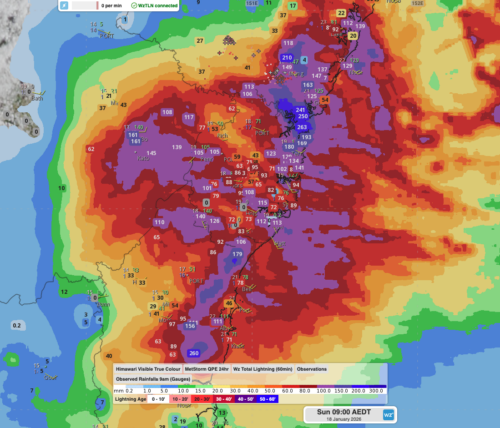
Eastern Australia witnessed a catastrophic rain and flooding event at the end of summer and early autumn this year. This event supported the need for timely and local impact-based information, both before and during an extreme weather event.
What World Meteorological Day means to us at Weatherzone
World Meteorological Day is an important day to Weatherzone, a DTN company as it raises global awareness and reinforces the importance of what we do. This year’s theme highlights the need for more focus on what the weather will do, rather than simply what the weather will be. This shift in focus is also being seen in the role of the modern-day meteorologist.
The main focus of a professional meteorologist used to be simply getting the forecast right. Today, meteorologists use this increasingly accurate forecast information to communicate risk and weather impacts. This wholesale change in the role of contemporary meteorology underpins Weatherzone’s products and services.
Weatherzone’s business products are tailored to individual client needs and include bespoke commentary and risk analysis from qualified meteorologists. For more information on our services, please contact us at apac.sales@dtn.com.