Prosper in a dynamic world
Search

Satellites capture historic weather event over eastern Australia


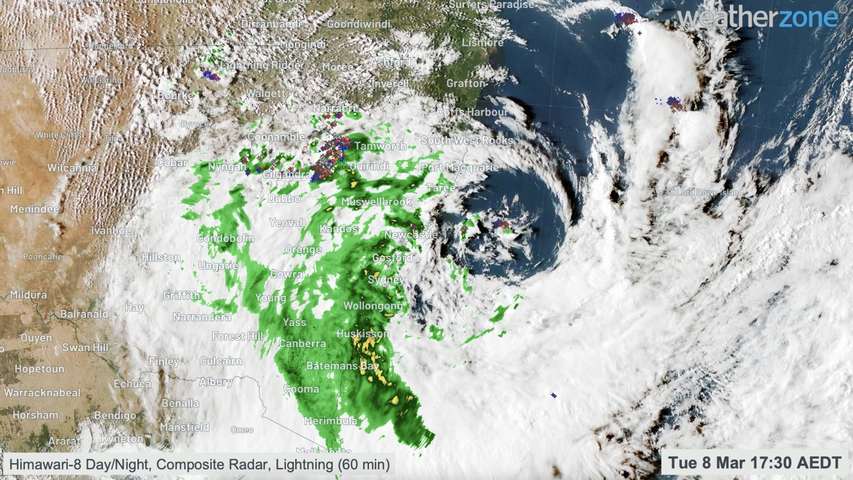
A satellite sitting 36,000 km above the ground has captured mesmerising images of the historic rain and flooding event that unfolded across eastern Australia during the last fortnight.

The Himawari-8 satellite is a geostationary satellite that captures images of the atmosphere over Australia, every 10 minutes, throughout the day and night.

This satellite, which is operated by the Japan Meteorological Agency, has the best seat in the house when it comes to watching weather events unfolding across the Australian region.

Fortunately, we can see this show as well by stitching the Himiwari-8 satellite images together after a weather event.

The animation below shows a sequence of combined visible (day) and infrared (night) satellite images over the eight-day period between Tuesday, February 22 and Tuesday March 1.

The clip above shows the development of the first phase in the past fortnight’s rain and flooding event, which involved an upper-level low passing over eastern Australia as an atmospheric river drove thick clouds and heavy rain into southeast QLD and eastern NSW.

The video below shows enhanced water vapour images over the same period as the previous clip.

Water vapour satellite imagery helps revel where moisture is locatd in the atmosphere. In the animation above, the blue, white and pink colours show regions of the atmosphere that have higher concentrations of water vapour in the atmosphere, while black and brown/orange colours indicate drier air.

The clip below shows the second phase of this weather event, which involved a second upper-level low helping to drive more heavy rain into eastern NSW.

This second phase of the event caused major flooding near Sydney and more flooding and landslides up and down the state’s east coast and ranges.

The videos featured in this article have documented a record-breaking weather event. But while the clouds looked spectacular from above, the severe weather they caused on the ground had a devastating impact. For more information, please contact us at apac.sales@dtn.com.
Latest news

Satisfy your weather obsession with these news headlines from around the nation, and the world.

DTN Dangerous Thunderstorm Alerts in action with severe thunderstorms disrupting Perth industries

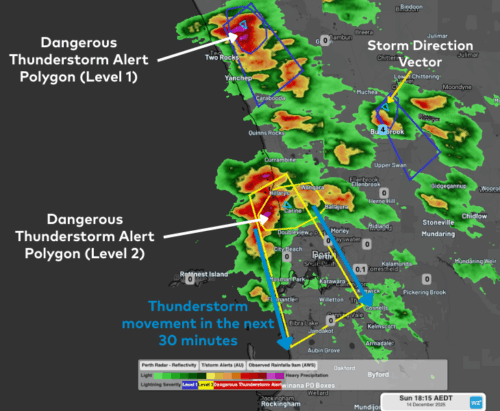
Severe thunderstorms impacted southwest WA and the Perth region on Sunday, December 14, 2025, triggering Dangerous Thunderstorm Alerts (DTA) by DTN for industries and businesses in the region. DTN operates Dangerous Thunderstorm Alerts (DTA) which alert businesses and industries to thunderstorms based on intensity and movement. These alerts provide advanced notice of thunderstorms moving into […]

How Australian East Coast port and maritime operations could be disrupted by tropical cyclones over the next two weeks

Port and maritime operations across Australia’s East Coast could be disrupted by increased tropical cyclone activity in the Coral Sea and southwest Pacific Ocean over the next two weeks. Meteorologists reference a large selection of Numerical Weather Prediction (NWP) models to forecast weather. A number of these NWP models are forecasting the development of tropical […]

Extreme fire danger and severe heatwave conditions spreading across SA, Victoria and NSW

Hot, dry and windy weather causing elevated fire danger and severe heatwave conditions are sweeping across southeastern Australia over the next three days, driving high energy demand and disruption to operations. Clear skies associated a large and slow-moving high pressure system have allowed hot air to build up over parts of northern, western and central […]

Heightened bushfire risk during the 2025-26 summer for WA, Victoria and NSW in latest AFAC Outlook

The Australian and New Zealand Council for fire and emergency services (AFAC) identified western and southern WA, Victoria and inland NSW as key regions that are at risk of heightened bushfire risk this summer. Parts of Australia have experienced severe soil moisture and rainfall deficiencies over the past months and years, while high fuel loads […]