
Prosper in a dynamic world
Search

How much has sea level risen due to climate change?

How much has sea level risen due to climate change?

Today marks the autumnal equinox in the Southern Hemisphere, meaning nights will become longer than days in Australia for the next six months. 

This year’s autumnal equinox occurred at 8:25am AEDT on Tuesday, March 21, marking the moment the sun was positioned directly above Earth’s equator. From the perspective of Earth, the sun will now appear to move over the Northern Hemisphere, where it will remain until the next equinox on September 23 this year.
How much has sea level risen due to climate change?

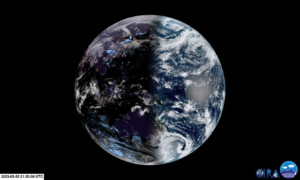
Image: Sunrise at the time of the March equinox in 2023, showing the solar terminator running perpendicular to the equator, due to the sun being positioned directly above the equator. Source: RAMMB/CIRA 

Most places on Earth experience almost exactly equal amounts of day and night around the date of the equinox. And while Australia’s meteorological autumn started at the beginning of March, the date of the equinox marks the start of the astronomical autumn. 

The Southern Hemisphere will remain tilted away from the sun for around six months following today’s equinox, causing nights to be longer than days in Australia. This gradual decrease in sunlight will also allow temperatures to drop across Australia as we head towards winter. 

The shortest day and longest night of 2023 will occur in around three months’ time, on the date of the winter solstice on June 21 or 22, depending on your location. 

Latest news

Satisfy your weather obsession with these news headlines from around the nation, and the world.

From Kimberley to northern NSW: Bushfire outlook flags risk for resources sector this winter

Bushfire risk doesn’t usually make headlines in June, but AFAC’s winter seasonal outlook is putting mining and resources operators on alert from the Kimberley to the NSW.  Australia’s official seasonal bushfire outlook for winter 2026 was released by AFAC on Thursday, May 28. The outlook predicts increased fire risk across the northern parts of the Great Sandy Desert and surrounds […]

The signal was there weeks earlier: forecasting one of the year’s biggest wind events

In mid-May 2026, DTN APAC meteorologists flagged a strengthening Southern Ocean pattern in model guidance, signalling an extended run of record-challenging wind conditions across the NEM.  Nearly three weeks later, NEM wind generation climbed from around 1.5GW to more than 9GW, supplying roughly one-third of the grid and coming within 1GW of the all-time generation record.  The event highlighted […]

The 2026 Indian Southwest Monsoon onset is expected in the next two weeks

The Indian Southwest Monsoon will reach India in the next two weeks, but a developing El Niño could signal a drier than normal monsoon for businesses and major industries across the country. Southwest monsoon onset over southern India in the next two weeks The Indian Meteorological Department (IMD) is responsible for tracking the advance and […]

Rapid El Niño signal accelerating risk for Australian businesses

El Niño–favourable conditions are gathering pace across the tropical Pacific, with key ocean indicators approaching threshold levels and early atmospheric responses emerging.  While uncertainty remains around final El Niño strength, historical analogues show that even weak events can generate widespread impacts, including reduced rainfall, warmer daytime temperatures, increased frost risk, elevated fire danger, reduced tropical cyclone activity, and more. Industries including […]


