Prosper in a dynamic world
Search

La Nina over…for now


The Bureau of Meteorology has today declared the end of the La Niña, but is this the last Australia will see of this rain-inducing climate driver in 2022?

The Bureau’s latest climate driver update, released on Tuesday, June 21, states that “the 2021–22 La Niña event has reached an end, with a majority of indicators currently at neutral levels.”

This ends a seven-month La Niña episode that was declared in November 2021 and went on to produce record-breaking rain and flooding in eastern Australia during late summer and autumn.
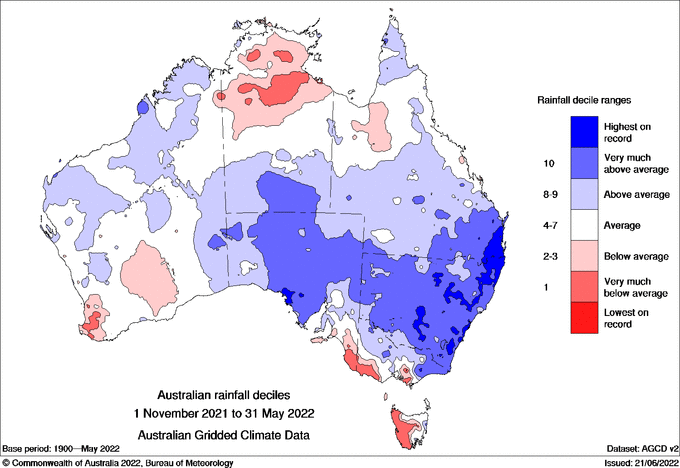
Image: Observed rainfall deciles between November 2021 and May 2022, showing that large areas of NSW and southeast QLD experienced their wettest November to May period on record.

The end of a high-impact La Niña is likely to come as welcome news to many communities and industries in flood-weary areas of eastern Australia. However, this may not be the end of this story just yet.

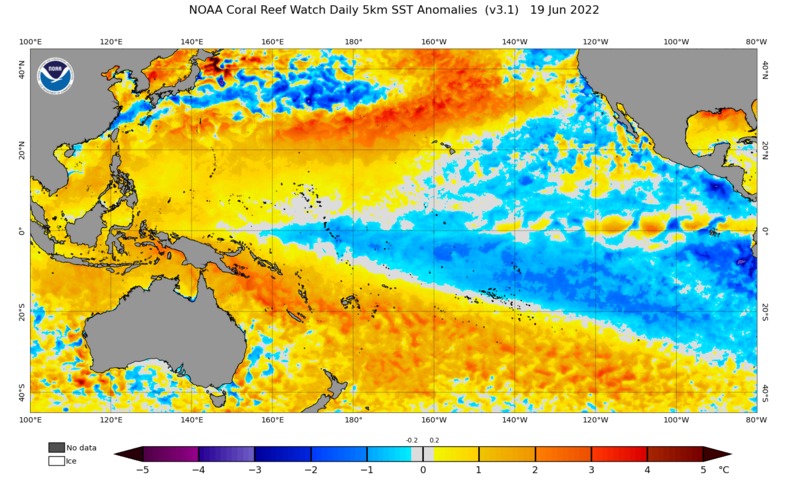
While the Pacific Ocean has returned to a neutral state based on the Bureau of Meteorology’s criteria, sea surface temperatures across the equatorial Pacific are still in a La Niña-like state. Furthermore, a number of international forecast models suggest that La Niña may return later this year, most likely during spring.
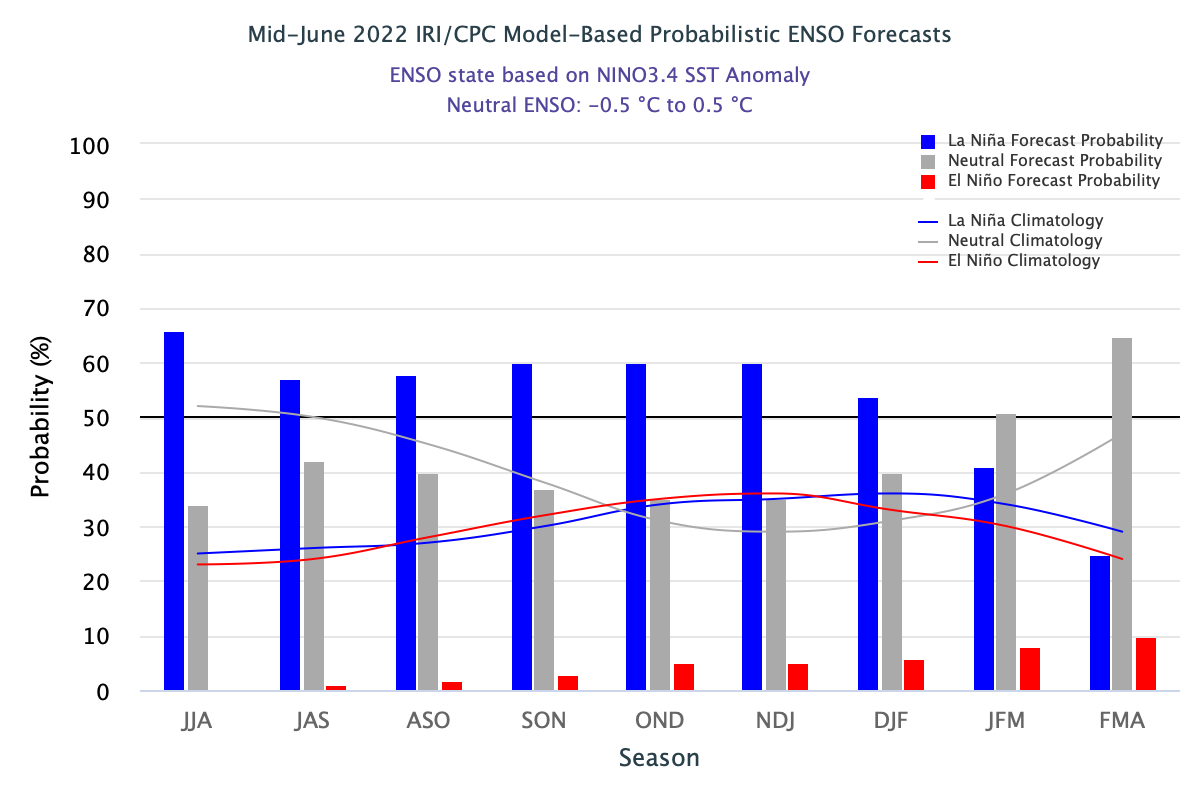
Image: A model-based ENSO outlook issued by the Columbia University’s International Research Institute for Climate and Society (IRI) and U.S. National Weather Service Climate Prediction Centre (CPC) on June 20. This outlook shows that La Niña is a 60 percent chance of occurring in the Southern Hemisphere’s spring and early summer.

The Bureau of Meteorology also acknowledge this potential in their latest climate outlook, stating that “some model outlooks suggest La Niña may re-form later in 2022. As a result, the Bureau’s ENSO Outlook status has moved to La Niña WATCH. La Niña WATCH means there is around a 50% chance of La Niña forming later in 2022. This is approximately double the normal likelihood.”

For more information on our detailed seasonal forecasts, please contact us at apac.sales@dtn.com.

Latest news

Satisfy your weather obsession with these news headlines from around the nation, and the world.

How does DTN help businesses monitor bushfire induced pyrocumulonimbus thunderstorms that ignite more fires?

Intense heat from bushfires during elevated fire danger days can trigger fire-induced pyrocumulonimbus thunderstorms that ignite additional fires. In early January 2026, an extreme heatwave sweeping over southeastern Australia brought catastrophic fire danger to Victoria. Intensely hot bush and grass fires spread erratically and quickly in hot, dry and gusty winds, with pyrocumulonimbus generating lightning, […]

Active seas to the north and east of Australia disrupting port and maritime operations

Seas to the north and east of Australia are experiencing periods of increased activity this week, leading to disruptions to port, maritime and offshore operations. Intense and hazardous Tasman Sea Ocean conditions across NSW’s South Coast rapidly deteriorated last Friday as a deep feed of easterly winds whipped up large and dangerous seas. The Batemans […]

Transport, emergency and energy industries flooded across Greater Sydney with weekend deluges

Transport, emergency, energy and port industries in eastern NSW and Sydney were impacted by significant flash flooding with intense and heavy rainfall this weekend. Rainfall rates between 80 and 140mm in one to three hours were registered across parts of Sydney’s Northern Beaches and Central Coast on Saturday afternoon and evening. In some areas, these […]

DTN Dangerous Thunderstorm Alerts in action with severe thunderstorms disrupting Perth industries

Severe thunderstorms impacted southwest WA and the Perth region on Sunday, December 14, 2025, triggering Dangerous Thunderstorm Alerts (DTA) by DTN for industries and businesses in the region. DTN operates Dangerous Thunderstorm Alerts (DTA) which alert businesses and industries to thunderstorms based on intensity and movement. These alerts provide advanced notice of thunderstorms moving into […]