Prosper in a dynamic world
Search

Tropical Cyclone names this season


Australia’s 2021/22 tropical cyclone season starts in just under two weeks. So, how many tropical cyclones will we see this season and what will they be called?

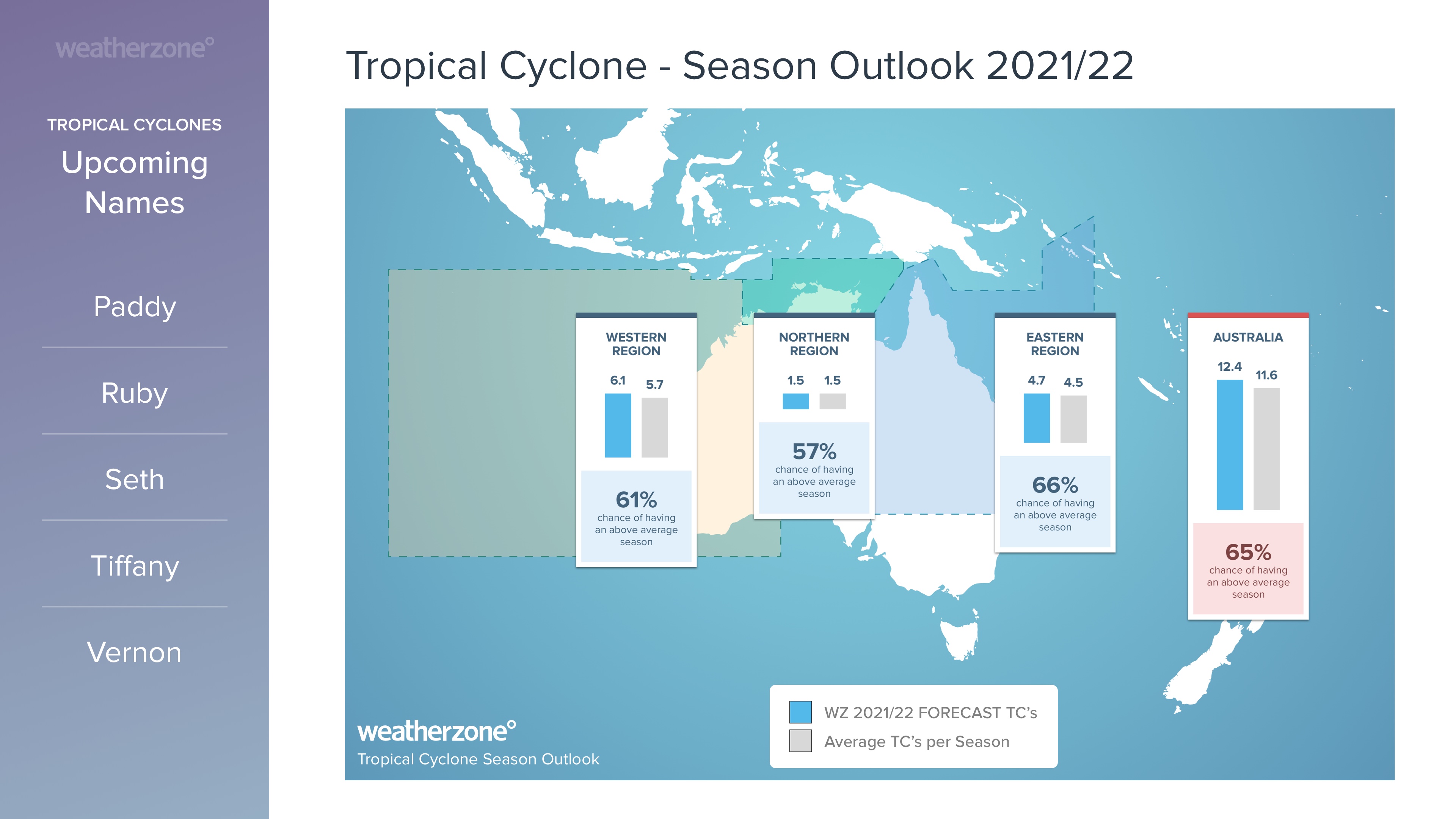
The Australian tropical cyclone season officially runs from November 1st to April 30th. During this six-month period, we usually see around 9 to 11 tropical cyclones in Australia’s area of responsibility and about four of these make landfall.

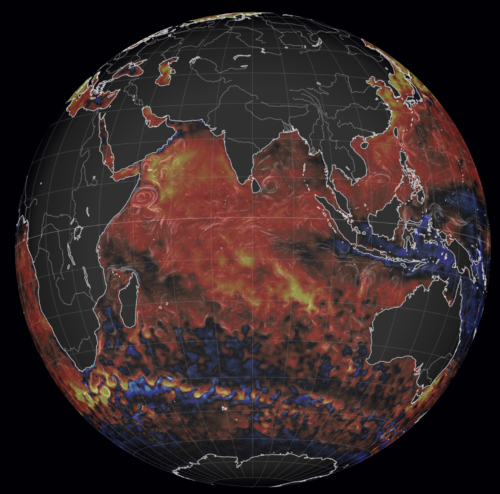
This season, the Australian region is expected to be a bit more active than usual thanks to a developing La Niña in the Pacific Ocean and warmer-than-average sea surface temperatures near Australia.

Weatherzone’s internal model predicts that we will see about 12-13 tropical cyclones in our region between November and April.
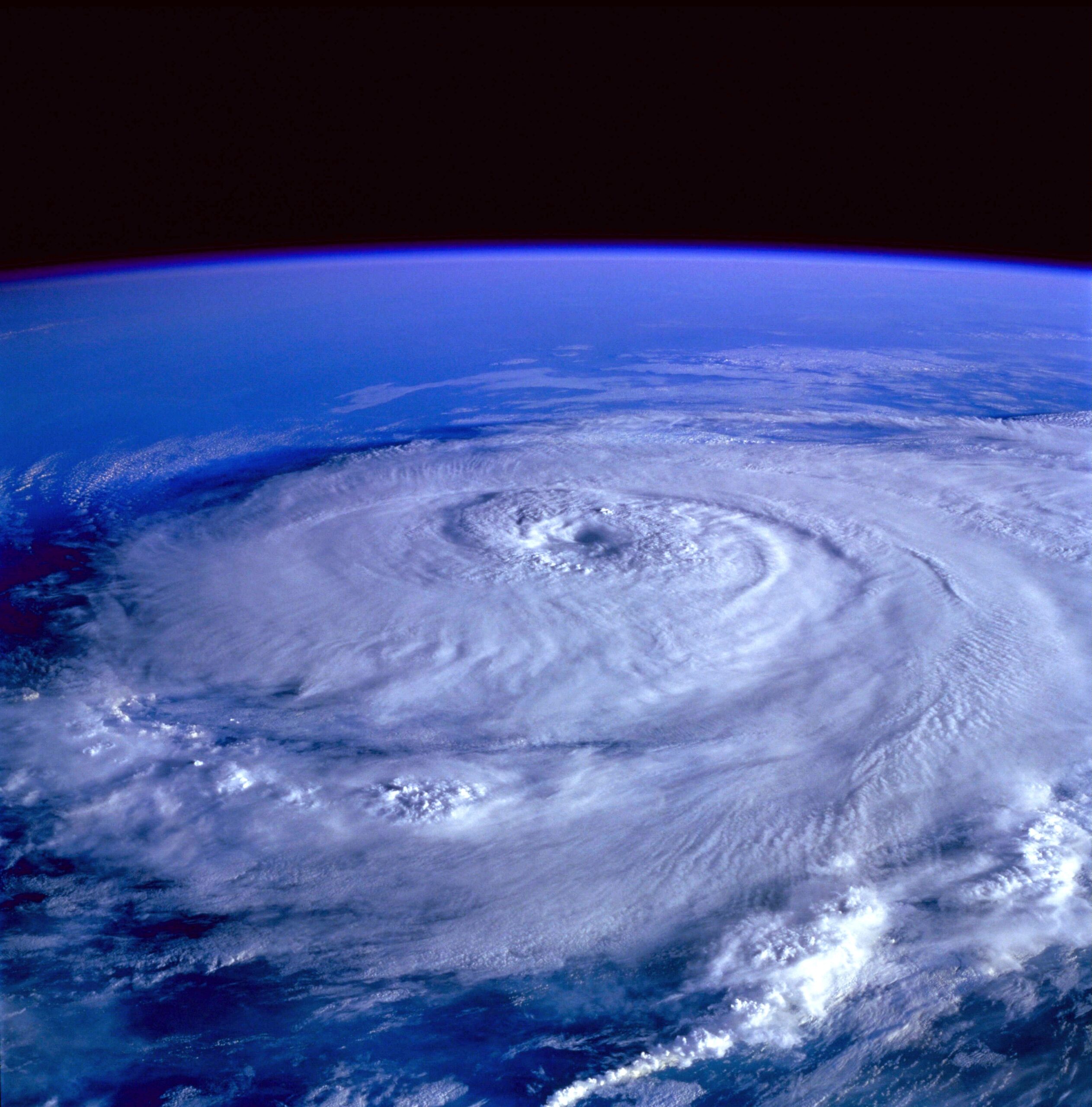
The first tropical cyclone of the season usually develops around early-to-mid December, however, the abnormally warm waters near northern Australia could cause it to happen earlier this year.

Regardless of the date it develops, the first tropical cyclone to form in Australia’s area of responsibility will be named Paddy, followed by Ruby and Seth.

Tropical cyclones that develop inside Australia’s area of responsibility are assigned names from a predetermined list that is maintained by the Bureau of Meteorology.
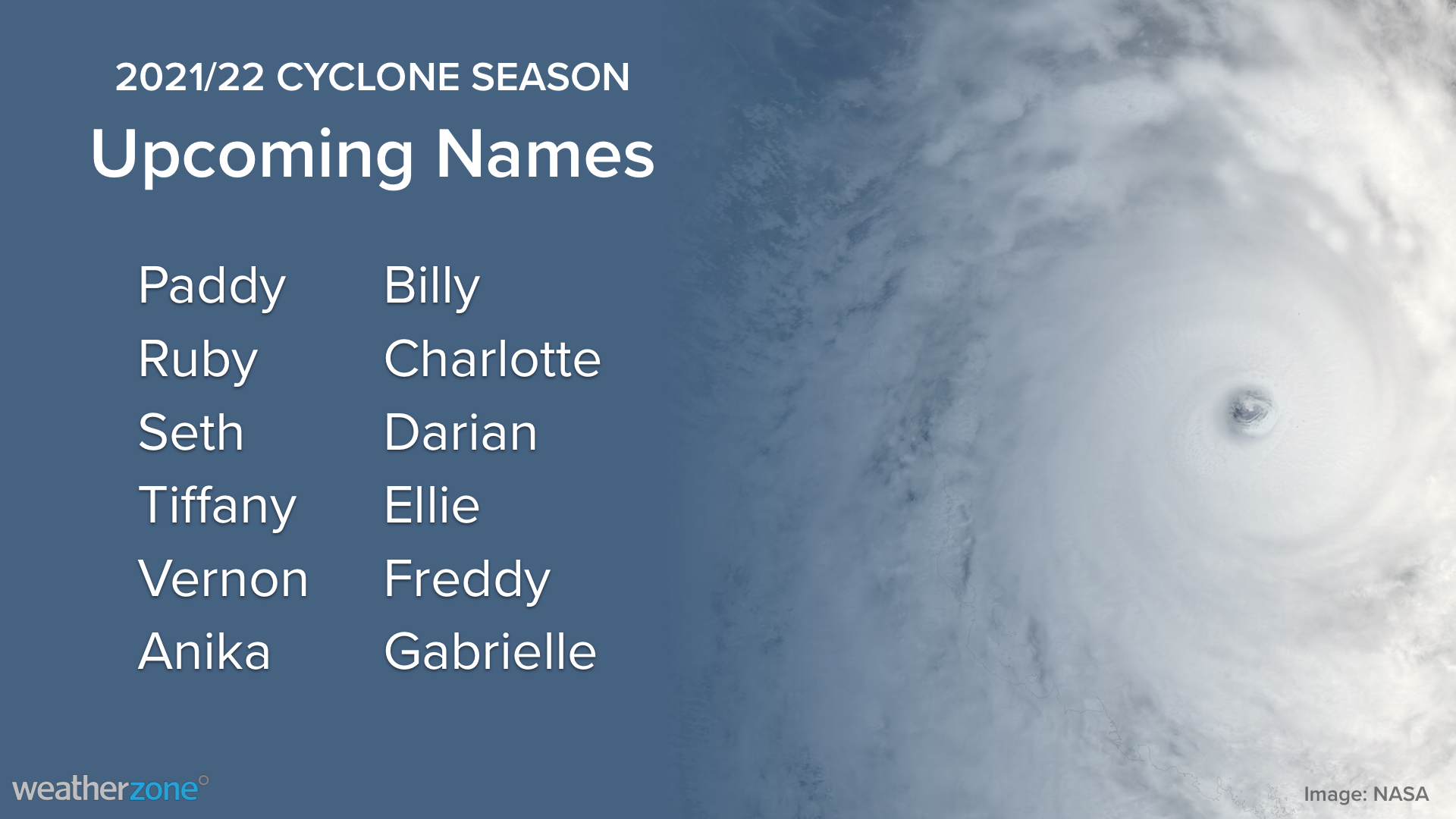
You can even request to have you name included on the list for an upcoming cyclone. All you have to do is submit a written request to the Bureau of Meteorology. But even if your request does get accepted, don’t expect to see it used any time soon. There are already enough names to last at least another decade.

For more information on Weatherzone’s tropical cyclone detailed 7 day forecast and risk assessment, please contact us at apac.sales@dtn.com.

Latest news

Satisfy your weather obsession with these news headlines from around the nation, and the world.

How does DTN help businesses monitor bushfire induced pyrocumulonimbus thunderstorms that ignite more fires?

Intense heat from bushfires during elevated fire danger days can trigger fire-induced pyrocumulonimbus thunderstorms that ignite additional fires. In early January 2026, an extreme heatwave sweeping over southeastern Australia brought catastrophic fire danger to Victoria. Intensely hot bush and grass fires spread erratically and quickly in hot, dry and gusty winds, with pyrocumulonimbus generating lightning, […]

Active seas to the north and east of Australia disrupting port and maritime operations

Seas to the north and east of Australia are experiencing periods of increased activity this week, leading to disruptions to port, maritime and offshore operations. Intense and hazardous Tasman Sea Ocean conditions across NSW’s South Coast rapidly deteriorated last Friday as a deep feed of easterly winds whipped up large and dangerous seas. The Batemans […]

Transport, emergency and energy industries flooded across Greater Sydney with weekend deluges

Transport, emergency, energy and port industries in eastern NSW and Sydney were impacted by significant flash flooding with intense and heavy rainfall this weekend. Rainfall rates between 80 and 140mm in one to three hours were registered across parts of Sydney’s Northern Beaches and Central Coast on Saturday afternoon and evening. In some areas, these […]

DTN Dangerous Thunderstorm Alerts in action with severe thunderstorms disrupting Perth industries

Severe thunderstorms impacted southwest WA and the Perth region on Sunday, December 14, 2025, triggering Dangerous Thunderstorm Alerts (DTA) by DTN for industries and businesses in the region. DTN operates Dangerous Thunderstorm Alerts (DTA) which alert businesses and industries to thunderstorms based on intensity and movement. These alerts provide advanced notice of thunderstorms moving into […]