Prosper in a dynamic world
Search

Coldest day in decades for Sydney


Bankstown has experienced its equal coldest day in 38 years today, with the maximum temperature unable to break above 10 degrees.  Sydney’s maximum temperature also struggled, with the capital shivering through the coolest day in 37 years.  

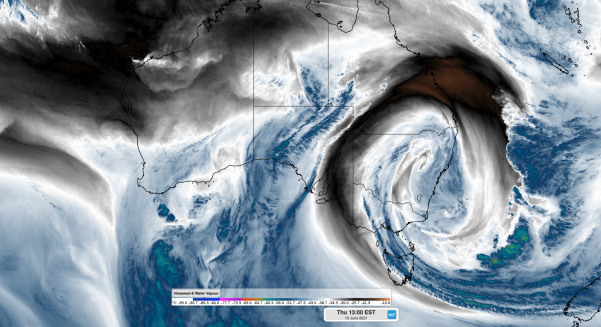
A freezing air mass has wrapped around a cut-off low and into NSWbringing icy temperatures and spreading low level snow across NSW. In fact, the ski resorts in the Snowy Mountains have seen over 60 centimetres of snow since Tuesday, due to moisture-laden air and the freezing temperatures. 

Sydney and Canberra were officially the coolest capital cities in Australia this afternoon. As of 3pm AEST today, Melbourne was four degrees warmer than Sydney, which is not unheard of, but unusual. 


Typical low-pressure systems and cold fronts, drag cold air across Victoria and into NSW, due to cool southerly winds. So why is Melbourne warmer?  

There are two contrasting air masses wrapping around the cut-off low. The warm airmass moved into Victoria today, creating these mild temperatures (for Melbourne) and ensuring the Victorian alps missed out on the significant snowfall. 


At the same time a very frigid airmass has wrapped its way into NSW, creating some of the coolest temperatures we have seen in years. The ski resorts in the Snowy Mountains have seen over 60 centimetres of snow since Tuesday, quite a contrast to the Victoria ski fields. 

Queenslanders have also donned their jackets for the first time in a while. Brisbane’s minimum temperature last night dropped to a very cool seven degrees, with the maximum temperature today struggling to reach 19 degrees.   

While the remainder of the states are set to warm up from tomorrow, Queensland will see one more day of below normal temperatures.  

The cut-off low has also brought significant cloud cover to Victoria and NSW, with solar input way down today, as well as the temperatures. 

For 14-day temperature forecasting and more, please contact us at apac.sales@dtn.com. 

Latest news

Satisfy your weather obsession with these news headlines from around the nation, and the world.

El Niño Is Here: What a Potential Record Event Means for Southeast Asia and Australia

  El Niño was officially declared in June 2026, raising the prospect of widespread impacts across Southeast Asia, from extreme heat and water shortages to higher energy demand and agricultural stress.   The World Meteorological Organization has warned countries to “prepare for it to be severe”, while several global forecast models suggest the event could rank among […]

How El Niño will shape Australian port operations in winter-spring 2026

Australian ports and marine pilots can expect a season of shifting wind and swell patterns through winter and spring 2026, as a developing El Niño brings the likelihood of drier conditions and more variable operating windows across the country’s coastline.  Will El Niño develop in 2026?  There are clear signs that an El Niño pattern is becoming […]

From Kimberley to northern NSW: Bushfire outlook flags risk for resources sector this winter

Bushfire risk doesn’t usually make headlines in June, but AFAC’s winter seasonal outlook is putting mining and resources operators on alert from the Kimberley to the NSW.  Australia’s official seasonal bushfire outlook for winter 2026 was released by AFAC on Thursday, May 28. The outlook predicts increased fire risk across the northern parts of the Great Sandy Desert and surrounds […]

The signal was there weeks earlier: forecasting one of the year’s biggest wind events

In mid-May 2026, DTN APAC meteorologists flagged a strengthening Southern Ocean pattern in model guidance, signalling an extended run of record-challenging wind conditions across the NEM.  Nearly three weeks later, NEM wind generation climbed from around 1.5GW to more than 9GW, supplying roughly one-third of the grid and coming within 1GW of the all-time generation record.  The event highlighted […]