Prosper in a dynamic world
Search

An active tropical cyclone season was promised, but has this been delivered?

Coming into the 2020/21 tropical cyclone seasons, all signs were pointing towards an above-average number of cyclones in the Australian region.

So far this season, this hasn’t eventuated. So what happened?

The tropics have actually been very active this season with 17 tropical lows generating widespread rainfall and strong winds across northern Australia. At times, the rainfall moved to the south of the country, with the whole country recording its third wettest December on record.

Despite the high number of tropical lows that have formed, only six have developed into tropical cyclones. This falls well below the average of nine to eleven a season.

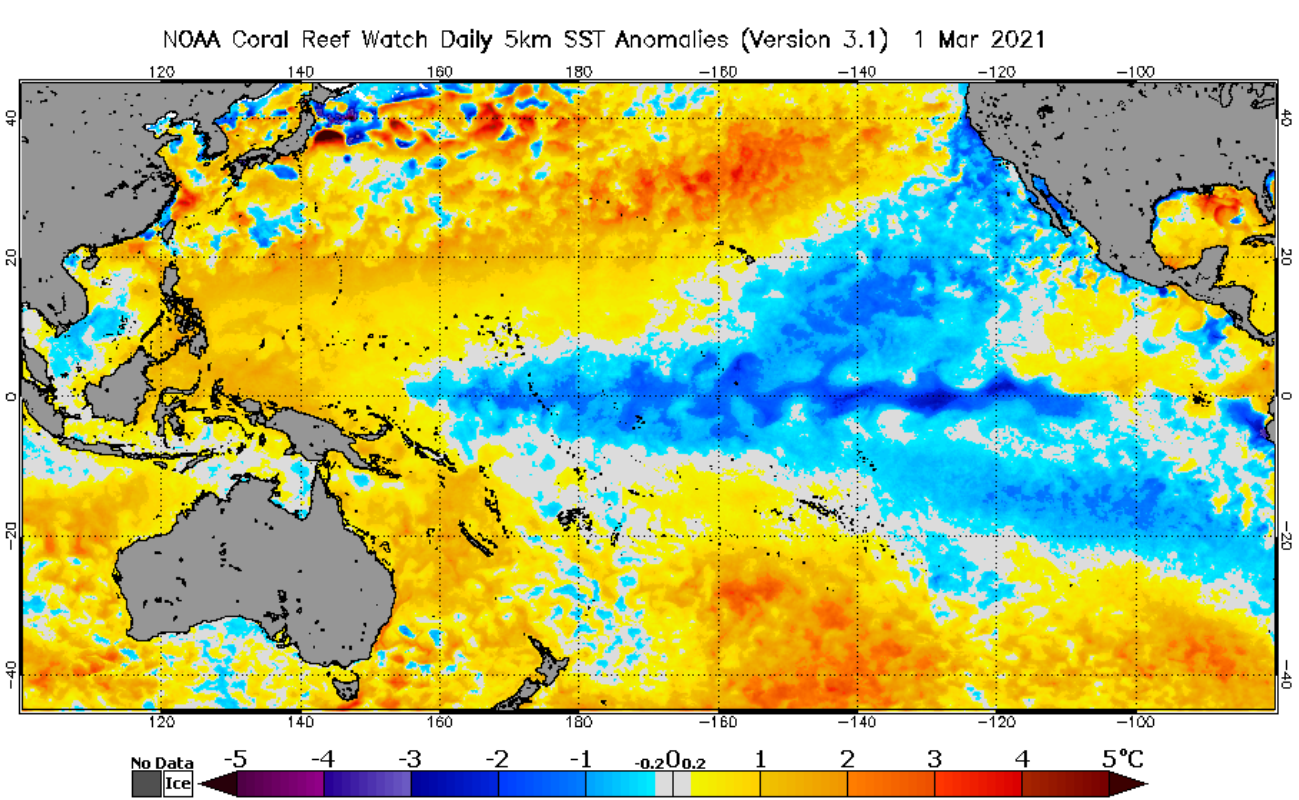
This went against expectations because we were primed for an above normal tropical cyclone season owing to La Niña and warm oceans across northern Australia (figure 1). The warm oceans are one of the ingredients cyclones need to develop  – think of the oceans as their energy source or fuel.
Active tropical cyclone season promised but not delivered

Figure 1: NOAA Sea Surface Temperature (SST) anomalies on the 1st of March 2021.

So why have there been so few cyclones this season?

Firstly, many of the low pressure systems have developed on or near the coastline, which has deprived them of their ‘fuel’ (warm ocean) that they need to develop.

Secondly, the wind setup has not been quite right, with opposing winds at different heights in the atmosphere, breaking the storm apart and working against each other.

Finally, the season is not over, we have a few months to go and March is usually the most active month. Never fear our meteorologists will be watching any tropical low development in the next few months. https://business.weatherzone.com.au

Latest news

Satisfy your weather obsession with these news headlines from around the nation, and the world.

How does DTN help businesses monitor bushfire induced pyrocumulonimbus thunderstorms that ignite more fires?

Intense heat from bushfires during elevated fire danger days can trigger fire-induced pyrocumulonimbus thunderstorms that ignite additional fires. In early January 2026, an extreme heatwave sweeping over southeastern Australia brought catastrophic fire danger to Victoria. Intensely hot bush and grass fires spread erratically and quickly in hot, dry and gusty winds, with pyrocumulonimbus generating lightning, […]

Active seas to the north and east of Australia disrupting port and maritime operations

Seas to the north and east of Australia are experiencing periods of increased activity this week, leading to disruptions to port, maritime and offshore operations. Intense and hazardous Tasman Sea Ocean conditions across NSW’s South Coast rapidly deteriorated last Friday as a deep feed of easterly winds whipped up large and dangerous seas. The Batemans […]

Transport, emergency and energy industries flooded across Greater Sydney with weekend deluges

Transport, emergency, energy and port industries in eastern NSW and Sydney were impacted by significant flash flooding with intense and heavy rainfall this weekend. Rainfall rates between 80 and 140mm in one to three hours were registered across parts of Sydney’s Northern Beaches and Central Coast on Saturday afternoon and evening. In some areas, these […]

DTN Dangerous Thunderstorm Alerts in action with severe thunderstorms disrupting Perth industries

Severe thunderstorms impacted southwest WA and the Perth region on Sunday, December 14, 2025, triggering Dangerous Thunderstorm Alerts (DTA) by DTN for industries and businesses in the region. DTN operates Dangerous Thunderstorm Alerts (DTA) which alert businesses and industries to thunderstorms based on intensity and movement. These alerts provide advanced notice of thunderstorms moving into […]