Prosper in a dynamic world
Search

A cloudy and rainy year thus far for Sydney

It has been a cloudy and rainy year thus far for Sydney, with 28 of the 55 calendar days recording rainfall. This unusual summer has seen more days of rainfall than not.

The wet weather is set to continue, with large multi-day rainfall accumulations predicted for the central and northern NSW coast from today through to Monday, March 1st, including Sydney. The heaviest falls are likely to occur during today and on Saturday.

So how cloudy was it? 

It has been a cloudier than average beginning to the year for Sydney with only two other cloudier beginnings to the year recorded in the last decade.

The week of January 26 to February 2nd has been the cloudiest week of the year. During this week, Sydney saw less than two and a half hours of sunlight on average per day. In the past decade there have only been two cloudier weeks at this time of year.

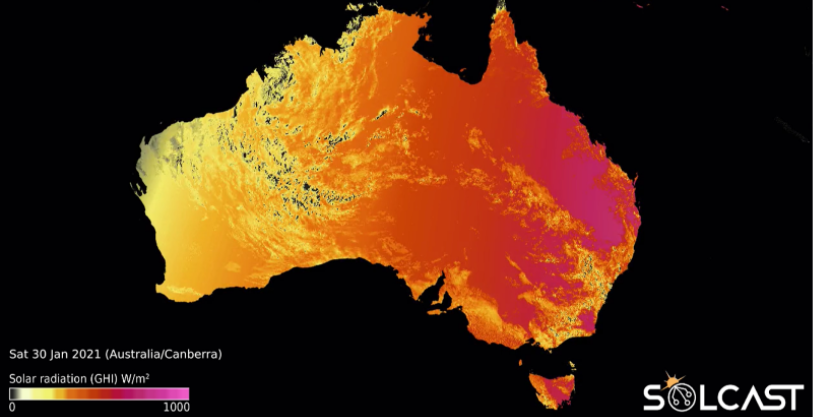
The largest daily rainfall total during the same week (week ending February 2nd) was 29.6mm at Sydney Observatory Hill on Saturday the 30th of January. The tropics were particularly active during this week feeding moisture into a low pressure trough on January 30th. As such low solar irradiance was observed for eastern New South Wales (yellow and black in figure 1).
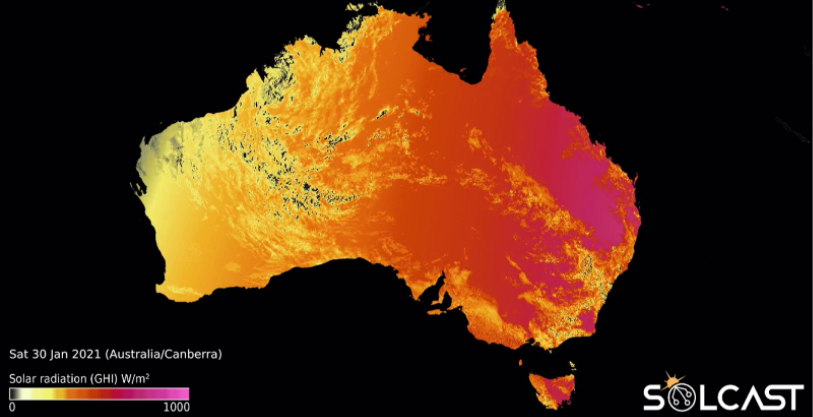


Figure 1: Solcast’s global horizontal irradiance on the 30th of January 2021

During such weather conditions it is especially important for the Renewable Energy industry to have excellent solar forecasting solutions in order to be able to maximise profit and minimise risk. If you want to know more about Weatherzone’s and Solcast’s market leading capabilities in this field please visit our websites (https://business.weatherzone.com.au/; www.solcast.com).

Latest news

Satisfy your weather obsession with these news headlines from around the nation, and the world.

A warm, light wind spring ahead for the NEM

A strong El Niño and an unusually stable Antarctic polar vortex are setting up a spring signal of light winds, elevated solar output, and a real risk of high-intensity heatwaves for the NEM.   This forecast could be a major flip to what the National Electricity Market (NEM) has experienced so far during Winter 2026. On 1 July 2026, the NEM […]

Habagat and successive typhoons trigger widespread flooding in the Philippines

Three consecutive weeks of enhanced southwest monsoon (Habagat) and back-to-back typhoons have flooded Luzon and the Visayas, grounding flights, triggering distribution power outages, cutting off transport corridors, and raising landslide risk across mining-dense provinces like Benguet and the Cordillera. The disruption is far from over with PAGASA expecting the monsoon to remain in place until […]

Australia’s Spring 2026 Bushfire Outlook: Increased Risk Across Seven States and Territories

Fire agencies, land managers and businesses are being urged to prepare as the AFAC spring seasonal bushfire outlook, released on August 19, 2026, warns of elevated bushfire risk across Australia this season. The outlook identifies above-average fire danger across seven states and territories, with conditions driven by a combination of elevated fuel loads, an El Niño […]

Businesses under pressure: how this powerful high will affect Australian industries

A very strong high pressure system centred over Tasmania will impact southern and eastern Australia’s weather over the coming days. How strong is this high pressure system? Mean Sea Level Pressure (MSLP) has already reached 1039.3 hPa at Ouse, Tasmania on Sunday morning, and is forecast to peak at 1041 or 1042 hPa on Monday […]