
Prosper in a dynamic world
Search

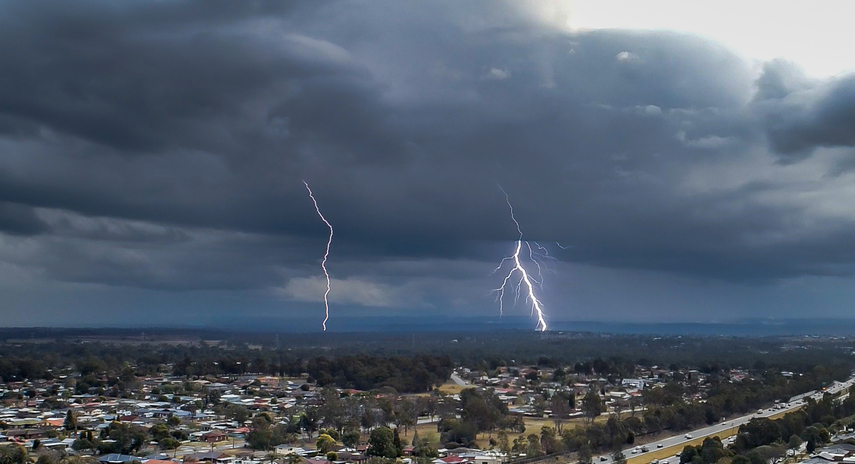
More thunderstorms in eastern NSW today

Parts of eastern NSW, including Sydney, will face another day of heavy showers and potentially thunderstorms today.

A broad upper-level low and numerous surface-based low pressure troughs are producing wet and stormy weather over NSW at the start of this week.

On Monday, heavy showers and severe thunderstorms soaked parts of eastern, central and northern NSW, triggering warnings for flash flooding in Sydney and other parts of the state.

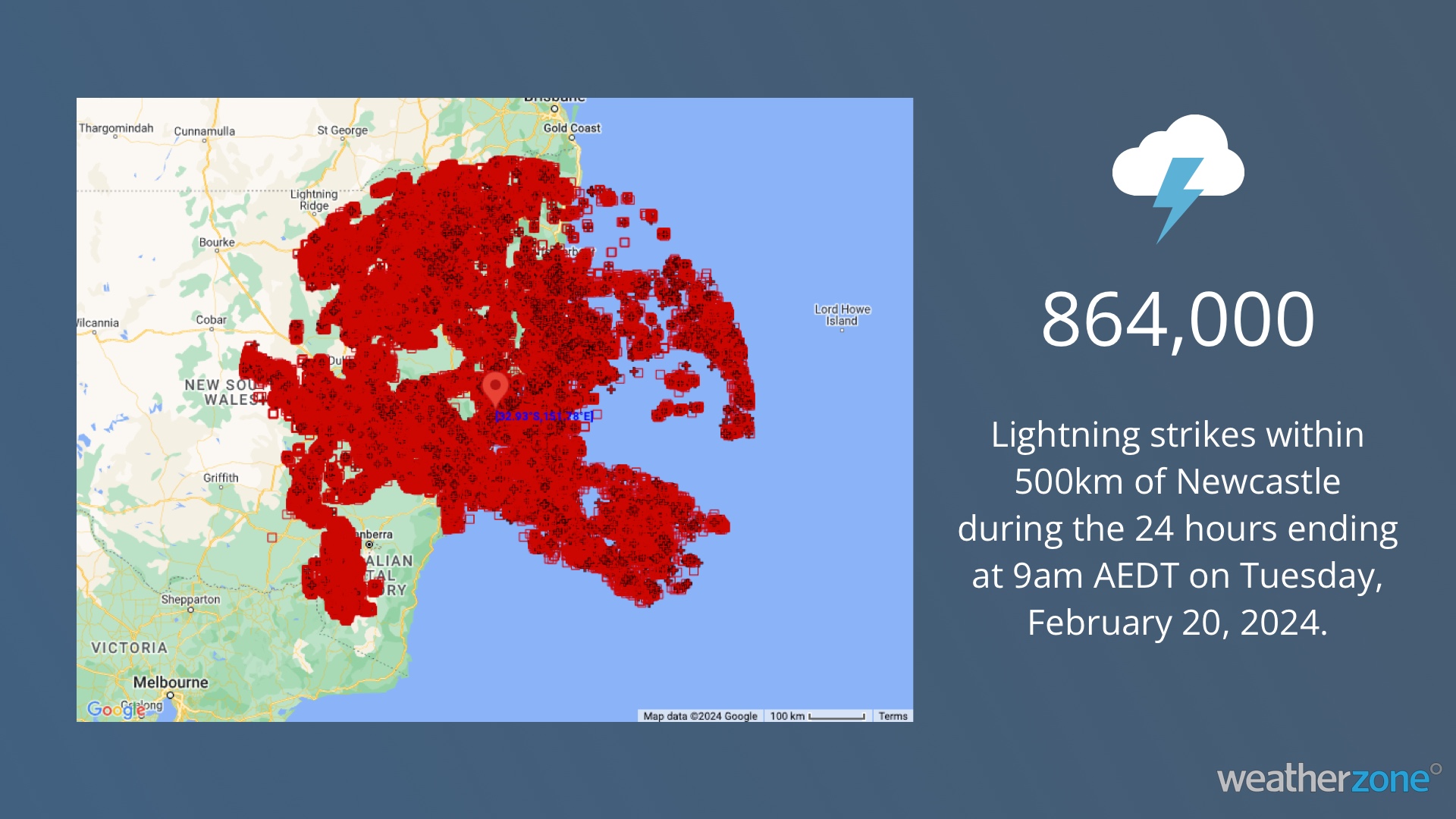
Total Lightning Network detected 864,000 lightning strikes within a 500 km radius of Newcastle between 9am on Monday and 9am on Tuesday. These included strikes over Sydney, and as far north and south as the Vic and Qld borders.
Rainfall totals of around 40 to 80 mm were recorded in the last 24 hours from Sydney up to southeast Qld, with falls of 20 to 40 mm also seen in a few places on the western side of the ranges in northern NSW.

Sydney Airport’s 39 mm in the 24 hours to 9am on Tuesday was its heaviest rain in two months, while Kings Langley and Little Bay both saw more than 50 mm in this period.

While Monday was the peak of this storm outbreak for many areas of NSW, a coastal trough will continue to generate showers and thunderstorms in the state’s east on Tuesday. The most likely areas to see more storms on Tuesday are the central and northern coast and ranges. Some storms could also develop over the southern ranges in NSW and extend across the border into eastern Vic.
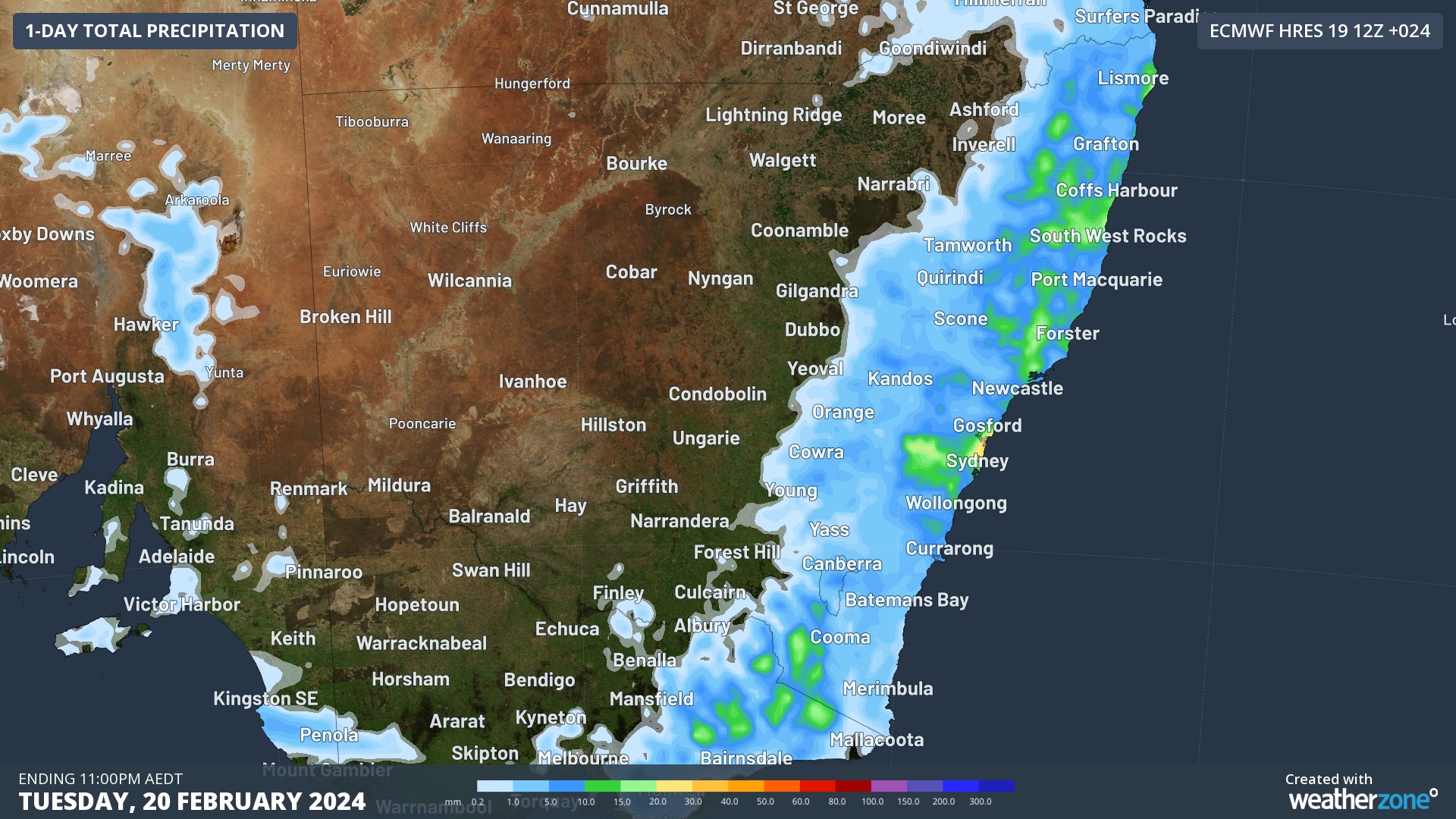
Image: Forecast accumulated rain on Tuesday, February 20, according to the ECMWF-HRES model.

Tuesday’s thunderstorms have an increased risk of heavy rain and flash flooding, due to their slow movement in weak steering winds. If severe storms do form, you can check the latest severe thunderstorm warnings for the most up-to-date information. For more information on our thunderstorm services, please contact us at apac.sales@dtn.com


Latest news

Satisfy your weather obsession with these news headlines from around the nation, and the world.

Signs of a positive Indian Ocean Dipole, but it may not follow the textbook

Waters off Indonesia have cooled in recent weeks, an indication that a positive Indian Ocean Dipole (IOD) event could be developing. It’s an important climate driver for Australia, and it could shape rainfall and temperatures heading into summer, with flow-on effects for farmers, energy and other industries.  What is the Indian Ocean Dipole?  The IOD […]

1.3 million lightning strikes and a record September downpour: the storms testing WA’s Goldfields

Leonora, WA, had its wettest September day on record earlier this month. Three weeks later, more than 1.3 million lightning pulses were detected within 800 km of the town in 48 hours. Why is a stalled trough delivering storms to mining country, and what it could mean for operations?  The DTN Total Lightning Network detected […]

A very low wind power week, likely to continue

A stubborn blocking high over southern Australia will make for a very quiet week for wind generation and the pattern behind it isn’t a one-off.   It’s the seasonal signature of a super (very strong) El Niño combined with a positive Southern Annular Mode (SAM), and both the historical record and the current seasonal forecast suggest it’s likely to keep recurring through spring before a potential switch from November.  The setup right […]

Fastest strengthening El Niño on record: Impacts on Australian monsoon timing and wet season planning

Australia’s Mining and Resources sectors are bracing for a wet season shaped by one of the most rapidly developing El Niño events on record.    Looking back at how the strongest El Niño events in Australian history have played out, it becomes apparent that mining operations in Australia should be planning for a later monsoon […]

