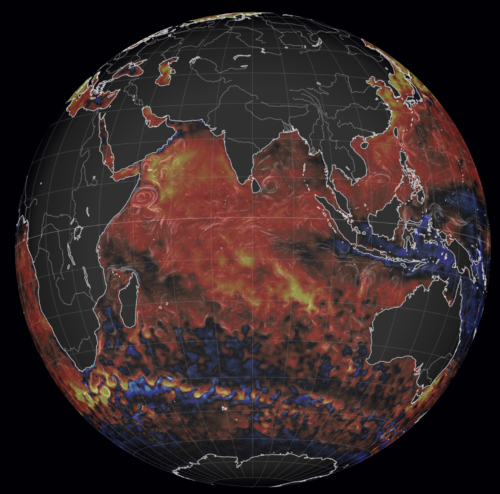
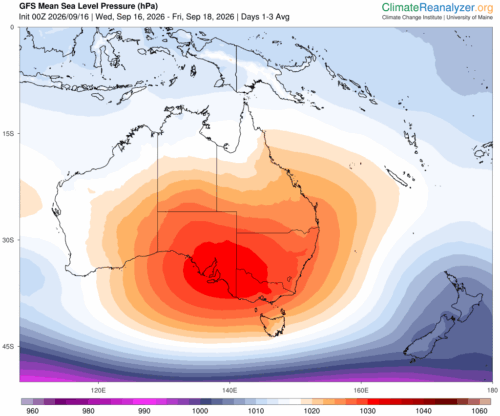
Winter in Australia was warmer than usual across Australia, with all states and territories recording a mean temperature above the historical average.*
Here’s a rundown of mean winter temperatures across the country, as compared to the historical average. (Please note that the ACT is not included as it has too few weather stations to create a meaningful average.)
- Australia as a whole +0.36°C
- WA +0.65°C
- NSW + 0.38°C
- Vic +0.37°C
- Tas +0.33°C
- Qld +0.30°C
- NT +0.08°C
- SA +0.07°C
In terms of rainfall, Australia as a whole was pretty close to average, with just 4% more rainfall than usual overall. However, there were significant variations between the states:
- Queensland (+55%) and the Northern Territory (+48%) experienced much heavier rainfall than normal.
- South Australia (-34%) and Western Australia (-13%) experienced notable deficiencies.
- The other states were very close to average.
So what’s in store for spring?
Weatherzone meteorologist Ashleigh Lange answered that question for you on the first day of the month yesterday in this story. If you don’t have time to read it, perhaps the key line was this:
“With three major climate drivers at play this spring, moisture-laden air will stream towards Australia from the Indian Ocean, Pacific Ocean and the Tasman and Coral Seas, likely enhancing rainfall across large areas of the country.”
Clarification of historical averages*
The historical average is currently set during the 30-year period between 1961 and 1990. As the BoM explains:
“This 30-year period is the most recent standard reference period as defined by the World Meteorological Organisation (WMO). The WMO describes ‘standard reference periods’ for use by the international community in order to maintain consistency in the calculation of climate statistics across the world.
This allows climate statistics from different countries to be compared and analysed. The standard reference period is commonly used in our climate maps, climate statistics and is the base period for most climate change studies. The next standard reference period will be 1991 to 2020.” For more information on our climate forecasts, please contact us at apac.sales@dtn.com.