
Prosper in a dynamic world
Search

Tonight will be Australia’s longest night of the year

The Southern Hemisphere’s winter solstice will occur tonight, making it the longest night of the year across Australia.

The winter solstice marks the moment the Southern Hemisphere reaches its furthest tilt away from the sun, as the northern Hemisphere reaches its closest tilt towards the sun.
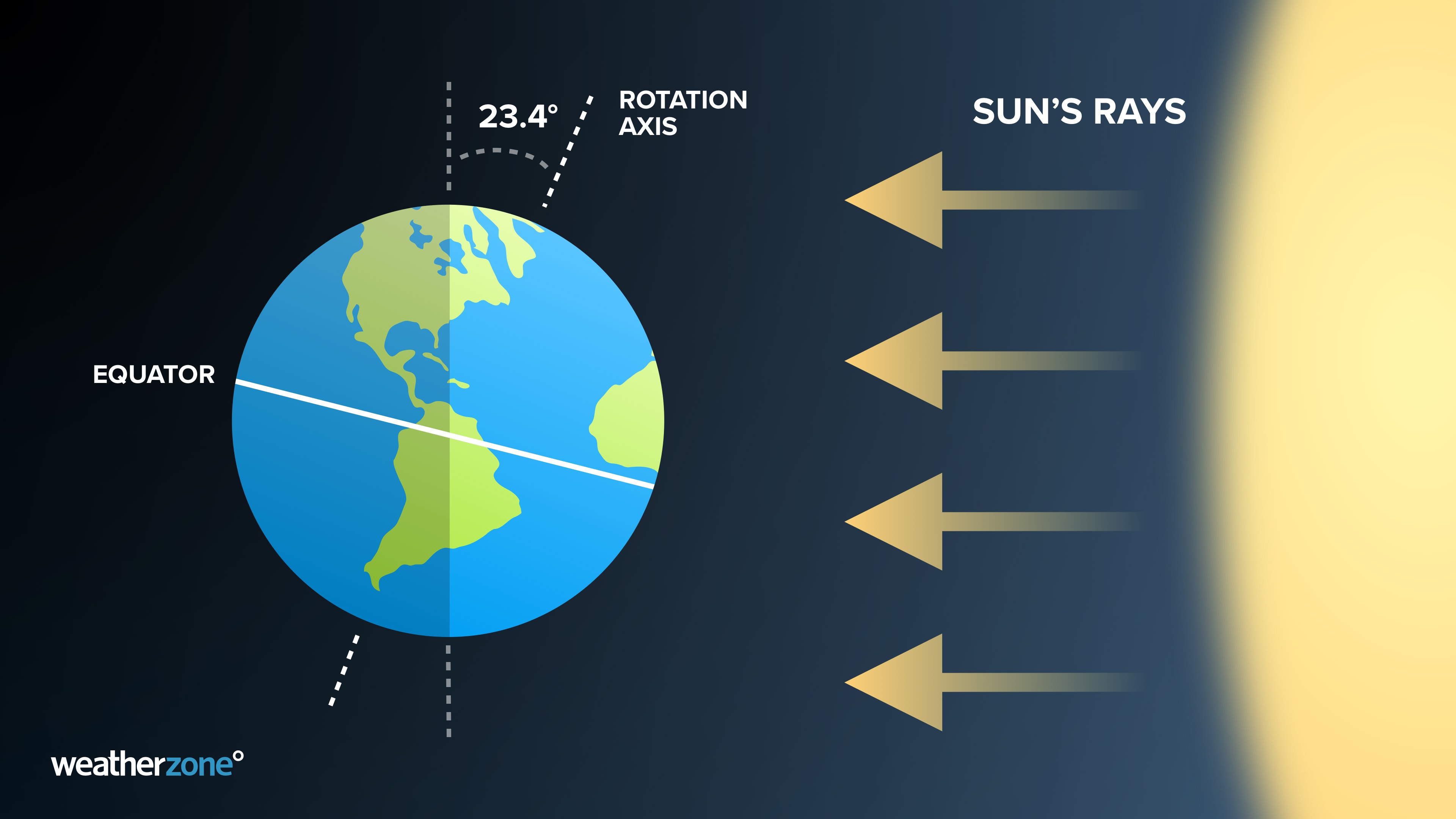
Image: Earth’s orientation, relative to the Sun, on the Southern Hemisphere’s winter solstice.

The orientation of Earth relative to the sun means that Australia experiences its longest night (based on darkness) and shortest day (based on daylight) of the year around the date of the winter solstice.

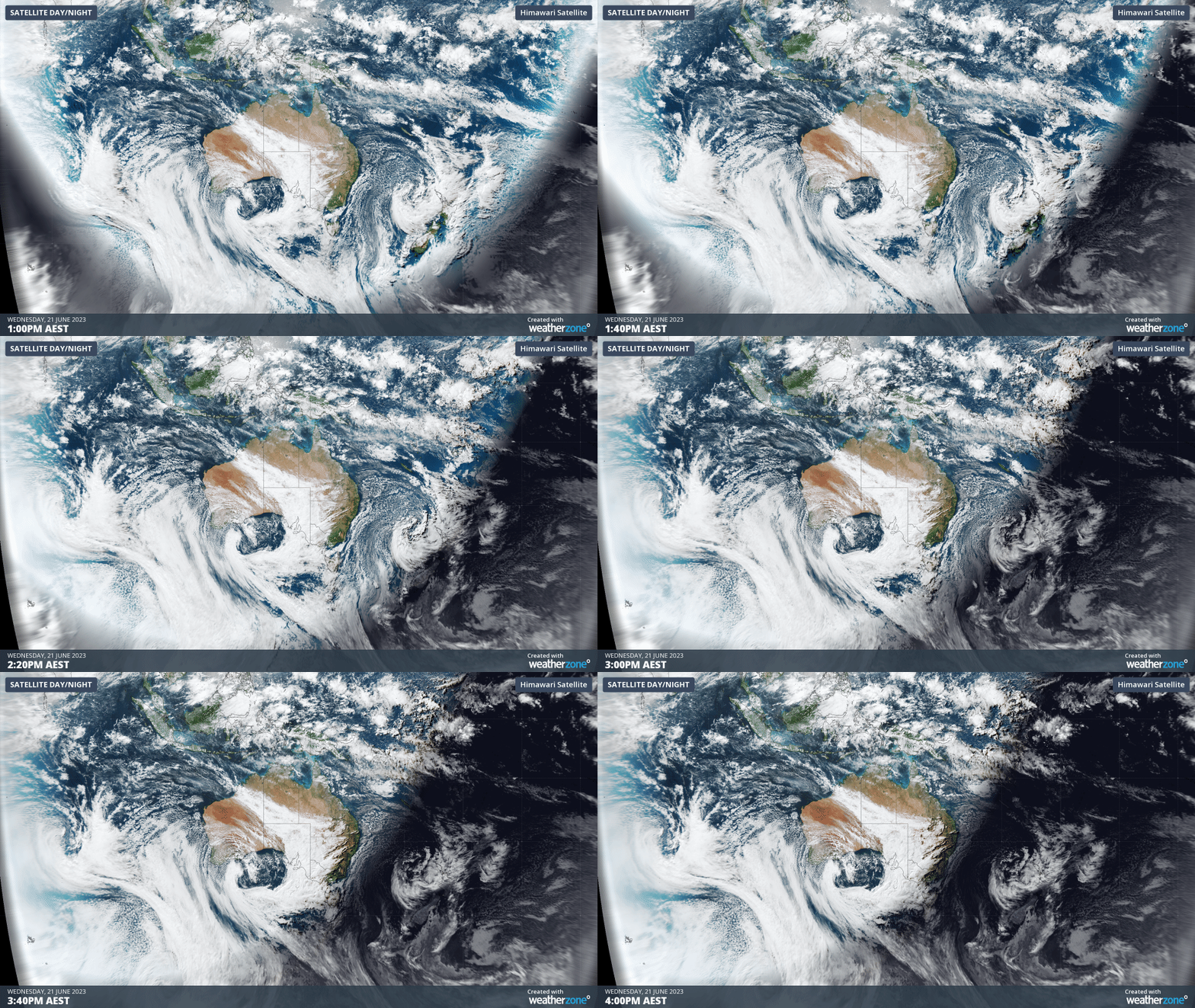
The image below shows the view of Earth’s surface as seen by the Himawari-9 satellite at 12:50 pm AEST on June 21. While this Mercator projection of the Earth’s surface distorts the extreme northern and southern areas of the planet, it shows how the Northern Hemisphere is currently exposed to more sunlight than the Southern Hemisphere.
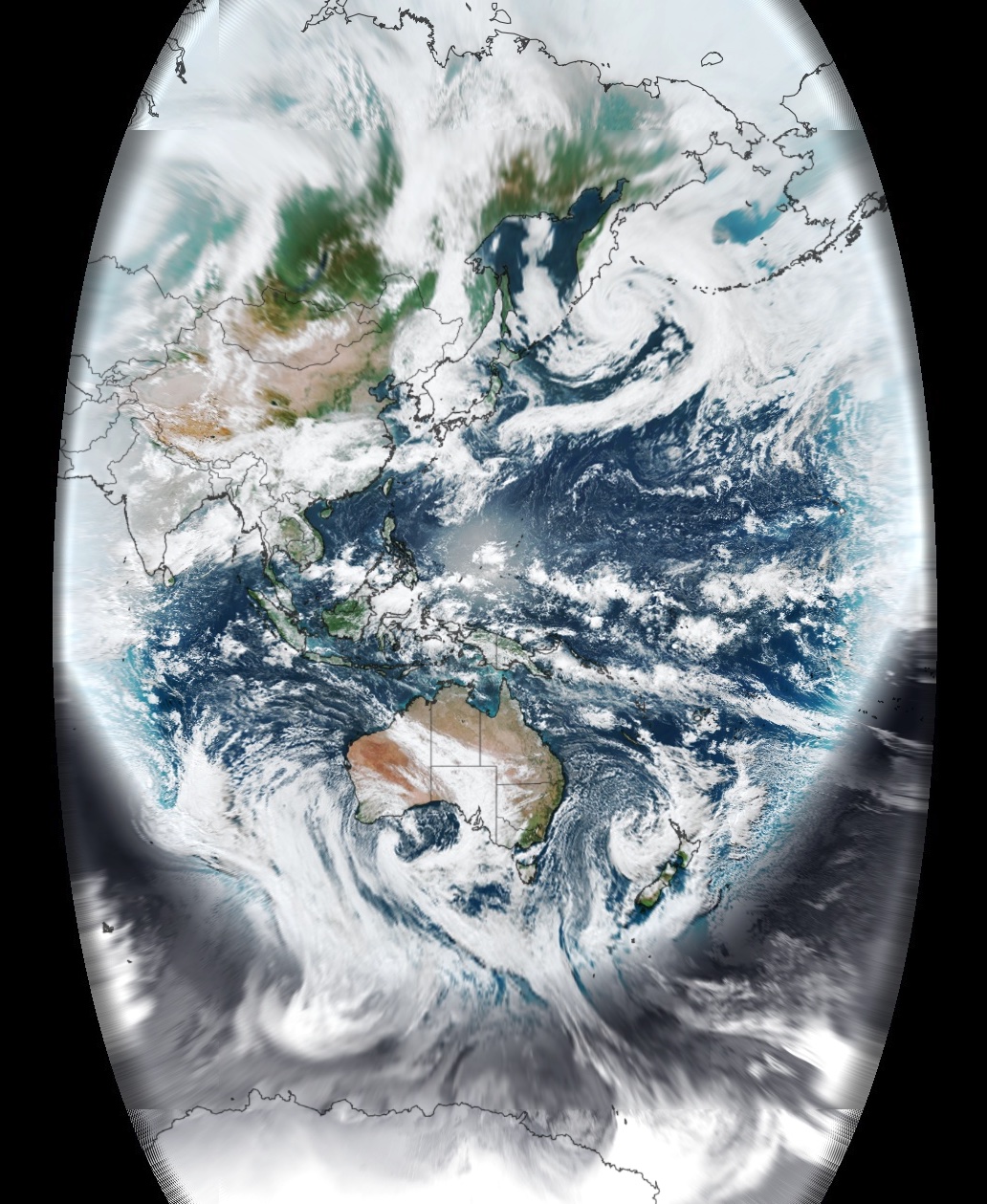
Image: Mercator projection of Earth showing a visible true colour satellite image captured by the Himawari-9 satellite at 12:50 pm AEST on June 21, 2023.

The image above also shows that Antarctica is locked in 24 hours of darkness per day at this time of year.

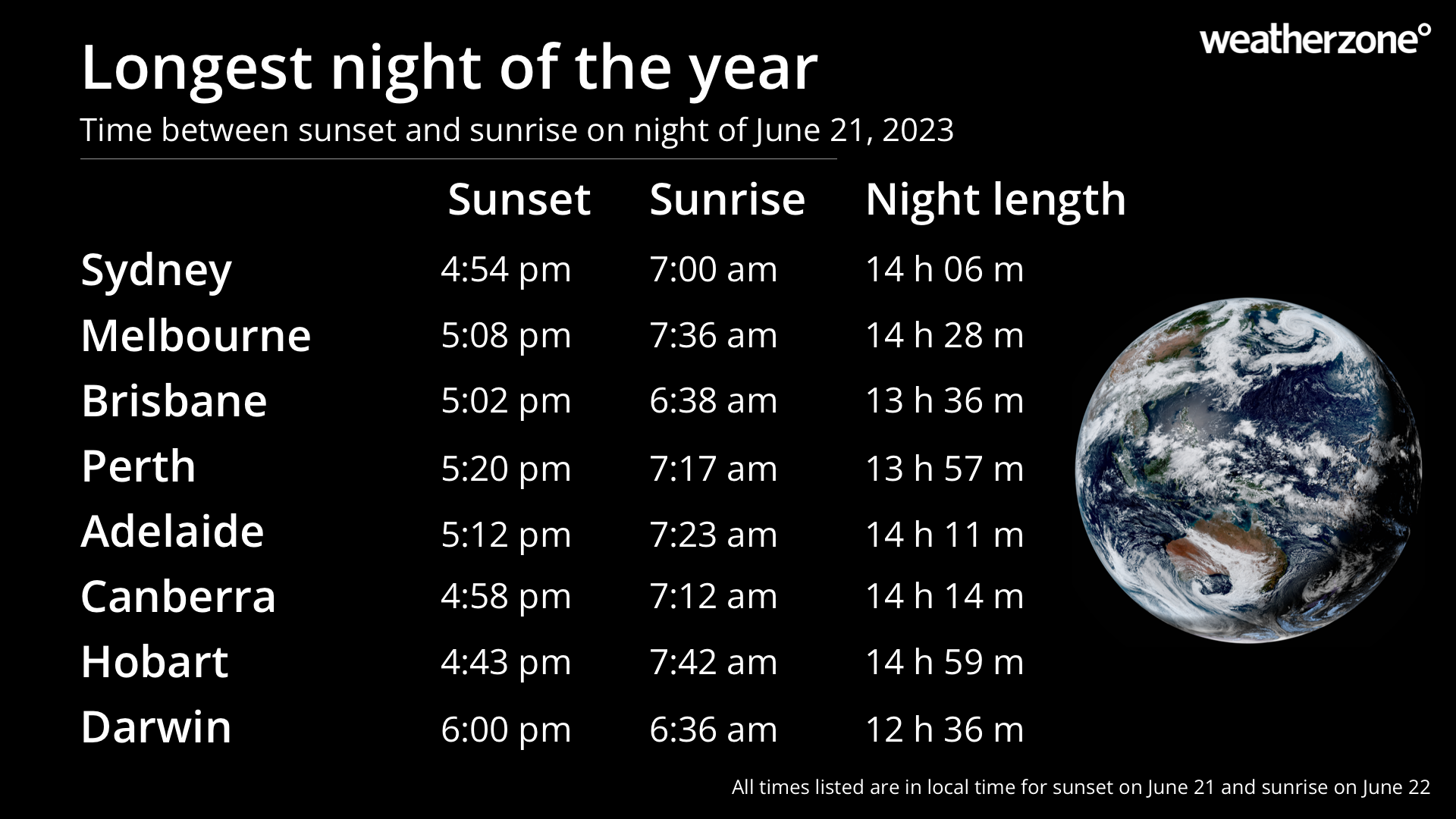
For Australia’s state capital cities, the length of time between sunset on June 21 and sunrise on June 22 will range from 12 hours and 36 minutes in Darwin to 14 hours and 59 minutes in Hobart.
The winter solstice will occur at 12:58 am AEST on June 22. Following tonight’s solstice, nights will start to get shorter, and days will become longer across Australia for the next 6 months.


Latest news

Satisfy your weather obsession with these news headlines from around the nation, and the world.

How does DTN help businesses monitor bushfire induced pyrocumulonimbus thunderstorms that ignite more fires?

Intense heat from bushfires during elevated fire danger days can trigger fire-induced pyrocumulonimbus thunderstorms that ignite additional fires. In early January 2026, an extreme heatwave sweeping over southeastern Australia brought catastrophic fire danger to Victoria. Intensely hot bush and grass fires spread erratically and quickly in hot, dry and gusty winds, with pyrocumulonimbus generating lightning, […]

Active seas to the north and east of Australia disrupting port and maritime operations

Seas to the north and east of Australia are experiencing periods of increased activity this week, leading to disruptions to port, maritime and offshore operations. Intense and hazardous Tasman Sea Ocean conditions across NSW’s South Coast rapidly deteriorated last Friday as a deep feed of easterly winds whipped up large and dangerous seas. The Batemans […]

Transport, emergency and energy industries flooded across Greater Sydney with weekend deluges

Transport, emergency, energy and port industries in eastern NSW and Sydney were impacted by significant flash flooding with intense and heavy rainfall this weekend. Rainfall rates between 80 and 140mm in one to three hours were registered across parts of Sydney’s Northern Beaches and Central Coast on Saturday afternoon and evening. In some areas, these […]

DTN Dangerous Thunderstorm Alerts in action with severe thunderstorms disrupting Perth industries

Severe thunderstorms impacted southwest WA and the Perth region on Sunday, December 14, 2025, triggering Dangerous Thunderstorm Alerts (DTA) by DTN for industries and businesses in the region. DTN operates Dangerous Thunderstorm Alerts (DTA) which alert businesses and industries to thunderstorms based on intensity and movement. These alerts provide advanced notice of thunderstorms moving into […]

