
Prosper in a dynamic world
Search

Storms barrel towards three capital cities

Severe storms have ripped through Melbourne and Canberra on Thursday morning, delivering brief but heavy downpours in many suburbs, with the strong chance of more to come in both cities, as well as Sydney.

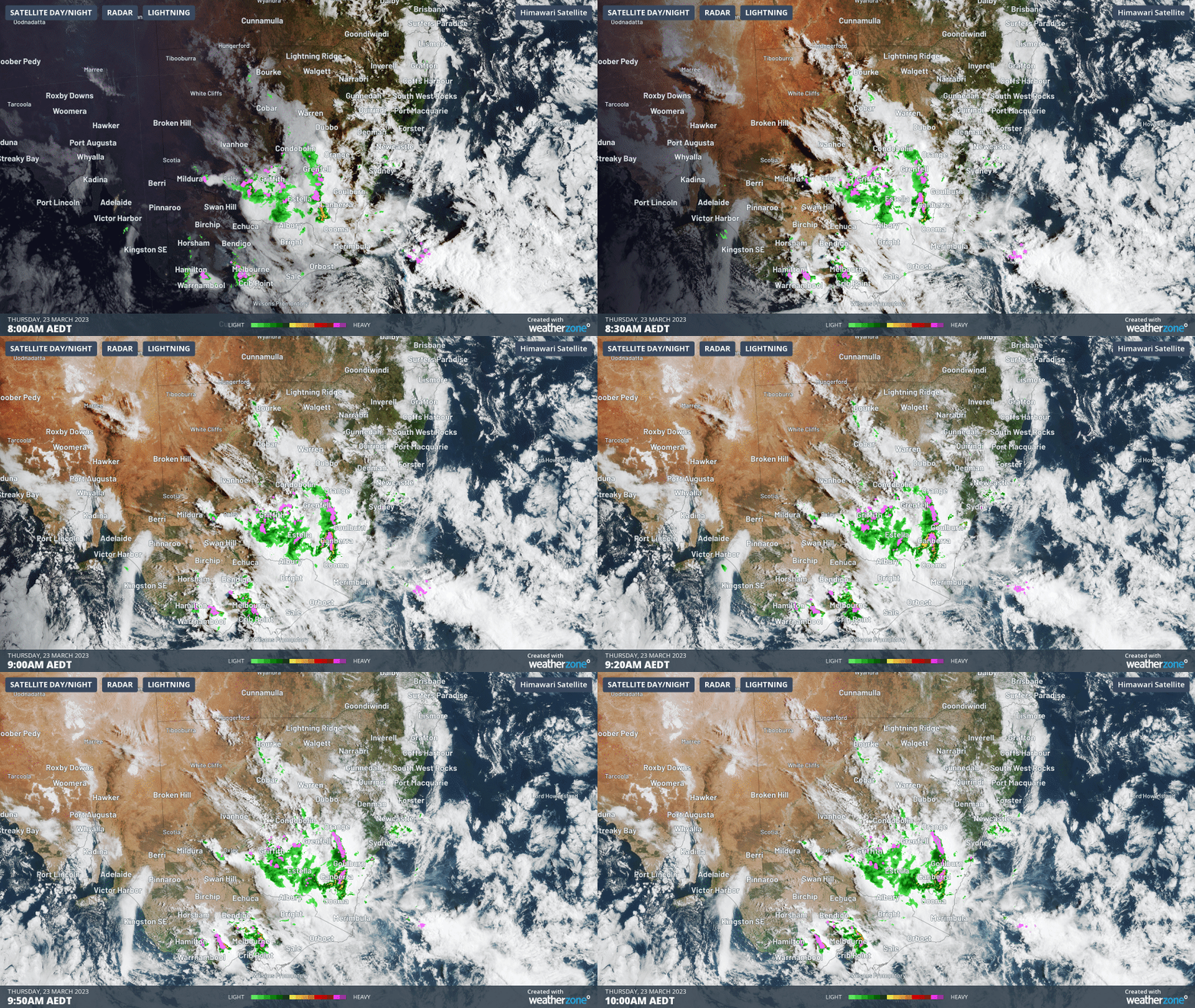
The storms in Canberra and Melbourne struck just after 9 am, as you can see on the radar loop below which covers the period between 8 am and 10 am Thursday.
The timing meant that commuters weren’t too badly affected, however as mentioned, we haven’t seen the last of the storm activity for the day.

The BoM has issued numerous warnings, the latest being a severe thunderstorm warning for the Melbourne area at 9:53 am Thursday, noting that the first severe thunderstorm has cleared to the east of the metro area, but another storm is approaching the Ballarat area and may become severe.

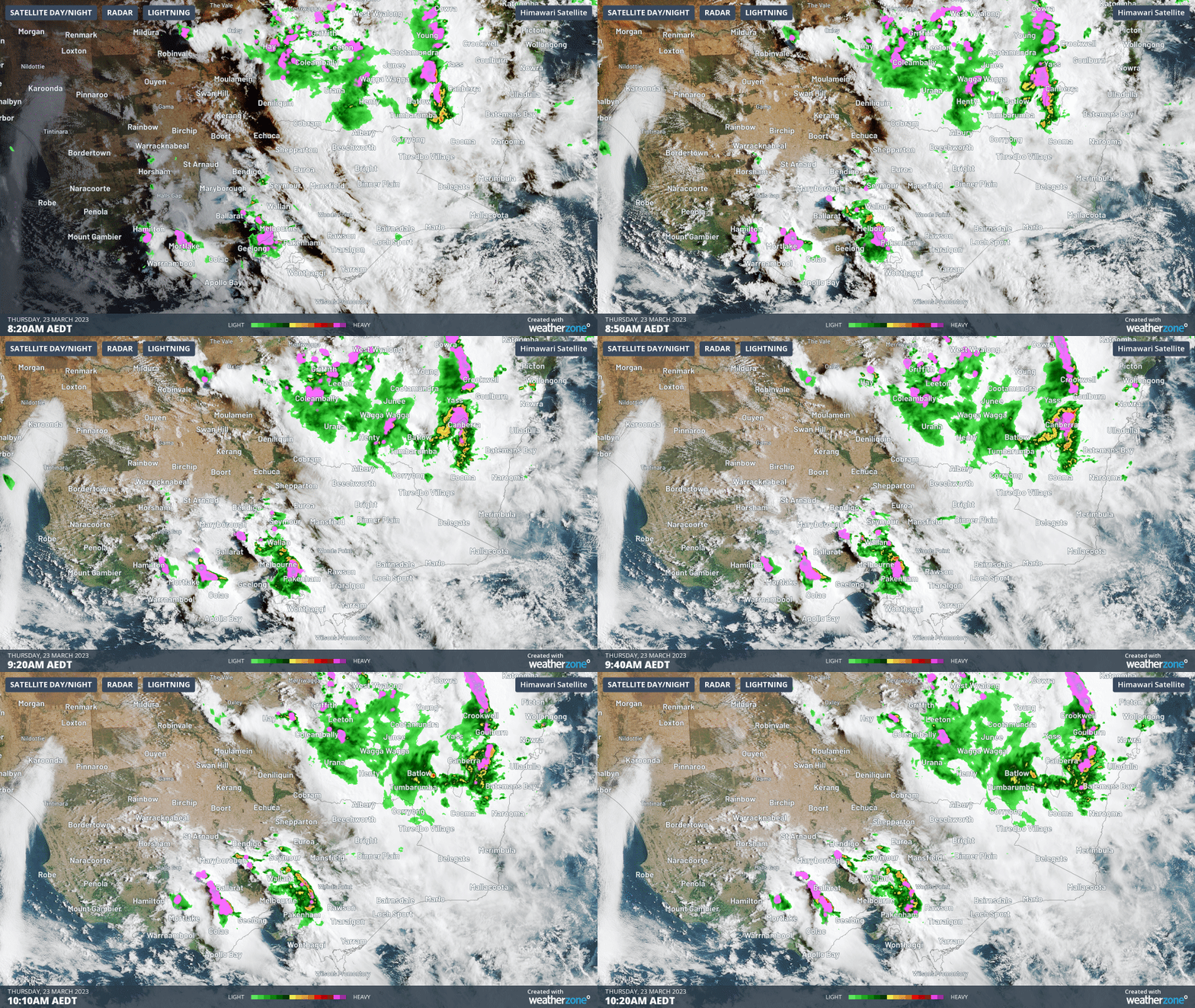
You can see that next storm marching through Ballarat in the general direction of Melbourne in the two-hour loop below, which shows the radar from 8:30 am to 10:30 am.

At the top of the loop, you can also see the storm that hit Canberra heading eastwards with bands north of it heading towards the greater Sydney metro area.
How much rain has fallen in this morning’s storms?

We wrote on Wednesday that the city and most suburbs of Melbourne only saw a millimetre or so of rainfall on a night when much heavier rain fell further north.

The city of Melbourne has again only seen 1.4 mm in Thursday’s first storm, while up to 15 mm fell in the outer eastern suburbs. These totals may well increase in coming hours as the next band of storms approaches.

Meanwhile Canberra has received a total of 15.4 mm on Thursday morning as we write this story, and that tally also seems likely to increase with another band approaching the national capital.

To find out bout DTN APAC and its weather forecasts and alerting services, please visit our website or email us at apac.sales@dtn.com.


Latest news

Satisfy your weather obsession with these news headlines from around the nation, and the world.

Habagat and successive typhoons trigger widespread flooding in the Philippines

Three consecutive weeks of enhanced southwest monsoon (Habagat) and back-to-back typhoons have flooded Luzon and the Visayas, grounding flights, triggering distribution power outages, cutting off transport corridors, and raising landslide risk across mining-dense provinces like Benguet and the Cordillera. The disruption is far from over with PAGASA expecting the monsoon to remain in place until […]

Australia’s Spring 2026 Bushfire Outlook: Increased Risk Across Seven States and Territories

Fire agencies, land managers and businesses are being urged to prepare as the AFAC spring seasonal bushfire outlook, released on August 19, 2026, warns of elevated bushfire risk across Australia this season. The outlook identifies above-average fire danger across seven states and territories, with conditions driven by a combination of elevated fuel loads, an El Niño […]

Businesses under pressure: how this powerful high will affect Australian industries

A very strong high pressure system centred over Tasmania will impact southern and eastern Australia’s weather over the coming days. How strong is this high pressure system? Mean Sea Level Pressure (MSLP) has already reached 1039.3 hPa at Ouse, Tasmania on Sunday morning, and is forecast to peak at 1041 or 1042 hPa on Monday […]

Northwest Cloudband looms despite sunny and dry outlook

A thick cloudband will stretch thousands of kilometres next week from the warm tropical waters off northwest Australia to southeastern Australia, bringing rain and low solar output despite a sunny, dry seasonal outlook.   The cloudy week may come as a surprise given the warm, dry, and sunny climate drivers currently in play – a very strong El Niño and a […]

