Prosper in a dynamic world
Search

Satellites capture cloud streets near Queensland


A spectacular display of cloud streets formed over the Coral Sea on Thursday morning as cold air drained off Queensland’s east coast.

A large high pressure system centered over southern Australia this week has been driving cold southwesterly winds across NSW and Queensland.

On Wednesday, maximum temperatures were around 1 to 6ºC below average across most of Queensland, with Appletohrpe only reaching a top of 9.9ºC in the afternoon. This was followed by a chilly night that saw the mercury drop to 10.4ºC at Cairns Airport, its lowest temperature in two years.

After sending shivers across Queensland on Wednesday, the stream of cold and dry air then flowed off Queensland’s east coast and spread over the Coral Sea on Wednesday night into Thursday morning.

The passage of cold and dry air from Queensland over much warmer water in the Coral Sea created a unique type of cloud formation called ‘cloud streets’.

Cloud streets are long parallel bands of cumulus cloud that form when cold air passes over relatively warm water. This interaction causes columns of heated, moisture-laden air, which rise and form thin bands of clouds.

As you can see in the satellite image below, Thursday morning’s cloud streets started forming around 200 km offshore. This is because it took a while for the air flowing off Queensland to pick up enough moisture from the Coral Sea.
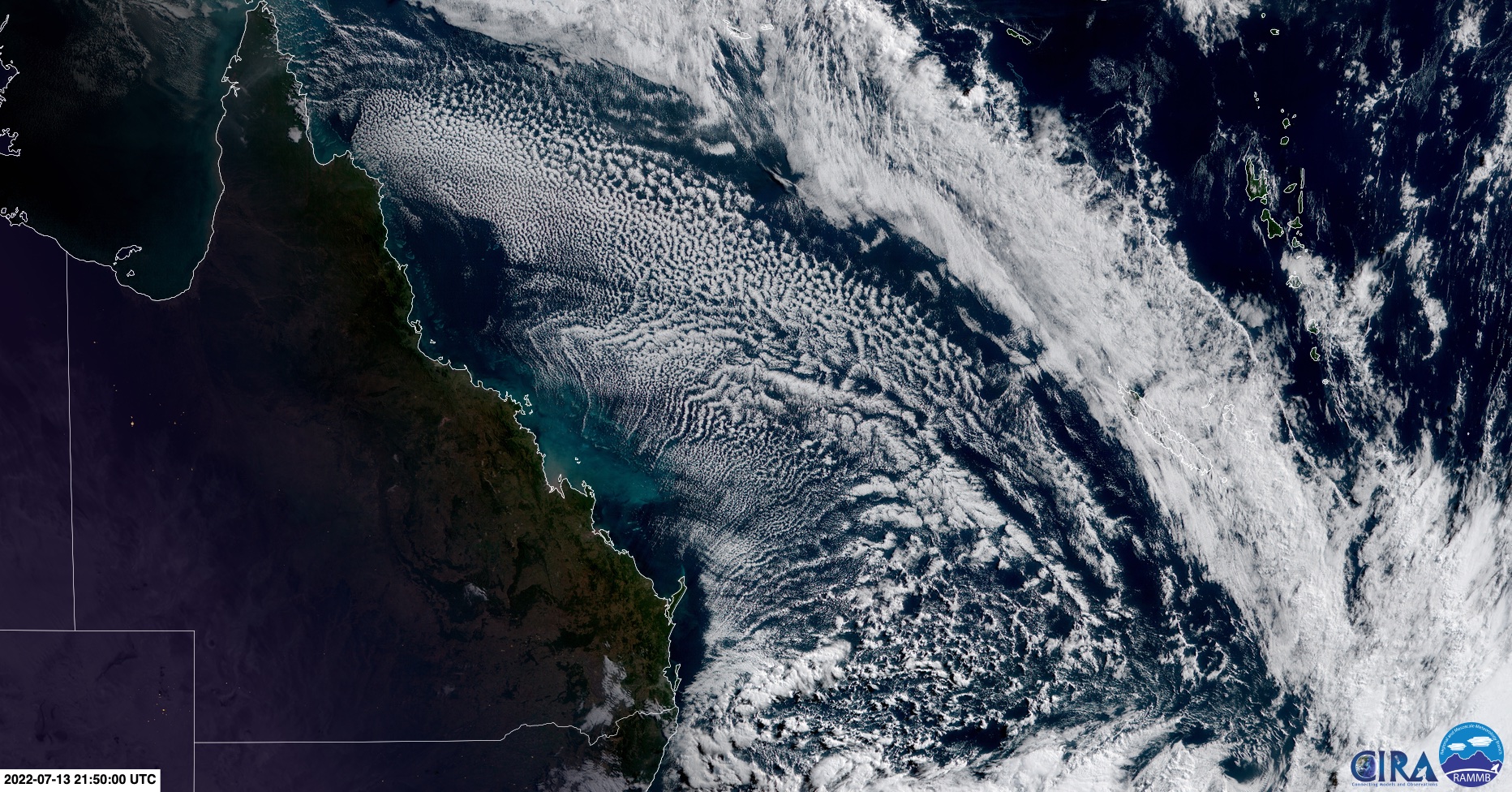
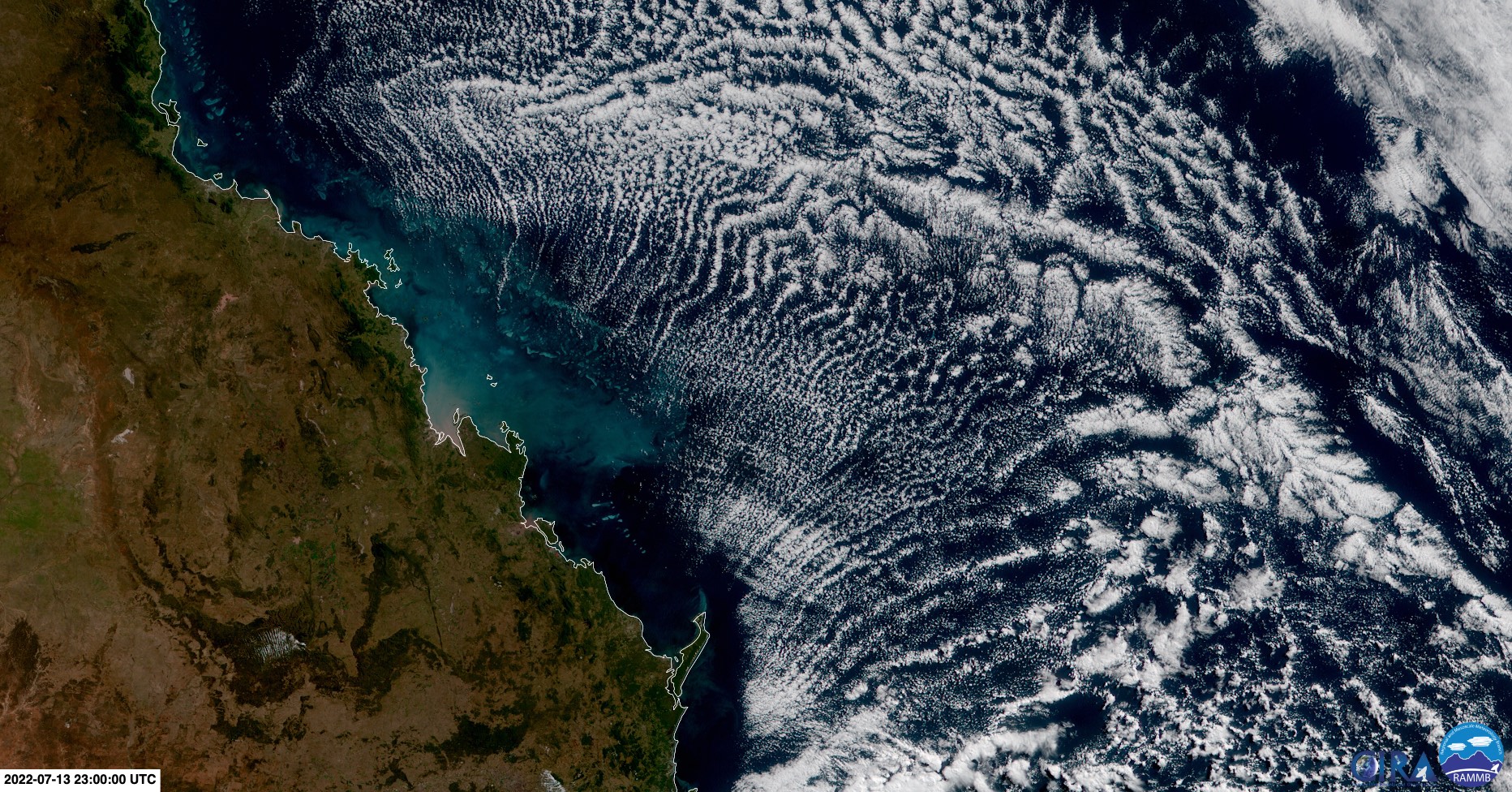
Images: Visible true-colour images from the Himiwari-8 satellite on Thursday morning. Source: RAMMB/CIRA

Cloud streets also happen in other parts of the world, with NASA capturing a similar display off the east coast of the United States in November 2019.
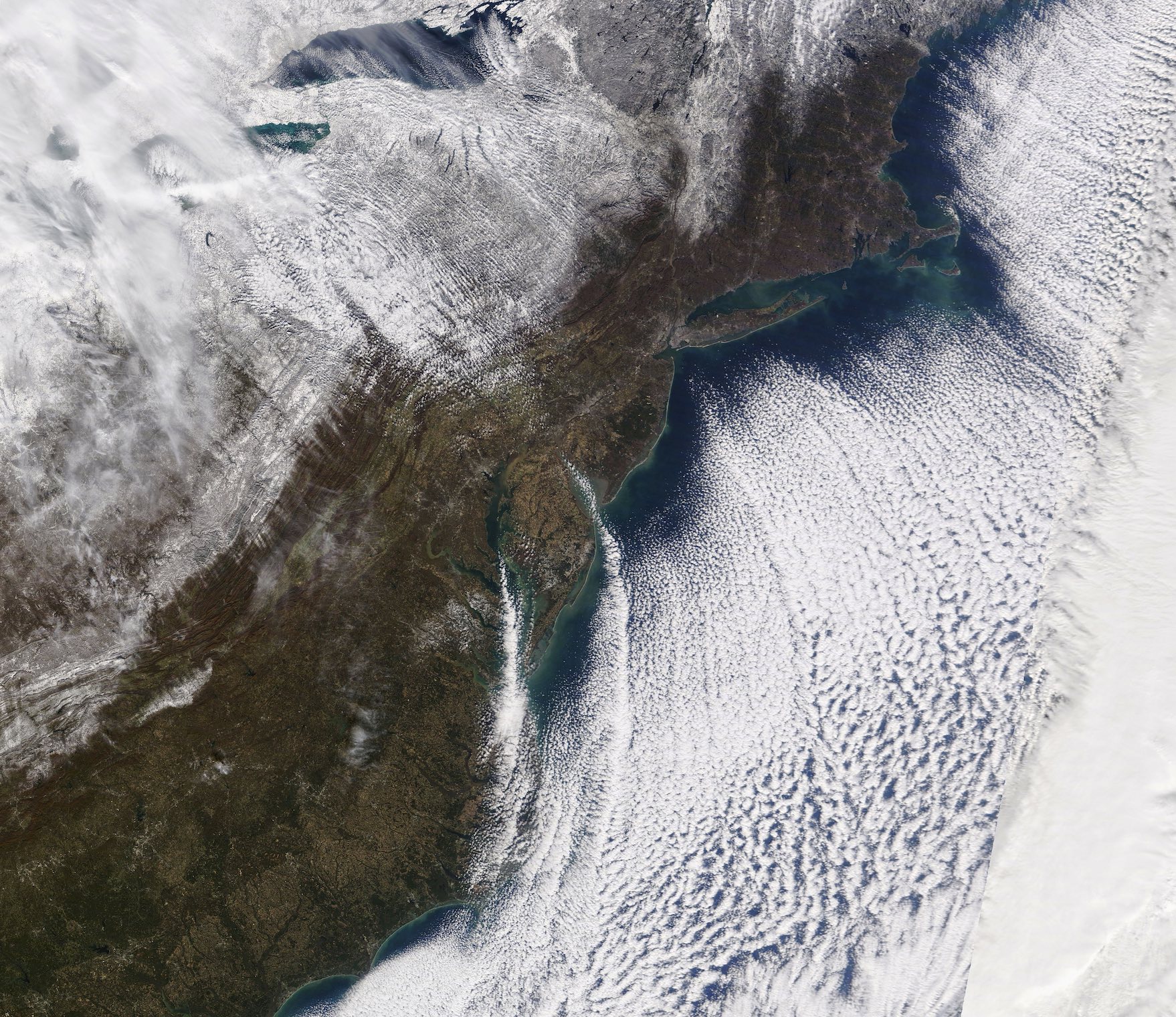
Image: Satellite image showing cloud streets forming off the east coast of the United States in November 2019, along with snow-covered ground in the top-right third of the picture. Source: NASA

Latest news

Satisfy your weather obsession with these news headlines from around the nation, and the world.

DTN Dangerous Thunderstorm Alerts in action with severe thunderstorms disrupting Perth industries

Severe thunderstorms impacted southwest WA and the Perth region on Sunday, December 14, 2025, triggering Dangerous Thunderstorm Alerts (DTA) by DTN for industries and businesses in the region. DTN operates Dangerous Thunderstorm Alerts (DTA) which alert businesses and industries to thunderstorms based on intensity and movement. These alerts provide advanced notice of thunderstorms moving into […]

How Australian East Coast port and maritime operations could be disrupted by tropical cyclones over the next two weeks

Port and maritime operations across Australia’s East Coast could be disrupted by increased tropical cyclone activity in the Coral Sea and southwest Pacific Ocean over the next two weeks. Meteorologists reference a large selection of Numerical Weather Prediction (NWP) models to forecast weather. A number of these NWP models are forecasting the development of tropical […]

Extreme fire danger and severe heatwave conditions spreading across SA, Victoria and NSW

Hot, dry and windy weather causing elevated fire danger and severe heatwave conditions are sweeping across southeastern Australia over the next three days, driving high energy demand and disruption to operations. Clear skies associated a large and slow-moving high pressure system have allowed hot air to build up over parts of northern, western and central […]

Heightened bushfire risk during the 2025-26 summer for WA, Victoria and NSW in latest AFAC Outlook

The Australian and New Zealand Council for fire and emergency services (AFAC) identified western and southern WA, Victoria and inland NSW as key regions that are at risk of heightened bushfire risk this summer. Parts of Australia have experienced severe soil moisture and rainfall deficiencies over the past months and years, while high fuel loads […]