
Prosper in a dynamic world
Search

Records tumble in NSW and the ACT

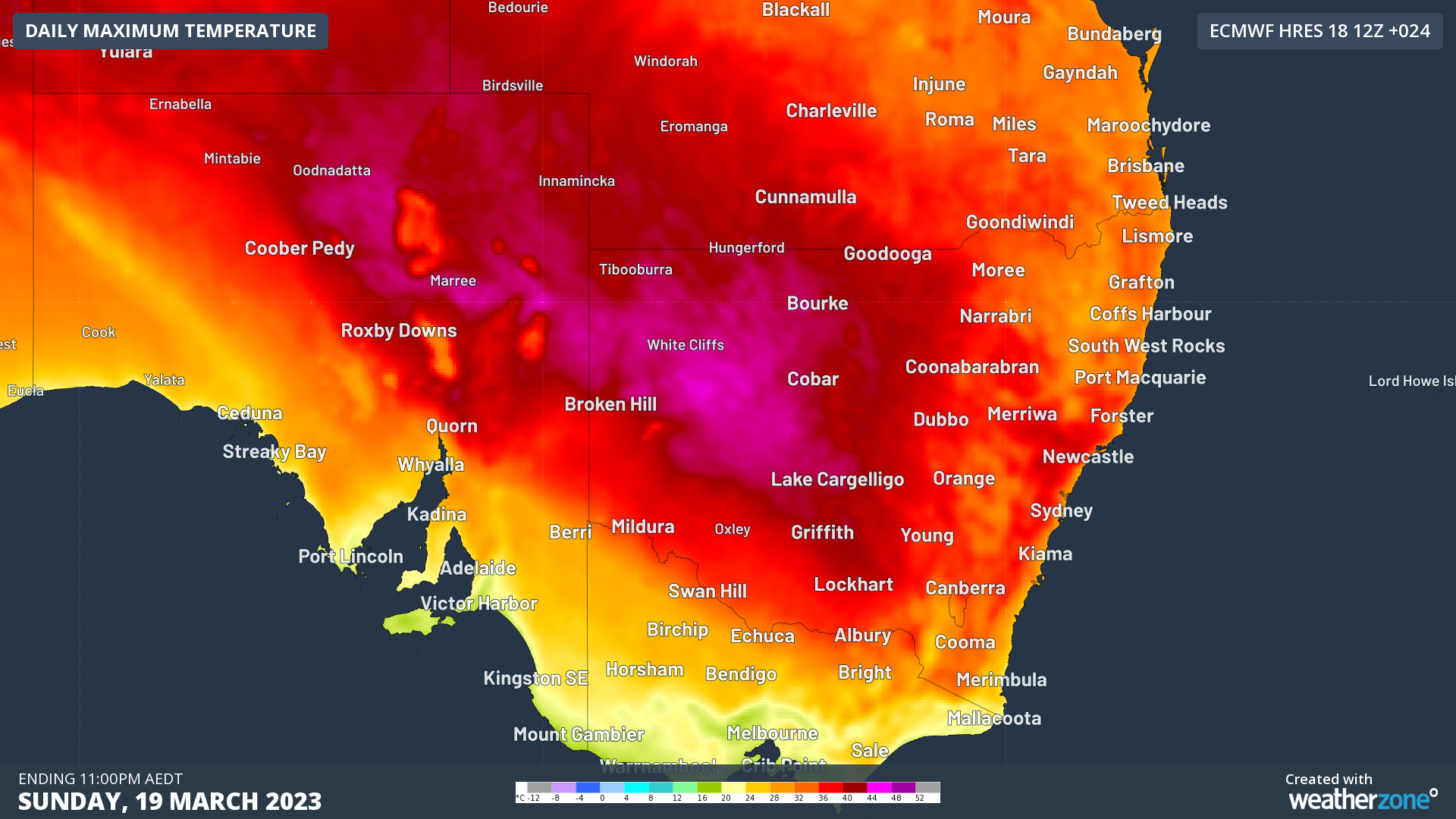
March records have tumbled in NSW and the ACT as the state sees an unusually late and widespread burst of extreme heat.

Both Forbes (40.7°C) and Wagga Wagga (39.9°C) have had their hottest March day in 83 years, with Bathurst (36.6°C) having their hottest March day in 81 years. Orange (34.5°C) had their hottest March day in 58 years. 

Some places even managed to bust long-standing records for their hottest March in history:

  • Katoomba (34.8ºC) with records available back to 1957
  • Mount Boyce (34.2°C) with a 33-year history 
  • Mudgee (38.3ºC) with 62 years of records
  • Moss Vale (37.0°C) with combined records at Moss Vale and Bowral dating back to 1962
  • Goulburn (37.6°C) with records back to 1962

The nation’s capital Canberra reached 37.4°C at 3:45pm, its hottest March day in 25 years. This is only 0.1 degrees off matching the long-term record of 37.5°C set in 1998 with records stretching back to 1939.
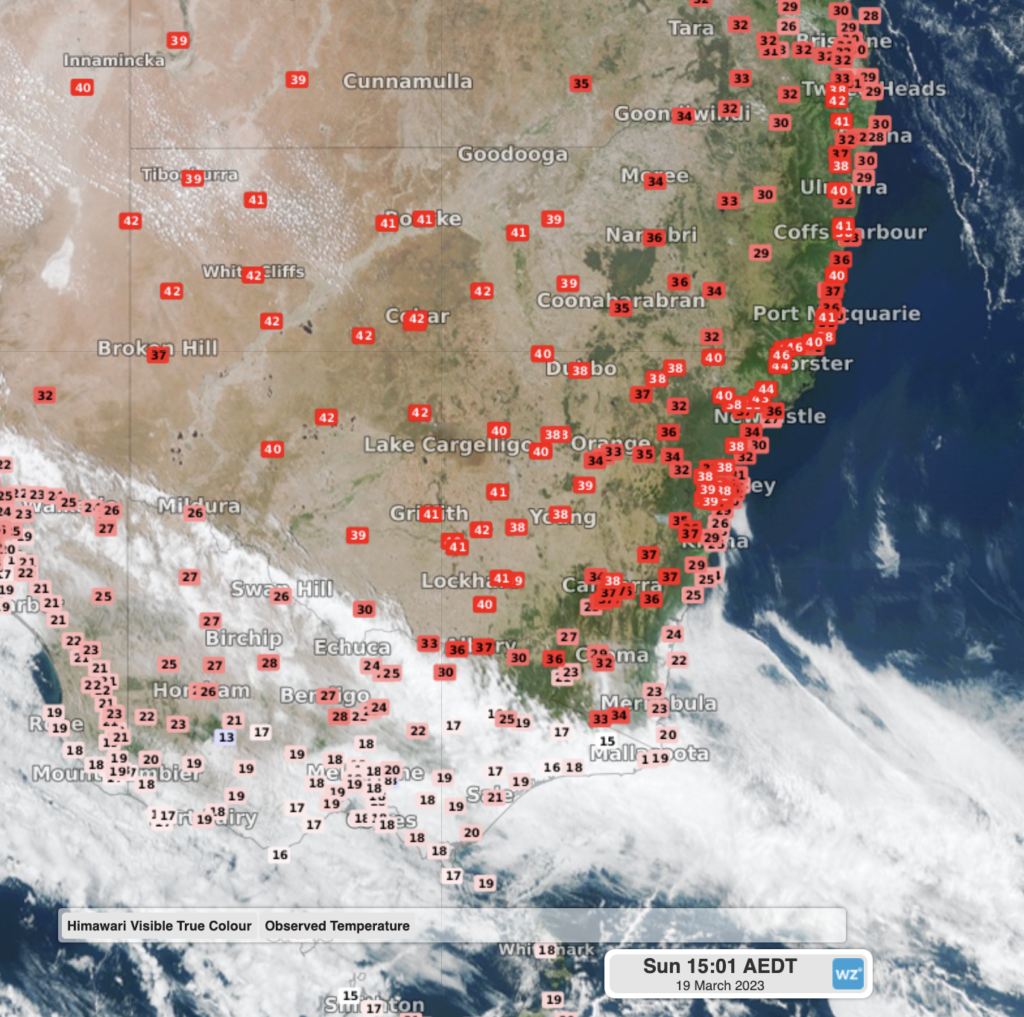
Image: Satellite image and observed temperatures over NSW at 3pm AEDT

This heat has been brought from the country’s interior and northern WA by a pair of slow-moving troughs over the last few days. The cold front that crossed SA, Victoria and Tasmania on Saturday now is pushing up over southern parts of NSW, bringing some welcome relief.

To find out about Weatherzones temperature and heatwave forecasts, visit our website or email us at apac.sales@dtn.com.


Latest news

Satisfy your weather obsession with these news headlines from around the nation, and the world.

Signs of a positive Indian Ocean Dipole, but it may not follow the textbook

Waters off Indonesia have cooled in recent weeks, an indication that a positive Indian Ocean Dipole (IOD) event could be developing. It’s an important climate driver for Australia, and it could shape rainfall and temperatures heading into summer, with flow-on effects for farmers, energy and other industries.  What is the Indian Ocean Dipole?  The IOD […]

1.3 million lightning strikes and a record September downpour: the storms testing WA’s Goldfields

Leonora, WA, had its wettest September day on record earlier this month. Three weeks later, more than 1.3 million lightning pulses were detected within 800 km of the town in 48 hours. Why is a stalled trough delivering storms to mining country, and what it could mean for operations?  The DTN Total Lightning Network detected […]

A very low wind power week, likely to continue

A stubborn blocking high over southern Australia will make for a very quiet week for wind generation and the pattern behind it isn’t a one-off.   It’s the seasonal signature of a super (very strong) El Niño combined with a positive Southern Annular Mode (SAM), and both the historical record and the current seasonal forecast suggest it’s likely to keep recurring through spring before a potential switch from November.  The setup right […]

Fastest strengthening El Niño on record: Impacts on Australian monsoon timing and wet season planning

Australia’s Mining and Resources sectors are bracing for a wet season shaped by one of the most rapidly developing El Niño events on record.    Looking back at how the strongest El Niño events in Australian history have played out, it becomes apparent that mining operations in Australia should be planning for a later monsoon […]

