Unusually cool temperatures in Australia and the tropical Pacific Ocean weren’t enough to stop last month from being one of our planet’s warmest Octobers on record, according to new data released by Berkely Earth.
The map below shows the global mean temperature anomaly in October based on air temperatures over land and oceans combined, according to data recently published by Berkeley Earth.
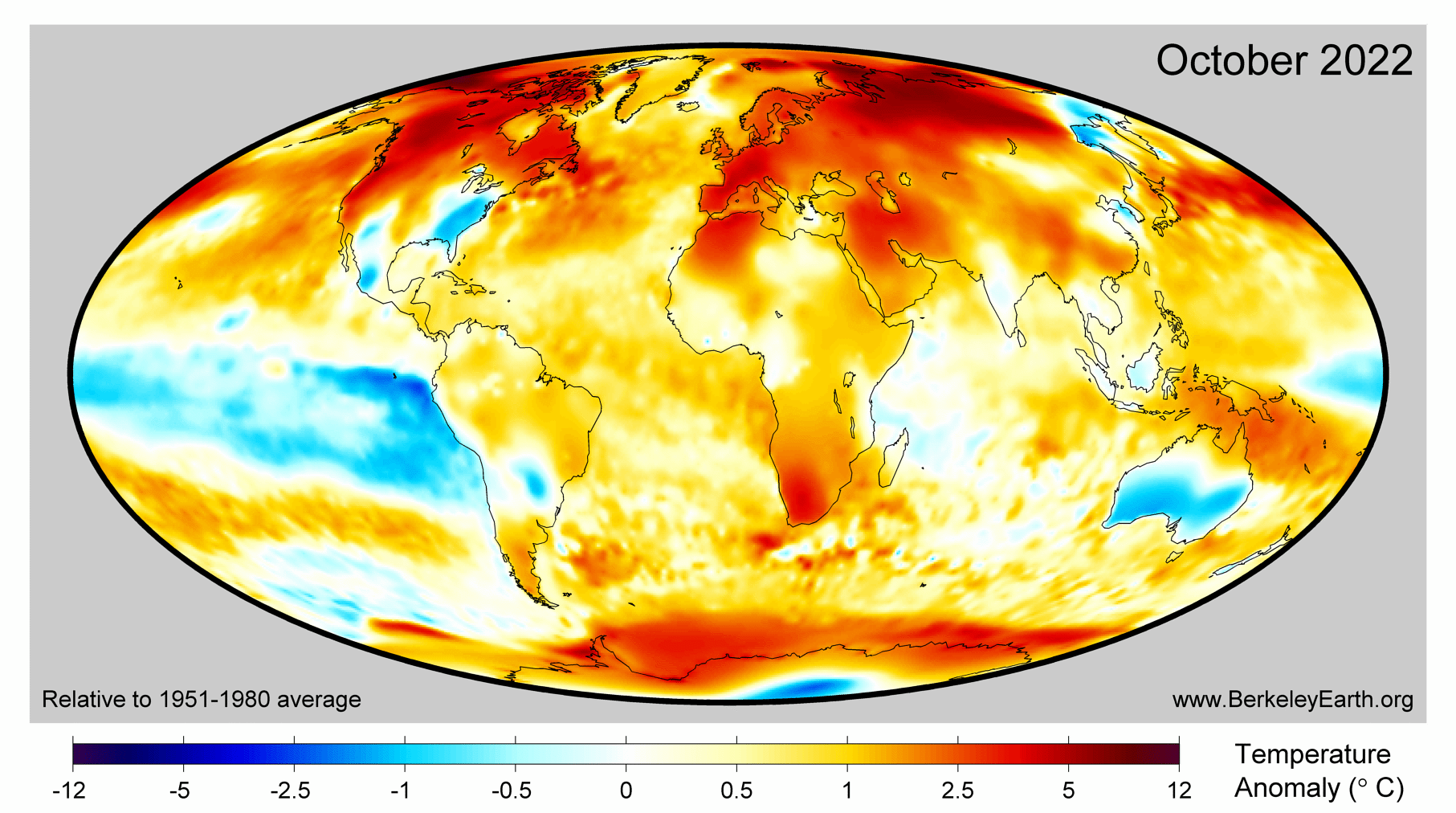
Image: Monthly surface air temperature anomaly for October 2022, according to Berkeley Earth.
Two things immediately stand out on the above map: most of the planet was unusually warm in October, and Australia and the tropical Pacific Ocean bucked this trend by having a cooler-than-average month.
According to Berkeley Earth, last month’s mean surface air temperature across Earth’s land and oceans combined was 1.05ºC above the 1951 to 1980 average. This is our planet’s third warmest October on record, beaten only by 2019 and 2015.
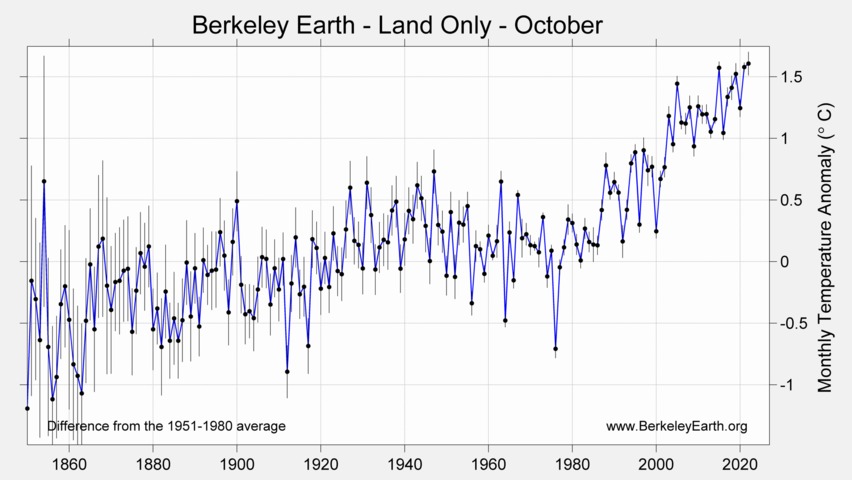
When looking at land regions only (excluding oceans), last month was Earth’s warmest October on record, with a temperature anomaly of 1.61ºC above the 1951 to 1980 average.
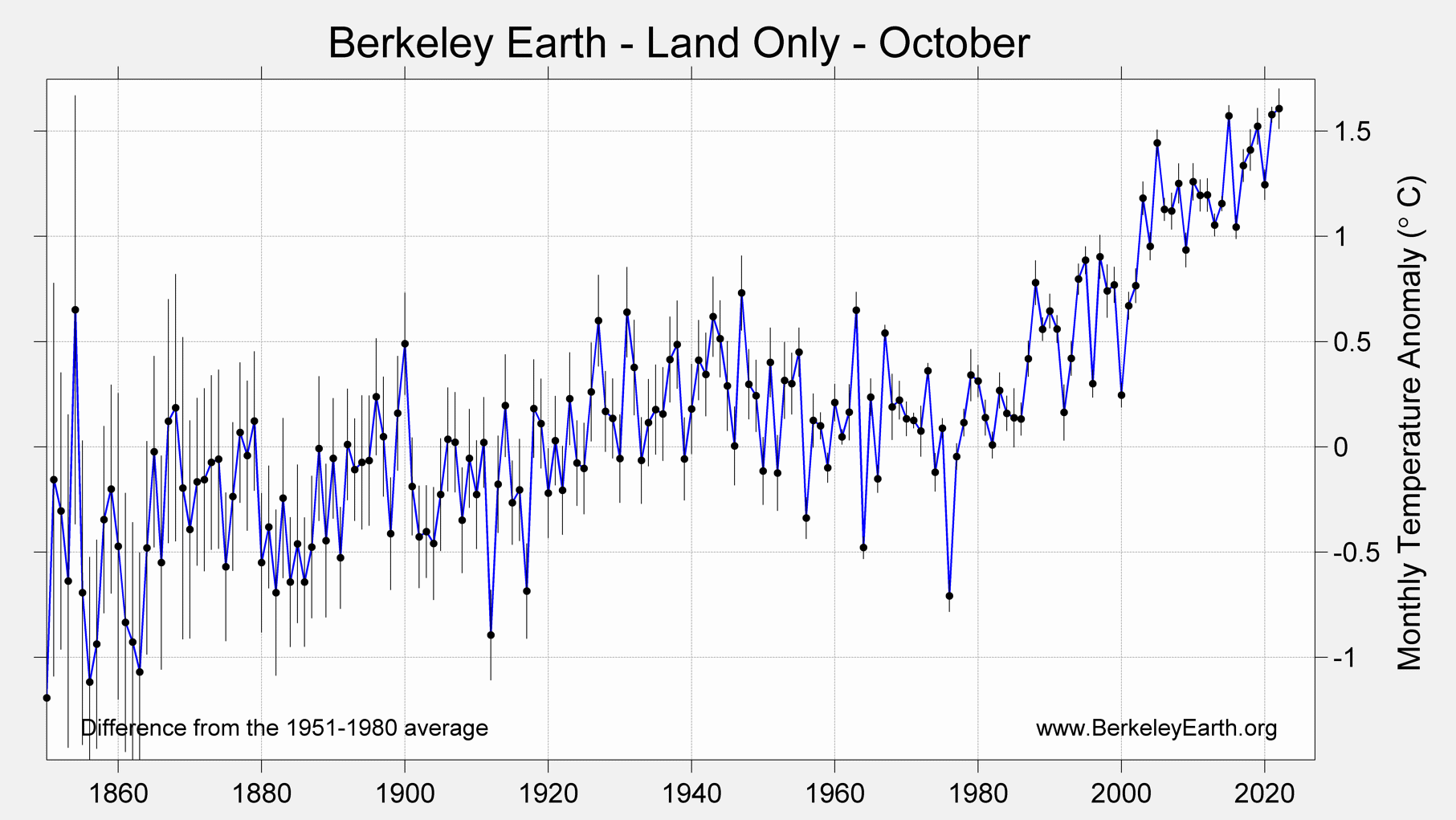
Image: Land-only global surface air temperature anomalies between 1850 and 2022 according to Berkeley Earth.
Setting a new October record for temperatures over land helps to show how much the cooling influence of La Niña can pull down global average temperatures.
Australia was one of the only large land masses that experienced widespread cooler-than-average air temperatures last month, particularly during the daytime. According to the Bureau of Meteorology, Australia’s mean maximum temperature in October was 0.58ºC below the 1961 to 1990 average, making it the country’s coolest October in 12 years.
Berkeley Earth’s global temperature data is one of the main international datasets used to monitor our planet’s changing climate. Another highly regarded global dataset from the ECMWF’s Copernicus Climate Change Service also confirms that October 2022 was one of the top four warmest Octobers on record for our planet.
According to Berkeley Earth, the last eight Octobers have been our planet’s eight warmest on record. The World Meteorological Organization predicts that this has also been the case annually, with 2022 on track to round out Earth’s hottest eight years in modern history.