
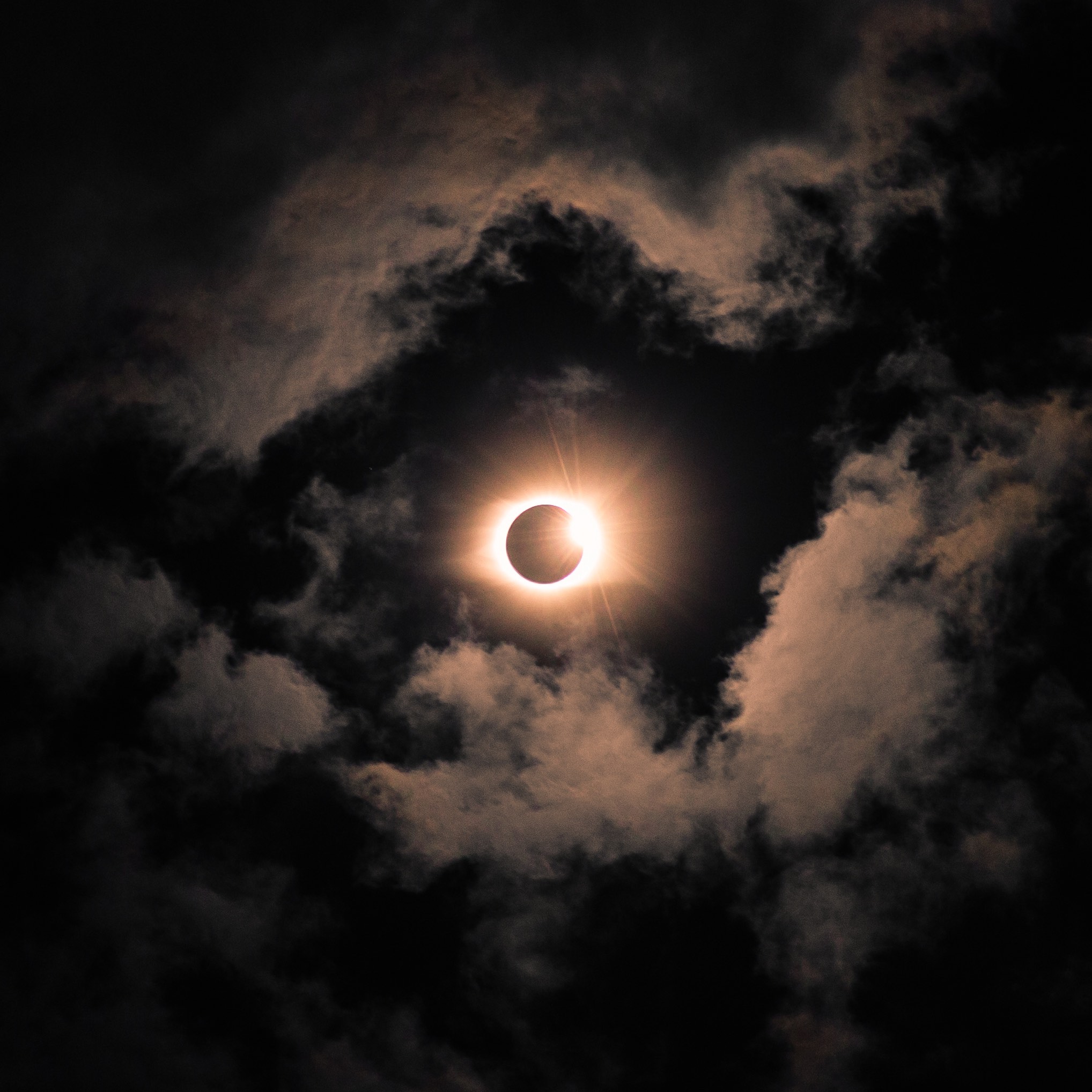
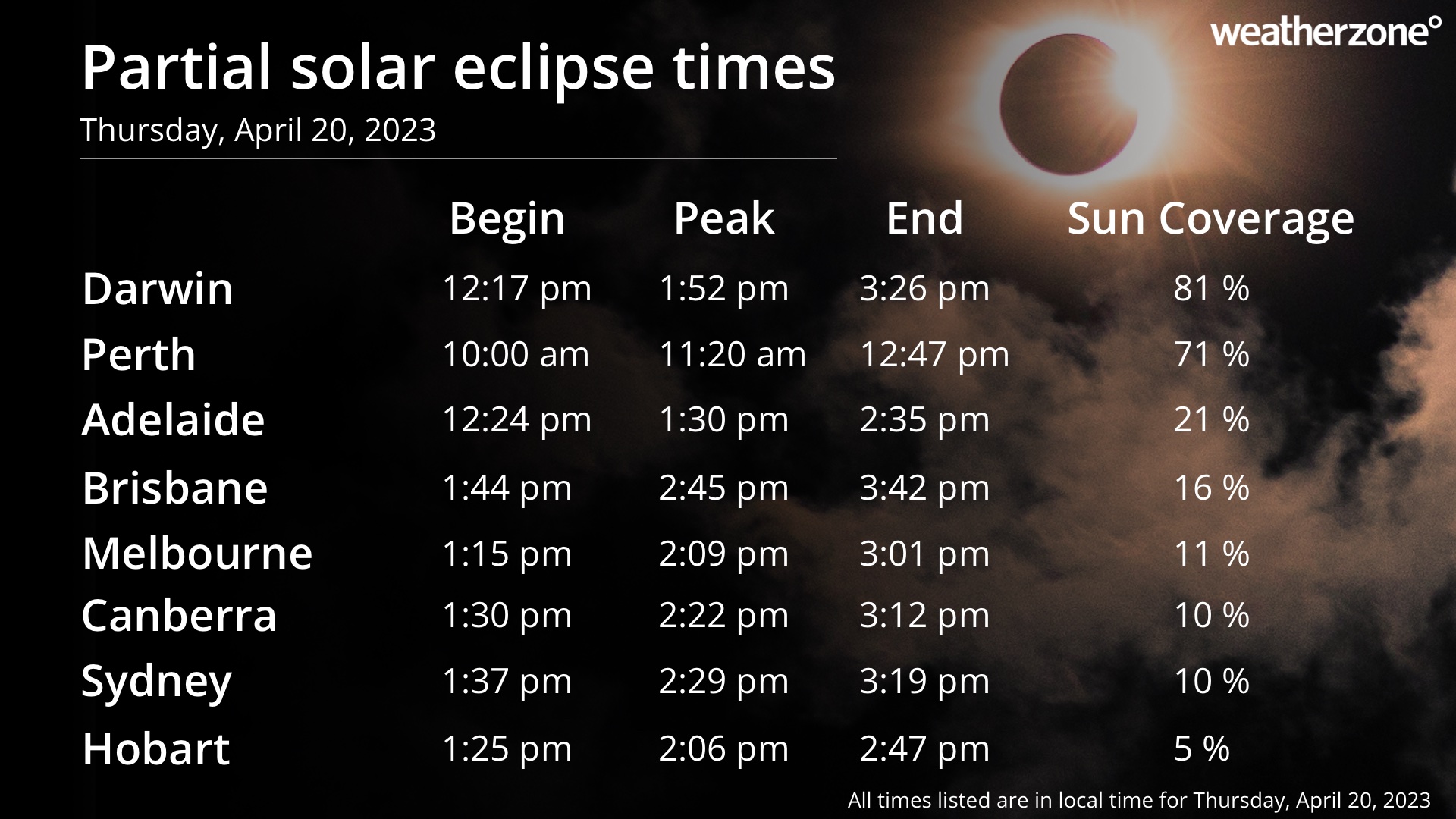
More than 20,000 people are expected to converge on Exmouth this Thursday to witness a rare total solar eclipse, while the rest of Australia will be able to observe a partial eclipse.
Solar eclipses occur when the Moon passes between the Sun and Earth, causing the moon’s shadow to pass across part of the Earth’s surface.
If you happen to be positioned directly in the path of the moon’s shadow when a solar eclipse occurs, you can witness day briefly turning into night and should feel a small dip in temperature. Some say that a total solar eclipse can be a life-changing experience and people have been known to travel across the world to witness the phenomenon.
This week’s eclipse will occur on Thursday, April 20, 2023. While all of Australia will technically be able to witness a partial eclipse during this event, only one part of the country will see it in totality.
The map below, courtesy of timeanddate.com, shows how much of the eclipse will be visible across Australia this Thursday.
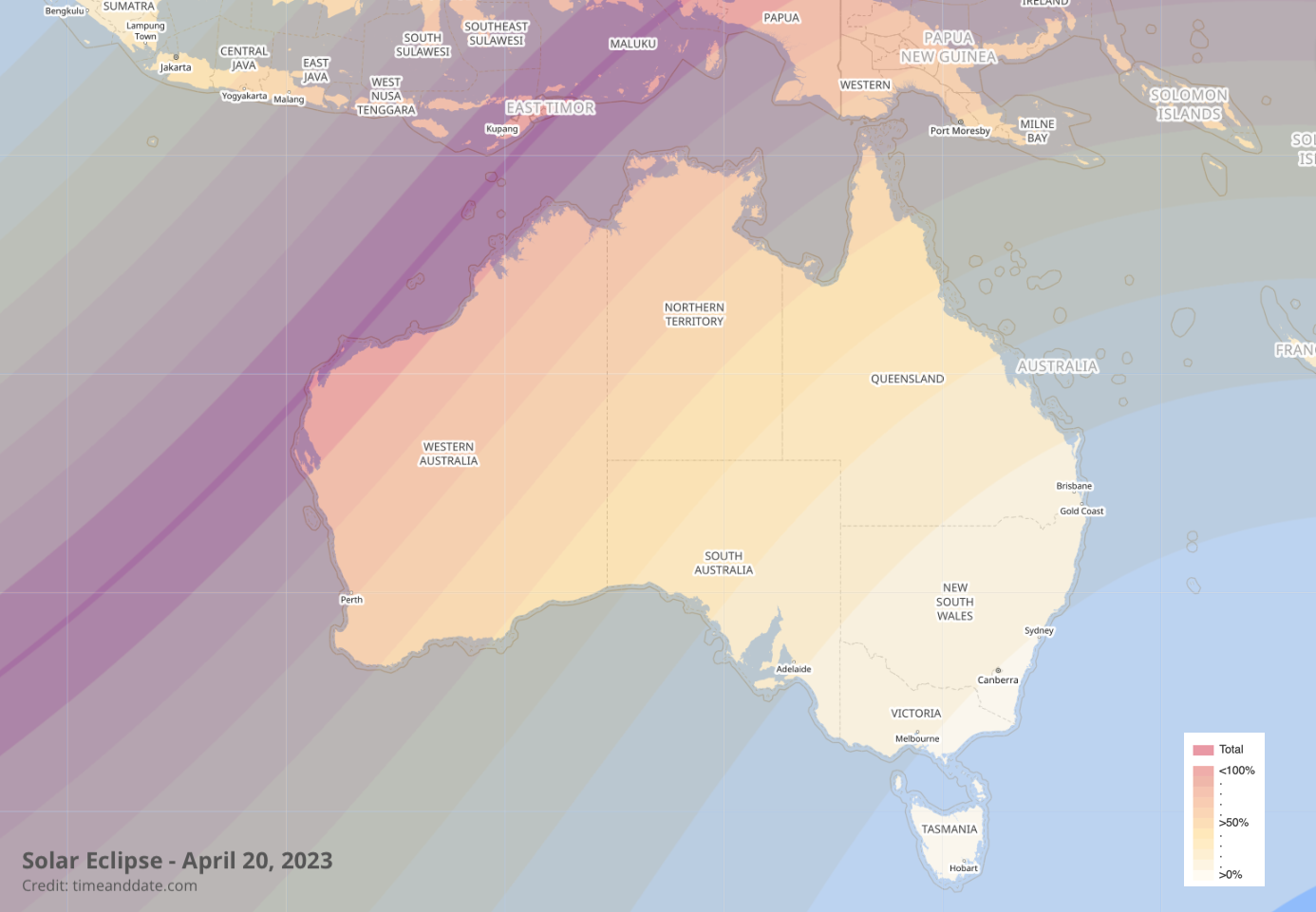
Image: Solar eclipse visibility guide. Source: timeanddate.com
The narrow path of totality, which is where the total solar eclipse will be visible, passes over Exmouth and the Ningaloo Coast, Barrow Island and a few reefs off the northwest coast of Australia.
Despite only lasting for about one minute, the allure of a total solar eclipse will draw a huge audience from far and wide.
The Australian Department of Industry, Science and Resources anticipates that “up to 25,000 stargazers from all over the world are expected to travel to Exmouth to witness this astronomical milestone.”
Fortunately, the Exmouth region will be free of clouds on Thursday, offering onlookers a perfect view of the solar spectacle. Skies will be cloudier over some parts of southern, eastern and northern Australia though, meaning some will miss out on the show.
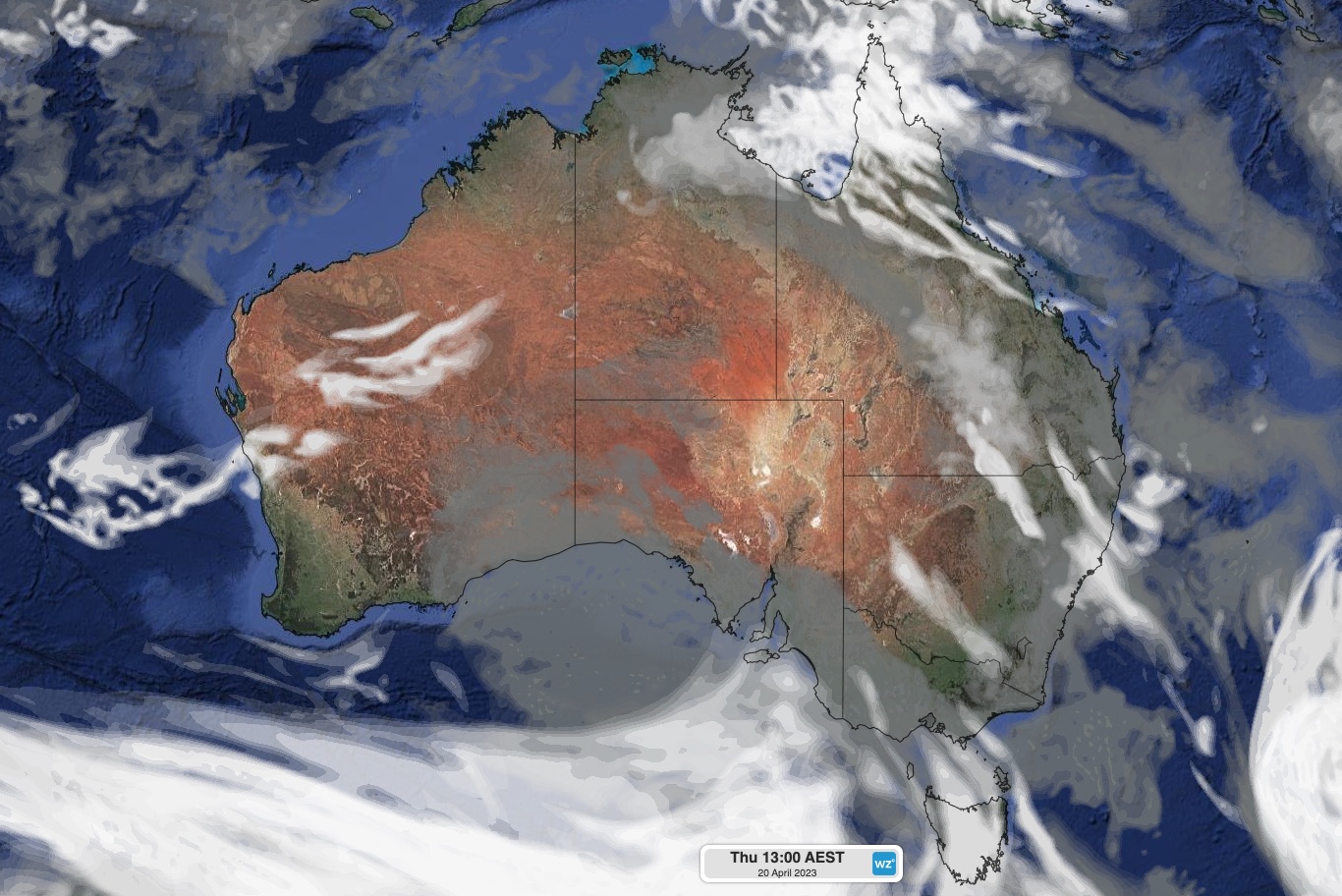
Image: Forecast cloud cover at 1pm AEST on Thursday, April 20, according to the ECMWF-HRES model.
Scientists will also be using this Thursday’s eclipse as an opportunity to learn more about the Sun.
“Total solar eclipses are rare opportunities for astronomers to test new telescopes and instrumentation for studying the Sun’s atmosphere,” says Dr Mark Cheung, Deputy Space Director at CSIRO.
“This includes studying the composition of the Sun’s million-degree hot corona, which is shaped by strong magnetic fields that permeate the Sun’s atmosphere and interplanetary space.
“These studies advance our understanding of how the Sun drives space weather around Earth, and how magnetic activity on other stars may affect planets around them.”
If you can’t make it to Exmouth for this week’s eclipse, the next chance to see a total solar eclipse from Australia will be on July 22, 2028. Fortunately, that one will be visible in totality from the Kimberley down to Sydney, offering vantage points in parts of five states and territories.
How to safely watch the solar eclipse
Unlike lunar eclipses, which are safe to watch with the naked eye, it’s not safe to look directly at the sun during a solar eclipse.
According to the Australian Radiation Protection and Nuclear Safety Agency (ARPANSA), “It is extremely dangerous for your eyesight to look directly at the sun at any time, even during a solar eclipse. You should never attempt to observe a total, partial or annular eclipse with the naked eye.”
The safest way to watch a solar eclipse is by using special eclipse sunglasses or viewing it indirectly, either through a live online stream or by using a pinhole projection. You can find out how to make your own pinhole projector here.




