

Today marks the Southern Hemisphere’s spring equinox, which means days will now be longer than nights in Australia for the next six months.
Well, technically speaking, each day will still be roughly 24 hours long. But there will be more daylight than darkness in Australia between now and late-March 2023.
What’s making days longer than nights?
Earth’s tilt relative to the Sun changes at a constant rate throughout the year. The summer and winter solstices refer to the moments our planet’s north or south poles reach their maximum tilt towards and away from the Sun, respectively. These solstices happen in December and June each year.
Roughly halfway between the two solstices are the autumn and spring equinoxes, which refer to the moments our Sun appears to be positioned directly above the Equator. The equinoxes occur in September and March every year.
The Sun’s position above Earth’s equator at the equinox means there are roughly equal hours of day and night in both the Southern and Northern Hemispheres.
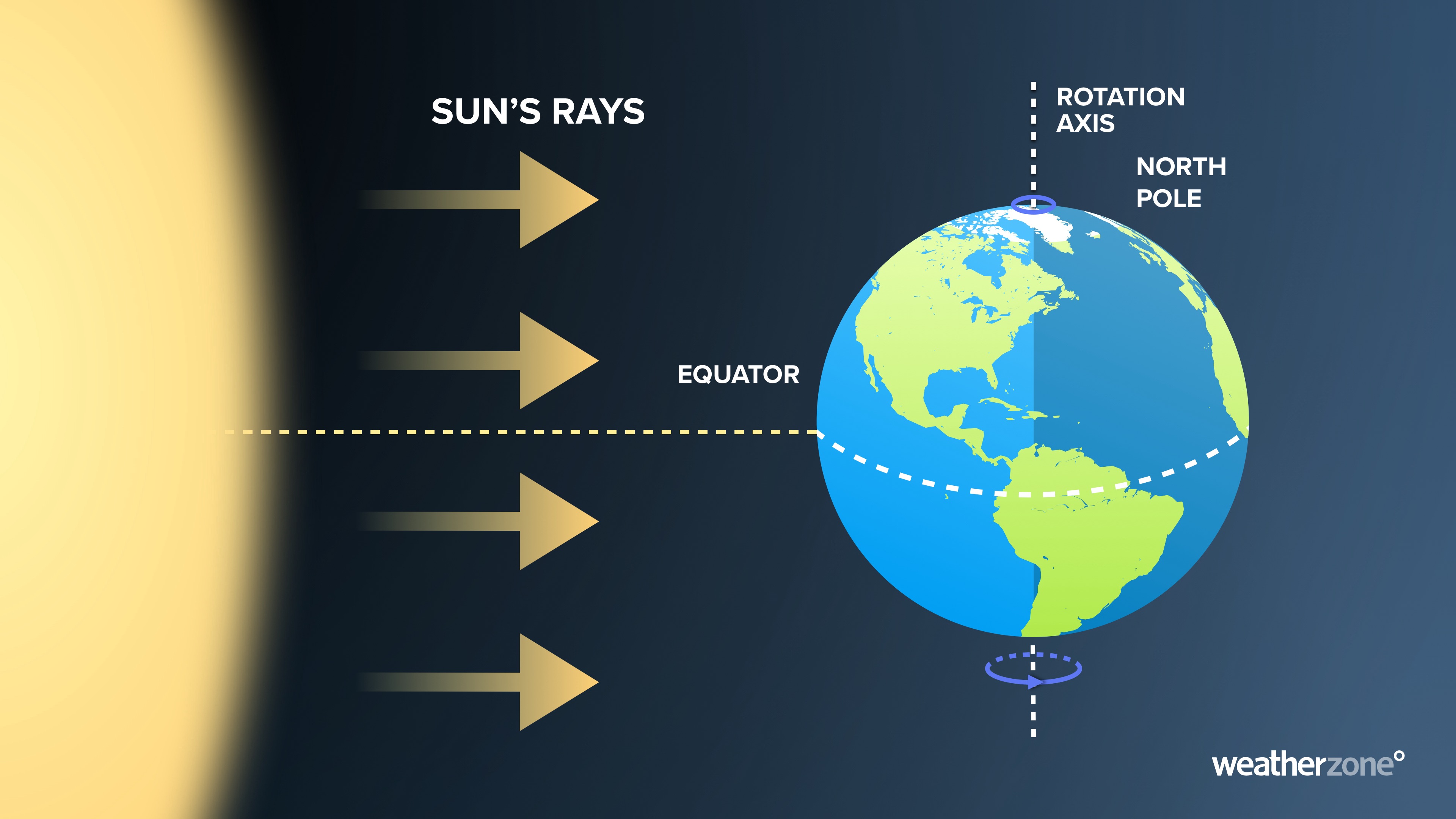
Image: The Sun is positioned directly above Earth’s equator at the time of the equinox, cauing roughly equal hours of day and night in both the Southern and Northern Hemispheres.
This year’s autumn equinox occurred at 11:03 am AEST on Friday, September 23, 2022. At the time of the equinox, the Sun was located directly above Earth’s horizon and the solar terminator ran perpendicular to the horizon, which you can see in the image below.
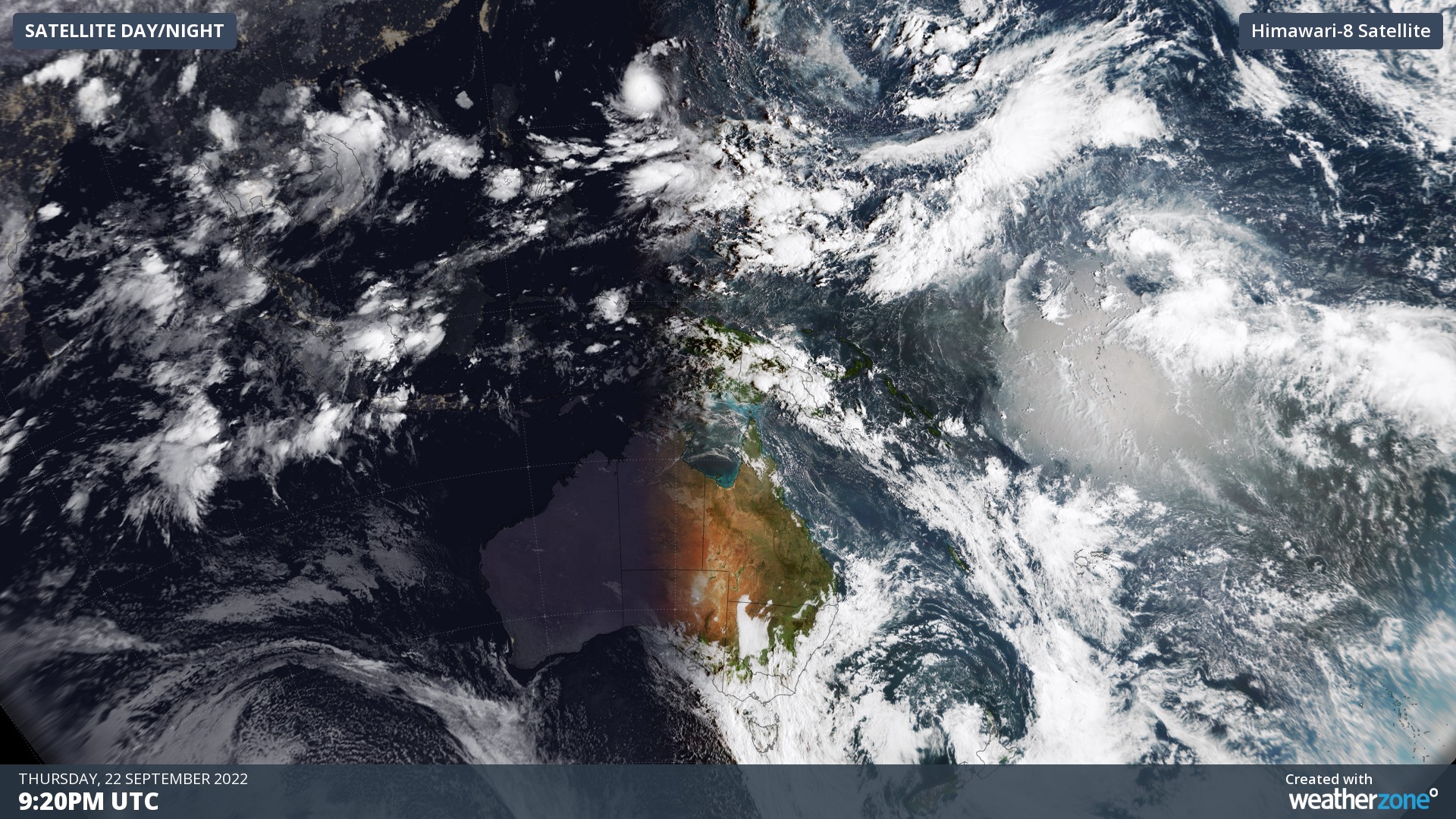
Image: The solar terminator (line between day and night) runs parallel to Earth’s equator on the day of the equinox because the Sun is positioned directly above the horizon.
After Friday’s equinox, the Sun will be positioned above Earth’s Southern Hemisphere and remain south of the equator for the next six months – until the next equinox occurs on March 20/21 in 2023.
The longest days of the year in Australia occur around the date of the summer solstice, which is in late-December and marks the halfway point between the September and March equinoxes.
For more information on our products or how we can help you with your business needs, please contact us at apac.sales@dtn.com.




