Prosper in a dynamic world
Search

Heavy rain and storms loom for Pilbara


A tropical low will cause heavy rain and thunderstorms across northwestern Australia later this week, with flooding possible in parts of the Pilbara. 

A slow-moving tropical low has caused persistent rain over parts of the NT during the past on to two, producing several hundred millimetres in some areas. Elliot’s 433 mm during the past 12 days was three times its January monthly average. 

The low pressure system has now moved across the border into WA and will continue to spread rain and storms across the state’s north over the next few days. 

Most forecast models suggest the low will move towards the west and soak inland areas of the Kimberley and Pilbara, and parts of the state’s northern Interior. 

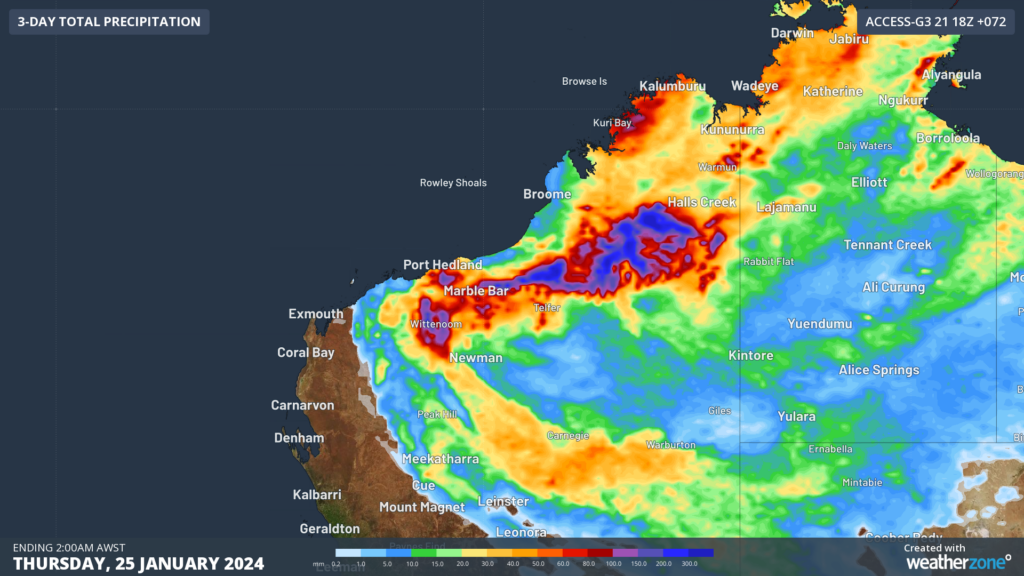
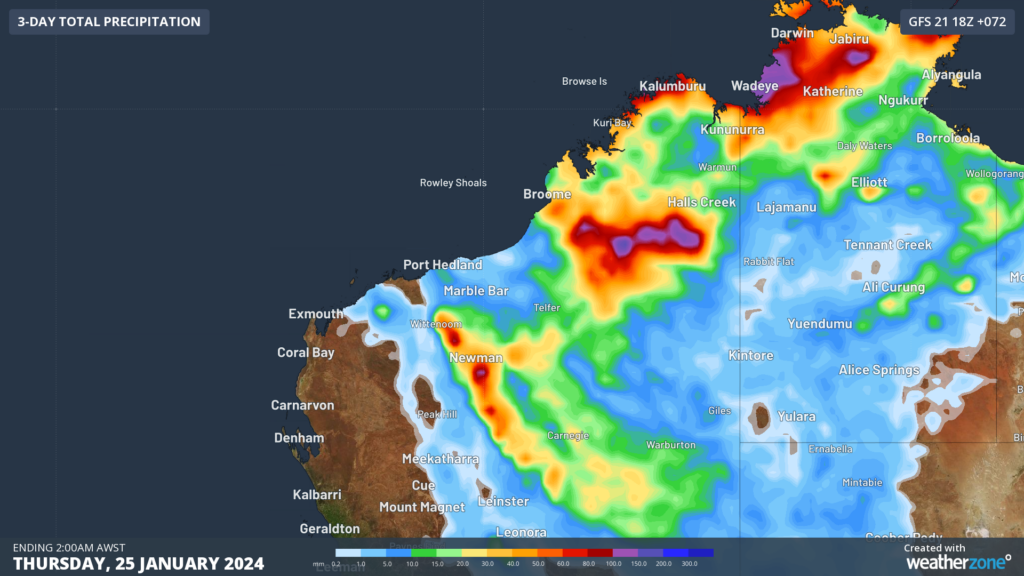
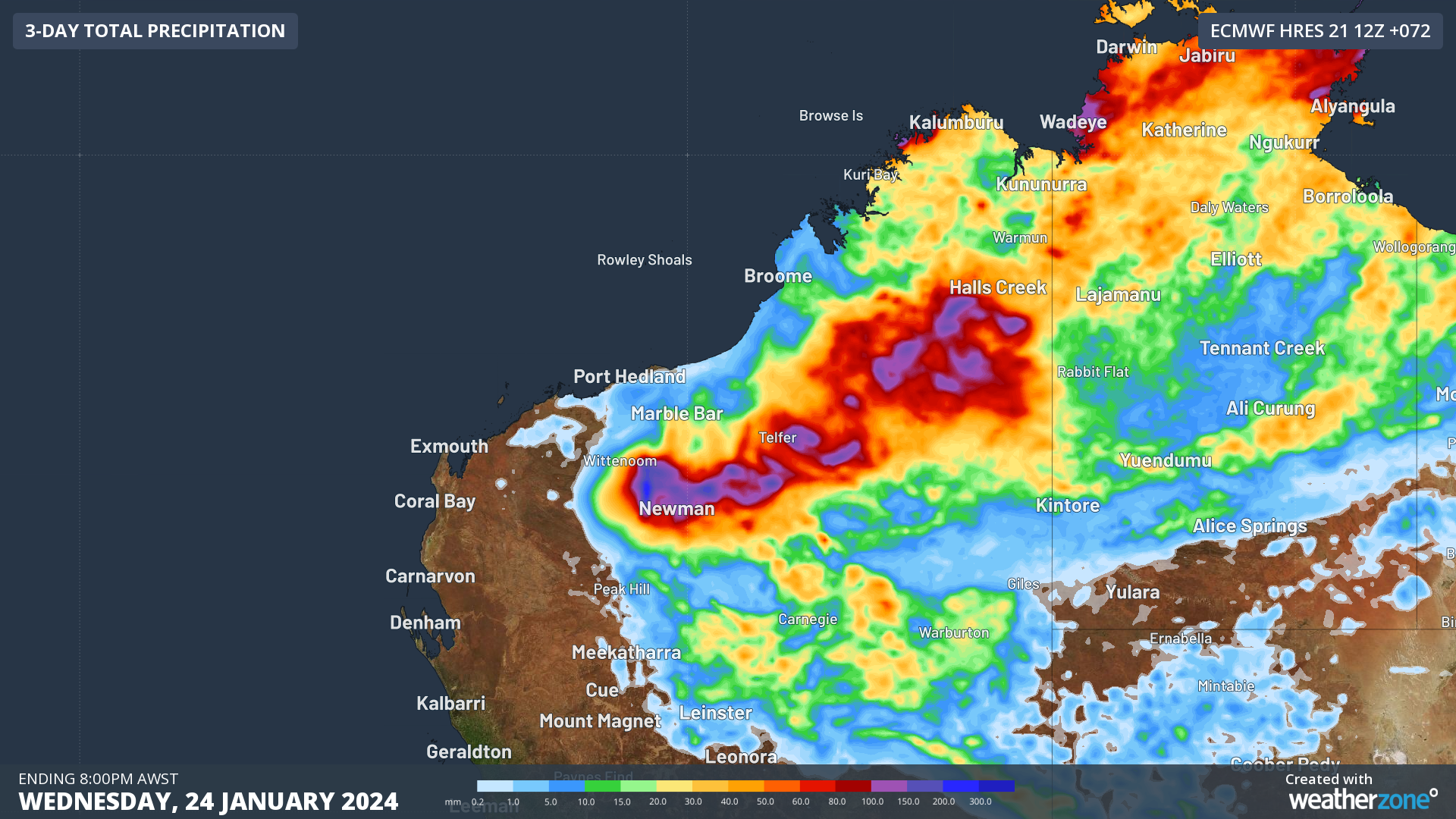
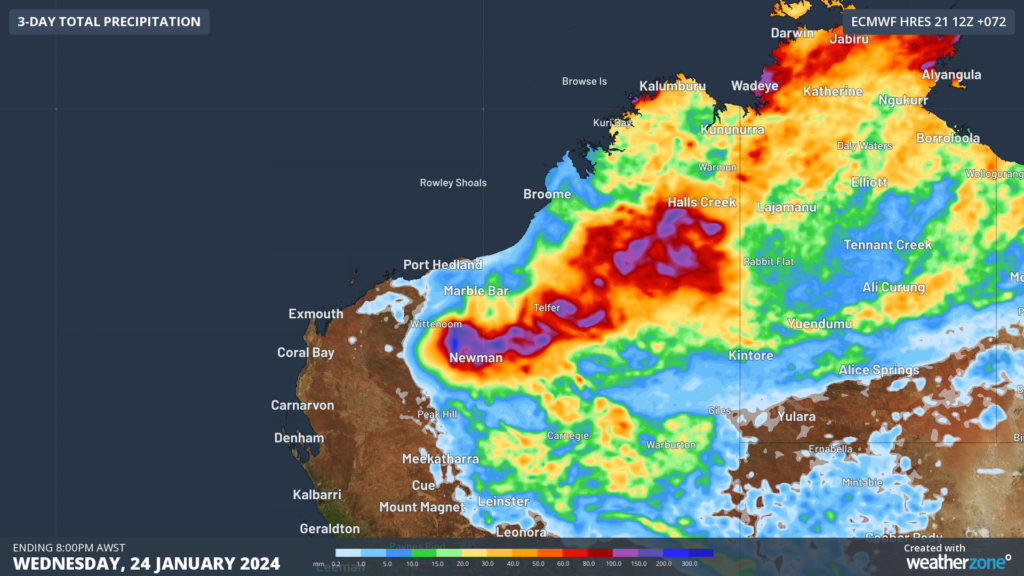
Some models predict 50 to 150 mm of rain over a broad area stretching from the southern Kimberley across the North Interior to the southern Pilbara between now and Thursday. Locally intense rainfall due to thunderstorms could produce six-hourly rain rates of 100 to 160 mm. 

However, there is some uncertainty regarding where and how much rain will fall, highlighted by images below. 
Heavy rain and storms loom for Pilbara

 Images: Forecast accumulated rain during the 72 hours ending on Thursday night, according to the ECMWF-HRES model (top), ACCESS-G model (middle) and GFS model (bottom). 

A severe weather warning and flood watch have been issued for the northern inland of WA in response to this system. Be sure to stay up to date with the latest warnings for the most accurate information on this developing weather event. 

Our Weatherzone clients have access to our lightning and severe weather tracking and alerts, thunderstorm tracking and high precision and site-specific forecasting, along with comprehensive reporting capacity. For more information, please contact us at apac.sales@dtn.com.


Latest news

Satisfy your weather obsession with these news headlines from around the nation, and the world.

Ahead of the fire season: Turn risk into readiness across your APAC operations

The 2026 El Niño has the potential to become one of the strongest on record, raising the likelihood of a warm and dry spring and summer across much of Australia. With the risk of elevated bushfire conditions later this year, fire and land management agencies are being urged to begin seasonal preparedness early.  Potential record-breaking El Niño  Beneath the surface of the tropical Pacific Ocean, a pool of abnormally […]

Positive Indian Ocean Dipole possible in 2026 – what this means for Australian businesses

A positive Indian Ocean Dipole (IOD) could develop in the coming months, a signal mining and energy operators and fire agencies will want on their radar with it potentially increasing the likelihood of warm and dry weather over large areas of Australia in late winter and spring, with flow-on effects for water availability, dust/heat exposure, […]

The snow has finally arrived after NSW’s best hydro week in a year

For most of June, the Snowy Mountains looked like they’d skipped winter altogether. Now, 28 cm of fresh snow has fallen at Thredbo, providing a promising sign for the season’s eventual snowmelt contribution to hydropower.  Thredbo in New South Wales was reporting 28 centimetres of snow overnight with snowfalls continuing this Friday morning, its nearby neighbour Perisher reported 25 cm, while Mt Hotham […]

India’s worst monsoon start in over a decade – what it means for mining and ports

India’s 2026 southwest monsoon delivered the fifth-driest June since records began in 1901 – with Jharkhand’s Chandan Dam, in the heart of the central mining belt, recording zero storage according to the Central Water Commission.  The monsoon arrived three days late to Kerala on Thursday, June 4, 2026, before pausing roughly over the Karnataka/Goa/Maharashtra border […]