Prosper in a dynamic world
Search

75,000 lightning strikes as severe storms pummel Sydney

A flurry of severe thunderstorms hit Sydney on Monday, causing heavy rain and lots of lightning.

A line of thunderstorms started approaching Sydney from the east shortly before midday. By 12:30pm, a new thunderstorm cell had formed directly over the CBD, producing loud thunder, lightning and heavy rainfall.

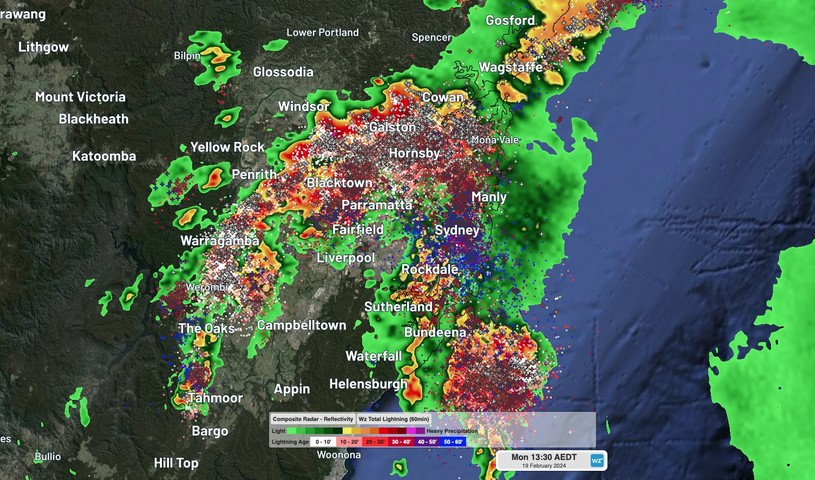
Several other storms then popped up across the Sydney Basin and by 1:30pm, the radar and lightning tracker were a kaleidoscope of colours as multiple storms assaulted the city and its surrounding suburbs.

Sydney’s Observatory Hill weather station, which is Sydney’s official weather observing site, received 8mm of rain in 10 minutes before going offline at 12:30pm.

Hersley Park picked up 18 mm in the one hour ending at 1:30pm, while unofficial observations suggested rain rates reached 30 mm in 15 minutes around Randwick.

The rain was so heavy that the Harbour Bridge couldn’t be seen from Circular Quay, forcing people to scramble for shelter. According to reports, four people were taken to hospital after the tree they were sheltering under at the Royal Botanic Gardens was struck by lightning.

Total Lightning Network detected around 75,000 lightning strikes within a 100km radius of Sydney’s CBD between 11am and 2pm AEDT on Monday.
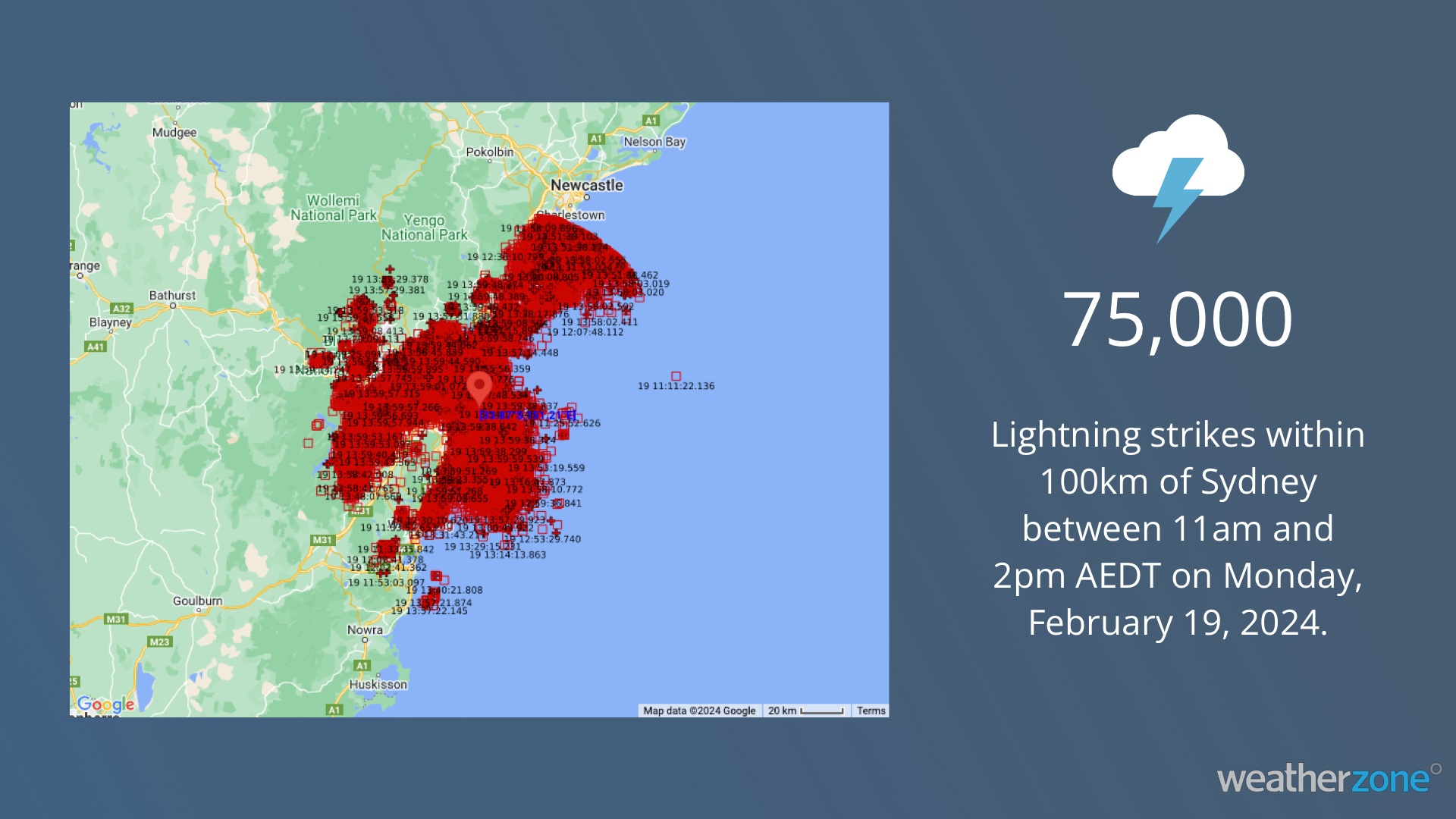
lightning strikes as severe storms pummel Sydney

Storms will continue to affect the eastern half of NSW and southern Qld this afternoon and tonight, so be sure to check the latest warnings for the most up-to-date information.

Stormtracker is our Global Information System (GIS) tracking tool, providing multiple weather layers and zoom controls overlaid on a map of your location and infrastructure. You can choose a snapshot or full screen view, depending on your requirements. The maps allow you to monitor all weather, and specifically any systems likely to cause risk for your business. You also have the capacity to observe:

  • real time lightning and thunderstorm alerts
  • localised lightning strike frequency
  • official warnings for storm, cyclone, wind, flood and fire
  • sentinel hotspot fires and fire agency current incidents

For ore information, please contact us at apac.sales@dtn.com
Latest news

Satisfy your weather obsession with these news headlines from around the nation, and the world.

From Kimberley to northern NSW: Bushfire outlook flags risk for resources sector this winter

Bushfire risk doesn’t usually make headlines in June, but AFAC’s winter seasonal outlook is putting mining and resources operators on alert from the Kimberley to the NSW.  Australia’s official seasonal bushfire outlook for winter 2026 was released by AFAC on Thursday, May 28. The outlook predicts increased fire risk across the northern parts of the Great Sandy Desert and surrounds […]

The signal was there weeks earlier: forecasting one of the year’s biggest wind events

In mid-May 2026, DTN APAC meteorologists flagged a strengthening Southern Ocean pattern in model guidance, signalling an extended run of record-challenging wind conditions across the NEM.  Nearly three weeks later, NEM wind generation climbed from around 1.5GW to more than 9GW, supplying roughly one-third of the grid and coming within 1GW of the all-time generation record.  The event highlighted […]

The 2026 Indian Southwest Monsoon onset is expected in the next two weeks

The Indian Southwest Monsoon will reach India in the next two weeks, but a developing El Niño could signal a drier than normal monsoon for businesses and major industries across the country. Southwest monsoon onset over southern India in the next two weeks The Indian Meteorological Department (IMD) is responsible for tracking the advance and […]

Rapid El Niño signal accelerating risk for Australian businesses

El Niño–favourable conditions are gathering pace across the tropical Pacific, with key ocean indicators approaching threshold levels and early atmospheric responses emerging.  While uncertainty remains around final El Niño strength, historical analogues show that even weak events can generate widespread impacts, including reduced rainfall, warmer daytime temperatures, increased frost risk, elevated fire danger, reduced tropical cyclone activity, and more. Industries including […]