
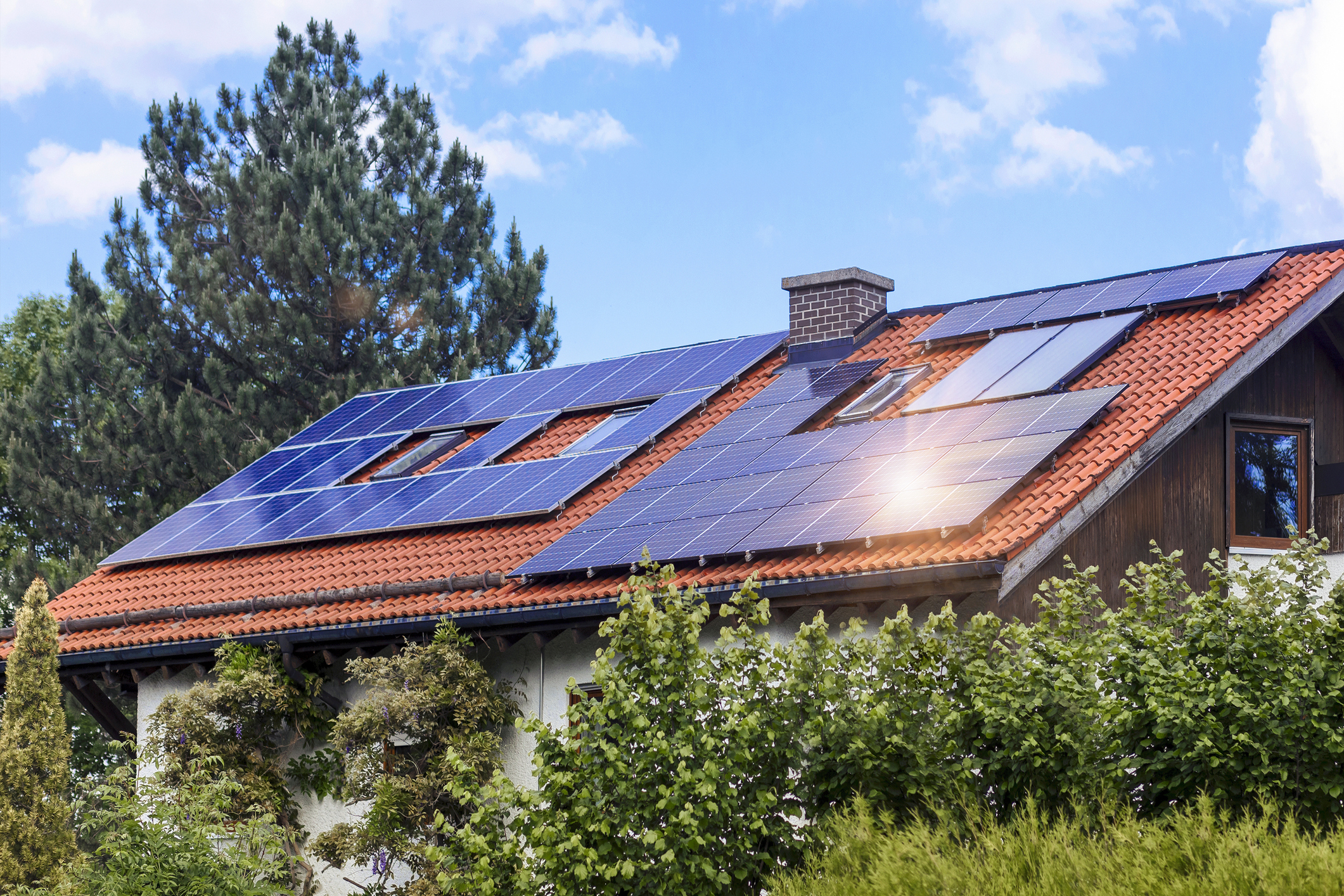
On the closing day of 2023, rooftop solar boomed in SA and Vic while record low energy demand was recorded in the two states.
On Sunday, December 31, mild temperatures and sunny skies were behind the new record low energy demand in SA and Vic.
The satellite image below shows the clear skies on Sunday across Australia’s southeast mainland, which allowed rooftop solar output to become the leading energy source in SA and Vic.
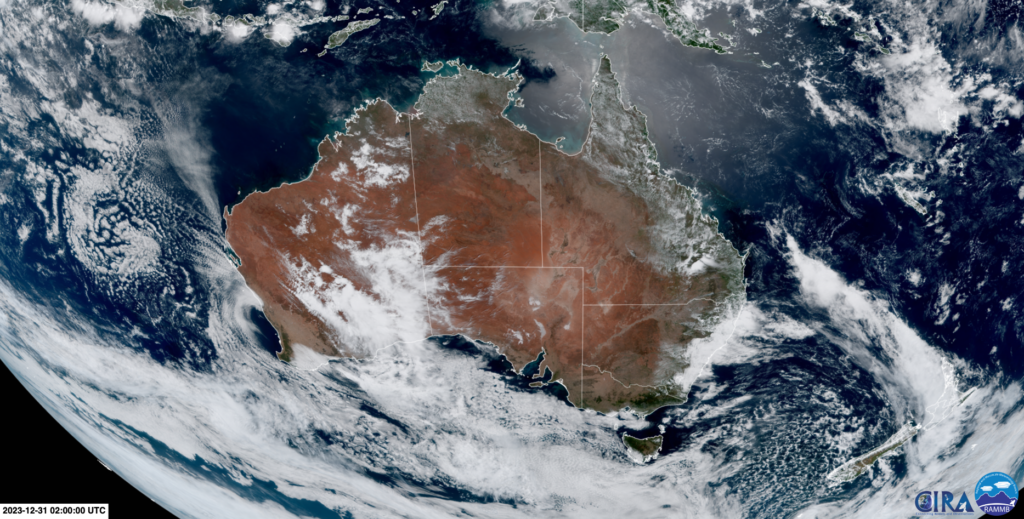
Image: Himawari-9 satellite image at 1pm AEDT on Sunday, December 31, 2023. Source: RAMMB/CIRA
According to the Australian Energy Market Operator (AEMO), Victoria’s minimal operational demand was 1,564 MW on Sunday, December 31, which beat the previous record that was set Sunday, November 12, 2023. SA’s demand dropped into the negatives on the same day, reaching as low as -26MW on New Year’s Eve, which trumped the previous record low set back in October 2023.
These new records superseded the ones set only several months ago, showing the National Energy Market (NEM) has had a period of abnormally low demand in the past couple of months. This has been driven by cooler temperatures under the influence of a positive phase of the Southern Annular Mode (SAM) and the waning impact of El Nino in December.
The image below shows that on the same day, rooftop solar (yellow) contributed most of SA and Vic energy needs.
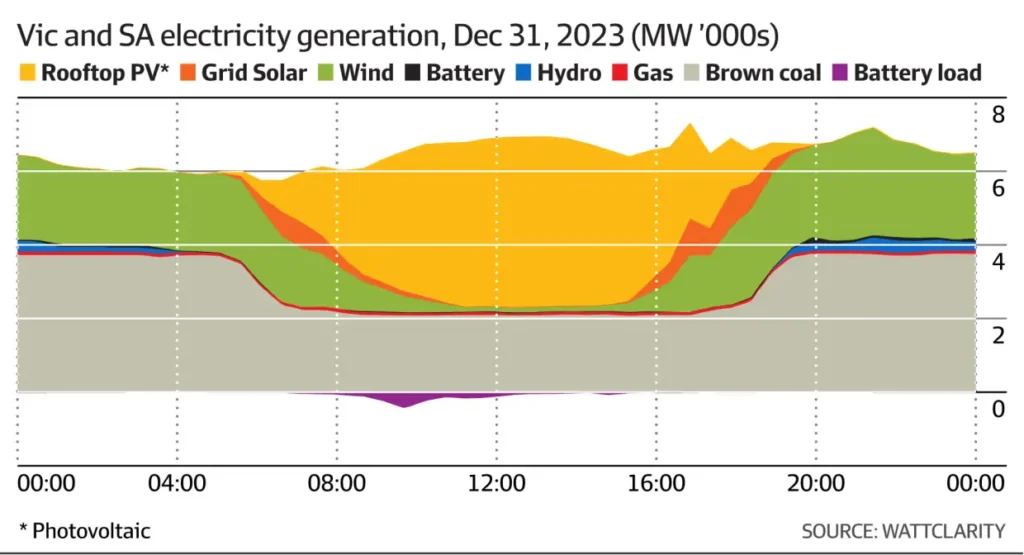
Image: Vic and SA electricity generation on Sunday, December 31, Source Wattclarity
The Image above also shows that wind and solar farms contributed near zero energy demand during the middle of the same day. It also shows that brown coal and rooftop solar were the two main sources of energy for the grid in the middle of the day in the states.
On Sunday, winds were relatively light under the influence of a high-pressure ridge extending from Bight to the southern Tasman Sea.
According to AEMO, rooftop solar contributed two-thirds of VIC’s & all of SA’s total energy needs on December 31.
New operational demand records set in VIC (1,564 MW) & SA (-26 MW) on 31 December 2023, with #rooftopsolar contributing two-thirds of VIC’s & all of SA’s total energy needs. On the day, wholesale electricity prices averaged -$66.54 & -$73.02 ($/MWh) in SA & VIC, respectively. pic.twitter.com/0JUorY4wG4
— AEMO (@AEMO_Energy) January 2, 2024
Rooftop solar has been increasing year-on-year since 2018, driven by a boom in solar installations across Australia.
Looking ahead, January looks to be wetter and cloudier than average across much of the NEM. February is expected to see near-to-below average rainfall and cloud, which could increase solar output in the closing month of summer.
Weatherzone Business has grown to become the outright leader within the Australian energy market, serving wind, solar, hydro, trading, utilities and network companies.
You can’t control the weather, but you can gain precision insights to optimise your response. What lights us up is providing your energy business with tailored weather information to reduce your risk and keep you moving ahead of the curve.
Our services cover all aspects – from wind and solar generation to demand forecasts, wholesale markets to retail so, no matter where your company sits, we have solutions for you. We have worked closely with market participants to create products that meet the evolving needs of the sector, aiming to increase safety and profitability for our customers.
Benefit from the timely delivery of accurate weather information, allowing informed and effective decision-making. For more information, please contact us at apac.sales@dtn.com.




