Prosper in a dynamic world
Search

Sydney’s record 15-day spell of 20 degree winter days


For the first time in 163 years of records, Sydney just registered 15 consecutive winter days above 20ºC. 


The temperature at Sydney’s Observatory Hill weather station, located next to the Harbour Bridge, has climbed above 20ºC every day since Monday, August 9. This makes today, August 23, the 15th day in a row to get this warm. 


Prior to 2021, Sydney had only ever seen up to 10 consecutive winter days at or above 20ºC in records dating back to 1859. This current warm spell has added five extra days to the previous record. 


This unrivalled run of warm winter days has been made possible by a lack of cold fronts or rain over NSW during the last few weeks.  


High pressure systems were the dominant feature over southern and southeastern Australia during August to date. This high pressure has acted like a shield, preventing cold fronts from pushing up over NSW.


Monday will be the final day of this record-breaking warm spell in Sydney, with a strong cold front and some decent rain finally making its way towards the city. 


After reaching a top in the mid-twenties on Monday, much colder air, clouds, rain and blustery winds will grip Sydney and other areas of eastern NSW by Tuesday. 


Temperatures across the Sydney Basin will struggle to reach the mid-teens on Tuesday and the city could see more than 30mm of rain, which would make it the wettest day so far this winter. Talk about a change in the weather! 


Rooftop solar output across the Sydney basin is likely to be low on Tuesday due to thick cloud cover and rainfall. This comes after a period of sunny days and high solar output for Sydney, which was coupled with the unseasonably warm temperatures.  

The cloud cover is a major contributor to reducing the daytime temperature across the basin on Tuesday. Skies will clear from Wednesday as a low-pressure system moves away from the NSW coastal waters. 


For more information on our 14-day temperature, cloud and rainfall forecasting, please contact us at apac.sales@dtn.com. 
 

Latest news

Satisfy your weather obsession with these news headlines from around the nation, and the world.

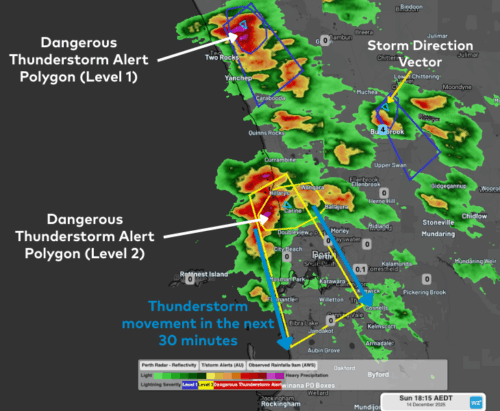
DTN Dangerous Thunderstorm Alerts in action with severe thunderstorms disrupting Perth industries

Severe thunderstorms impacted southwest WA and the Perth region on Sunday, December 14, 2025, triggering Dangerous Thunderstorm Alerts (DTA) by DTN for industries and businesses in the region. DTN operates Dangerous Thunderstorm Alerts (DTA) which alert businesses and industries to thunderstorms based on intensity and movement. These alerts provide advanced notice of thunderstorms moving into […]

How Australian East Coast port and maritime operations could be disrupted by tropical cyclones over the next two weeks

Port and maritime operations across Australia’s East Coast could be disrupted by increased tropical cyclone activity in the Coral Sea and southwest Pacific Ocean over the next two weeks. Meteorologists reference a large selection of Numerical Weather Prediction (NWP) models to forecast weather. A number of these NWP models are forecasting the development of tropical […]

Extreme fire danger and severe heatwave conditions spreading across SA, Victoria and NSW

Hot, dry and windy weather causing elevated fire danger and severe heatwave conditions are sweeping across southeastern Australia over the next three days, driving high energy demand and disruption to operations. Clear skies associated a large and slow-moving high pressure system have allowed hot air to build up over parts of northern, western and central […]

Heightened bushfire risk during the 2025-26 summer for WA, Victoria and NSW in latest AFAC Outlook

The Australian and New Zealand Council for fire and emergency services (AFAC) identified western and southern WA, Victoria and inland NSW as key regions that are at risk of heightened bushfire risk this summer. Parts of Australia have experienced severe soil moisture and rainfall deficiencies over the past months and years, while high fuel loads […]