
Prosper in a dynamic world
Search

Subzero temps spread to Qld, NT

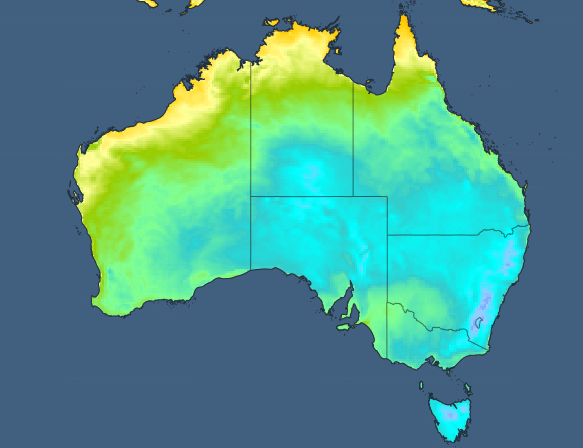
It was a chilly one overnight in southeastern Australia as you’d expect in the cold dry air in the wake of a cold front, but freezing temps were also recorded in our two northernmost states.

  • Alice Springs recorded an overnight low of –0.3°C, the first subzero night of the year in the Northern Territory.
  • For those who love their weather stats, the coldest May night on record in The Alice was –2.7°C in 1987, while the coldest in any month was –7.5°C in July 1976.
  • Queensland recorded freezing temps at several spots, including Charleville (–0.3°C), Roma (–0.4°C) and Applethorpe (–0.5°C).
  • The coldest overnight temperature anywhere in Australia was the tiny map speck of Liawenee at an elevation of 1057m on Tasmania’s Central Plateau, with a min of –5.3°C.
  • The coldest temperature recorded on the mainland was –4.2°C at Glen Innes on the NSW Northern Tablelands. Interestingly, the town at an elevation of 1062 m also recorded the coldest temp anywhere in Australia in the 2023 winter.
  • Canberra was the next coldest spot on the mainland with –3.7°C, although it wasn’t quite as cold as the  low of –3.9°C on Sunday morning.
  • Alpine areas in Victoria and NSW also dipped below zero, although breezy overnight conditions prevented temperatures from plummeting too low. Thredbo was the coldest ski resort with –3.0°C, after registering –6.4°C on the previous mornings.
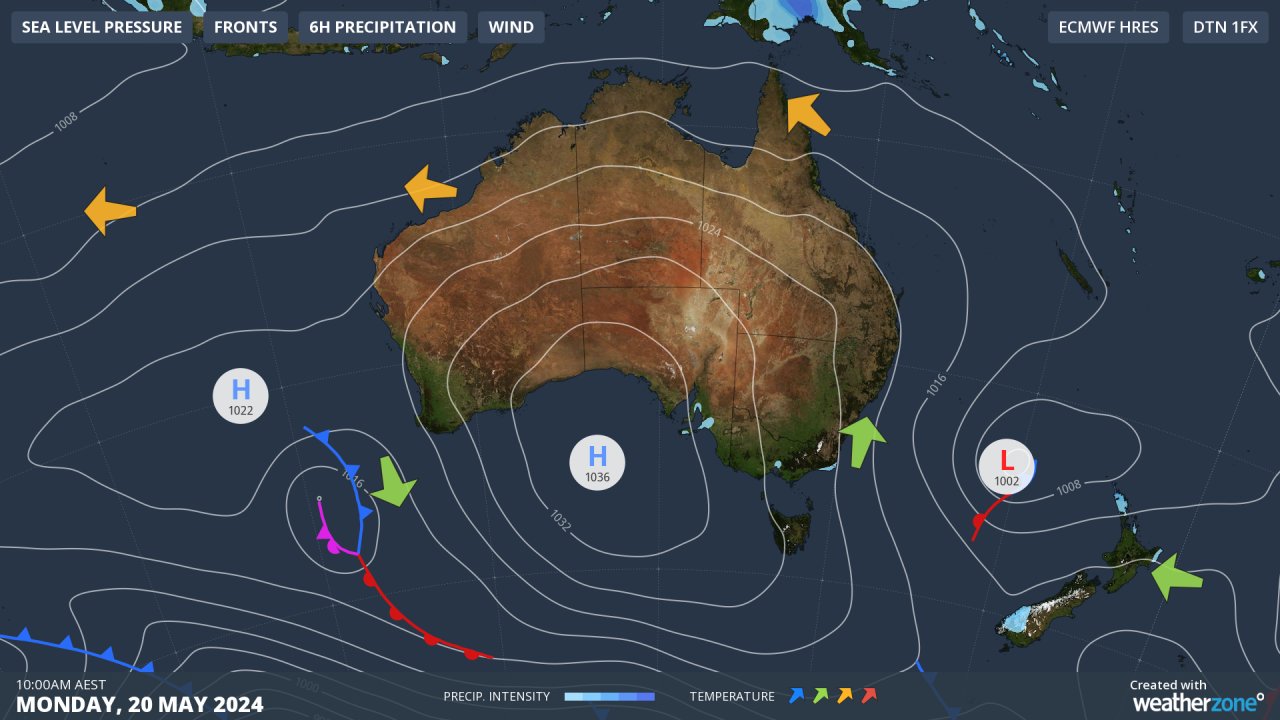
If you look at the Monday morning synoptic chart above, you can see how cold air circulating anticlockwise around the big high centred over the Great Australian Bight has made its way into the northern interior of the country.

High pressure leads to clearer skies, and light winds, which helps cool air settle near the ground.

The pattern won’t change too much throughout the working week (check our synoptic charts here) which means you can expect the run of cold nights to persist, although most spots should see temps rise by a few degrees from Monday morning’s chilly minimums.


Latest news

Satisfy your weather obsession with these news headlines from around the nation, and the world.

Signs of a positive Indian Ocean Dipole, but it may not follow the textbook

Waters off Indonesia have cooled in recent weeks, an indication that a positive Indian Ocean Dipole (IOD) event could be developing. It’s an important climate driver for Australia, and it could shape rainfall and temperatures heading into summer, with flow-on effects for farmers, energy and other industries.  What is the Indian Ocean Dipole?  The IOD […]

1.3 million lightning strikes and a record September downpour: the storms testing WA’s Goldfields

Leonora, WA, had its wettest September day on record earlier this month. Three weeks later, more than 1.3 million lightning pulses were detected within 800 km of the town in 48 hours. Why is a stalled trough delivering storms to mining country, and what it could mean for operations?  The DTN Total Lightning Network detected […]

A very low wind power week, likely to continue

A stubborn blocking high over southern Australia will make for a very quiet week for wind generation and the pattern behind it isn’t a one-off.   It’s the seasonal signature of a super (very strong) El Niño combined with a positive Southern Annular Mode (SAM), and both the historical record and the current seasonal forecast suggest it’s likely to keep recurring through spring before a potential switch from November.  The setup right […]

Fastest strengthening El Niño on record: Impacts on Australian monsoon timing and wet season planning

Australia’s Mining and Resources sectors are bracing for a wet season shaped by one of the most rapidly developing El Niño events on record.    Looking back at how the strongest El Niño events in Australian history have played out, it becomes apparent that mining operations in Australia should be planning for a later monsoon […]


