A severe heatwave is set to impact New South Wales, raising concerns over potential energy deficits across the state early next week.
The prolonged period of extreme heat is being caused by an extremely hot airmass moving over the state ahead of a cold front.
The Australian Energy Market Operator (AEMO) issued a market notice on Friday afternoon, forecasting LOR2 conditions for Vic on Monday and NSW on Tuesday, meaning that the AEMO forecasts the energy demand will be larger than the single largest reserve in the state.
This forecast comes as the state grapples with a severe heatwave, including western Sydney.
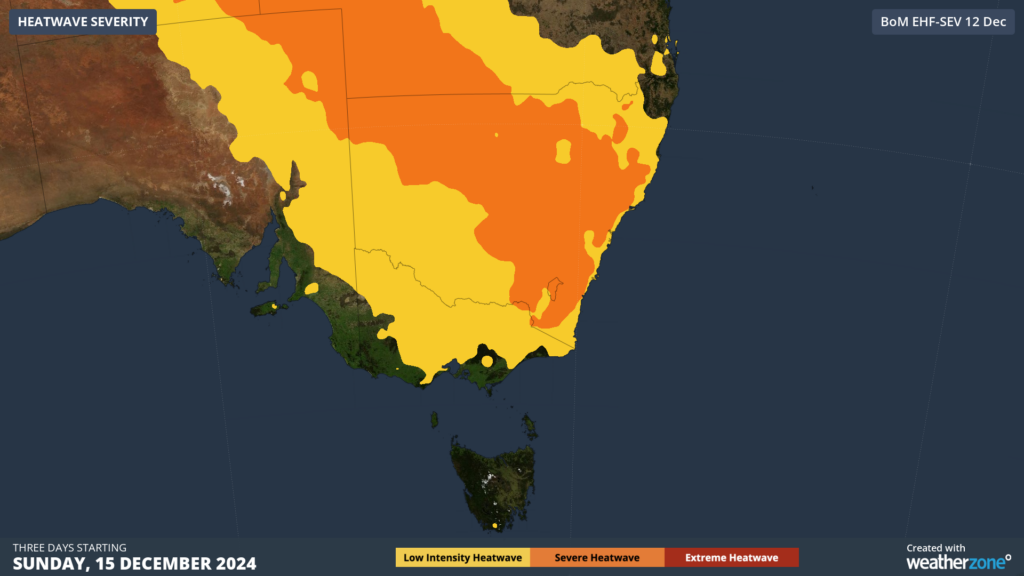
Image: Heatwave severity for three days beginning on Sunday, December 15. Source: Bureau of Meteorology
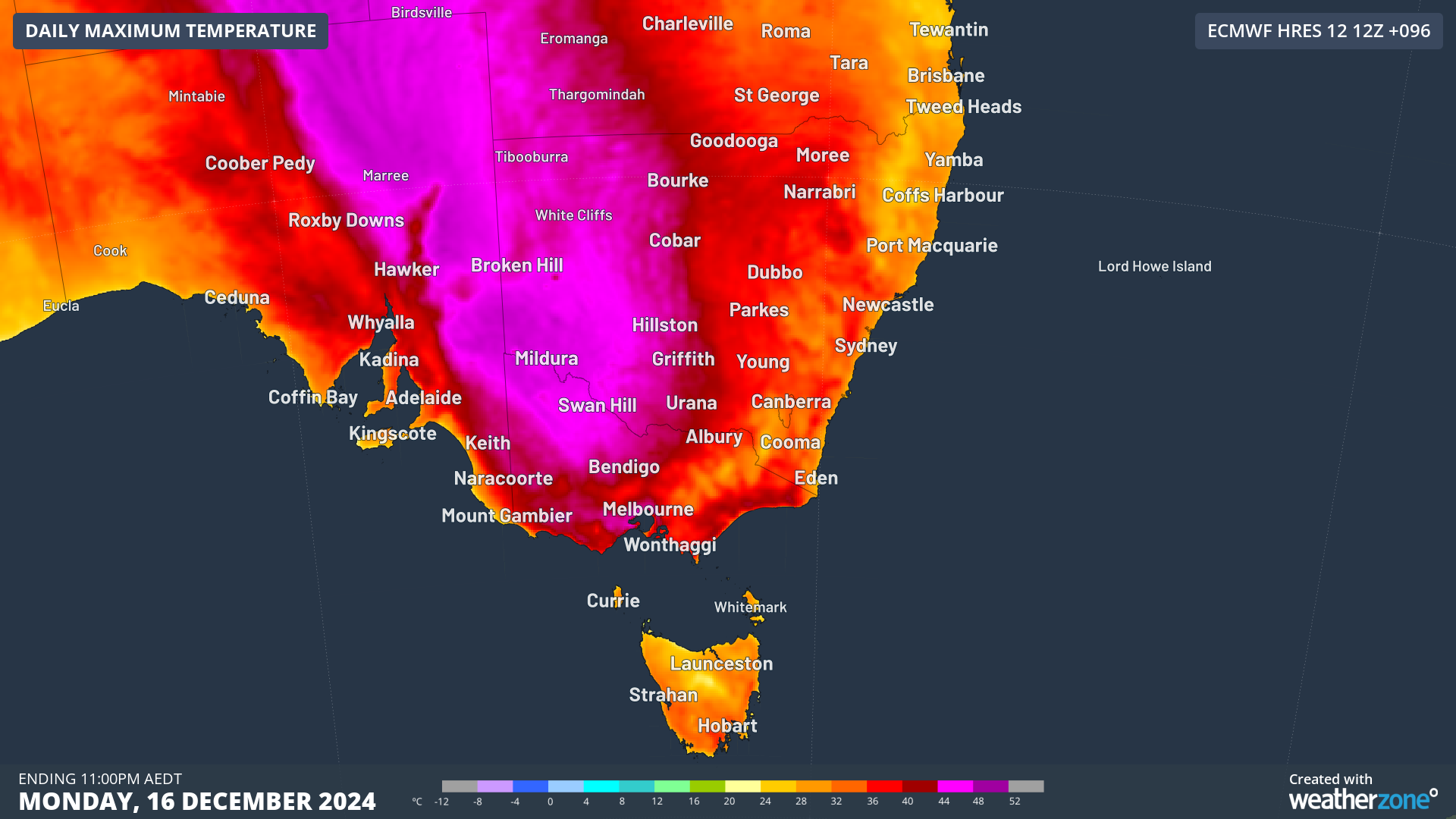
The mercury is set to soar into the mid 40s across northern Vic, western NSW and eastern SA on Monday. Western Sydney is forecast to see temperatures reach the high 30s to low 40s on Monday, meanwhile Melbourne’s heat will peak on Monday at 40°C.
The coincident heat across the National Electricity Market (NEM) on Monday will contribute to low energy reserve forecast for NSW with the state unable to borrow from others.
Heat will peak on Monday during the early afternoon before a seabreeze arrives, cooling temperatures slightly. However, humidity from the mid-afternoon will make the temperatures feel 2 to 3°C hotter than the actual temperature.

Image: DTN’s Opticast hourly temperature forecast for Sydney late this week and early next week
You can see in the graph above that temperatures will remain hot in Sydney on Tuesday, which will increase energy demand across the state.
However, wind power is set to pick up in NSW on Tuesday, December 17, which will likely increase the electricity generation in the state.

Image: DTN’s Wind farm output forecast for NSW for the next five days.
This increased wind power is being generated by a cold front and trough moving over the state on Tuesday, with a strong southerly change forecast to hit Sydney on Tuesday evening.
This southerly will bring some cooler and drier air into NSW, reducing Sydney’s temperatures to the mid 20s.
DTN APAC supplies precise weather intelligence to over 75% of the National Energy Market (NEM); and is the trusted provider for the Australian Energy Market Operator (AEMO).
Weatherzone’s next-generation nowcasting and forecasting system, OpticastTM, is independently proven to outperform other industry models, allowing energy traders to respond rapidly to changing conditions. From 14 day forecasting to seasonal outlooks, you have access to complete and powerful weather intelligence giving you the confidence to make the best call.
Meeting the needs of the changing market, Weatherzone utilises high-resolution modelling and local knowledge to provide 5-min granularity observations and forecasts, optimising your market bidding and maximising your profits. These, coupled with briefings from our energy meteorologists, give you full awareness of the associated risk.
Benefit from specialised indices such as apparent temperature, Cooling/Heating Degree Days (CDD/HDD) and Effective Degree Days (EDD) to help accurately predict demand. You can get a clear picture of forecast conditions across the market and quickly assess heat/heatwave potential from 14 days out to 12 months
No matter where your energy trading focus lies, we have the power generation and weather insights to inform your critical decisions, keeping you ahead of the curve. For more information please visit our website or email us at sales.apac@dtn.com.