
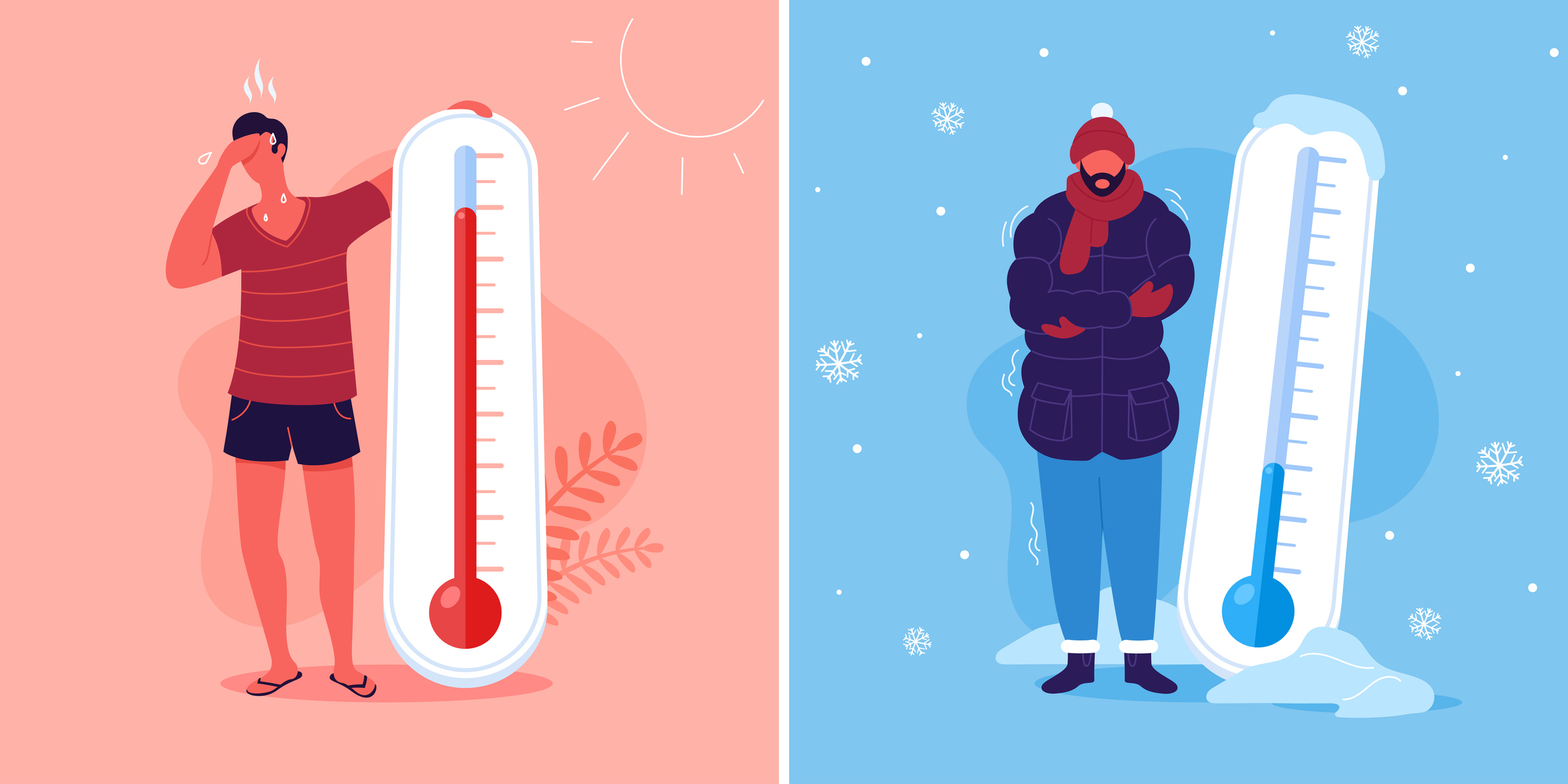
Ever walked outside on a beautiful, 20°C day, but the wind whipped up making it feel like Frosty the Snowman just gave you a hug? Or have you sat in the shade on a 25°C summer’s day and feel like you are cosplaying as Niagara Falls? The temperature isn’t lying, it’s just the ‘feels-like’ temperature is different.
‘Feels-like’ temperature factors in a range of weather elements, besides the air temperature, which collectively affect how you feel. This is because, unlike a thermometer, you aren’t made of glass and liquid mercury. Your body and skin are incredibly efficient at reacting to different types of weather to make sure your internal temperature stays as close to 37°C as possible.*
The main contributors to the feels-like temperature are:
- The actual air temperature
- The Relative Humidity (RH), i.e. how much moisture is in the air
- Wind speed
- If you are in the sun or not
- If it’s raining or not
Humidity
When it is too warm, your body produces sweat. What your body is doing is supplying moisture into the air so it can evaporate. When it does, it takes some heat away from your skin, known as ‘evaporative cooling’, which cools you down.
When there is a lot of moisture (humidity) in the air already, this process becomes slower, as the air can’t hold much more water. That is why the higher the humidity, the hotter it feels. Hotter air can hold exponentially more water than colder air, so at cold temperatures, this effect is negligible, but when it’s hot, minor changes in humidity can make it feel several degrees hotter.
Wind
Wind has the opposite effect to humidity. When the wind is blowing, it ensures that any sweat evaporating from your skin is quickly blown away, allowing more sweat to form and evaporate just as easily. This is what is commonly referred to as ‘wind chill’.
Wind chill is much easier to work out because it is linear i.e. doesn’t matter what temperature you are at. The rule of thumb is: for every 5 km/h increase in wind speed, the wind chill makes you feel one degree colder.
Sunlight & Rain
The final part is whether you are in the sun, in the rain, or neither. These are not actually things that go into the ‘feels-like’ temperature equation because it varies quite a lot depending on your surrounds and you as an individual. However, if you are in full direct sunlight, you typically feel 5-8 degrees warmer than if you were in the shade.
Conversely, if it is raining, the water draws heat away from your skin rapidly, making you feel much colder. Just how cold depends on the temperature of the water droplets, but typically you feel about 7-12 degrees colder when wet.
When does it feel like the actual temperature?
Because humidity warms you up, but winds cool you down, there are a lot of combinations which the feels-like temperature is the same as the actual temperature. Here are some good references points:
- 10°C air temperature, 100% RH, calm winds
- 20°C air temperature, 50% RH, calm winds
- 20°C air temperature, 80% RH, 10km/h winds
- 30°C air temperature, 50% RH, 15km/h winds
Consequently, if its colder than 10°C, even at 100% RH, it always feels colder than the actual temperature.
How do they figure out what the temperature feels like?
The ‘feels-like’ temperature is based on empirical evidence, rather than pure physics. It represents how the average person would perceive the weather conditions. This makes it more of a guide than a set rule, as different people will be more resilient or vulnerable to different weather conditions.
Where can I see the ‘feels-like’ temperature?
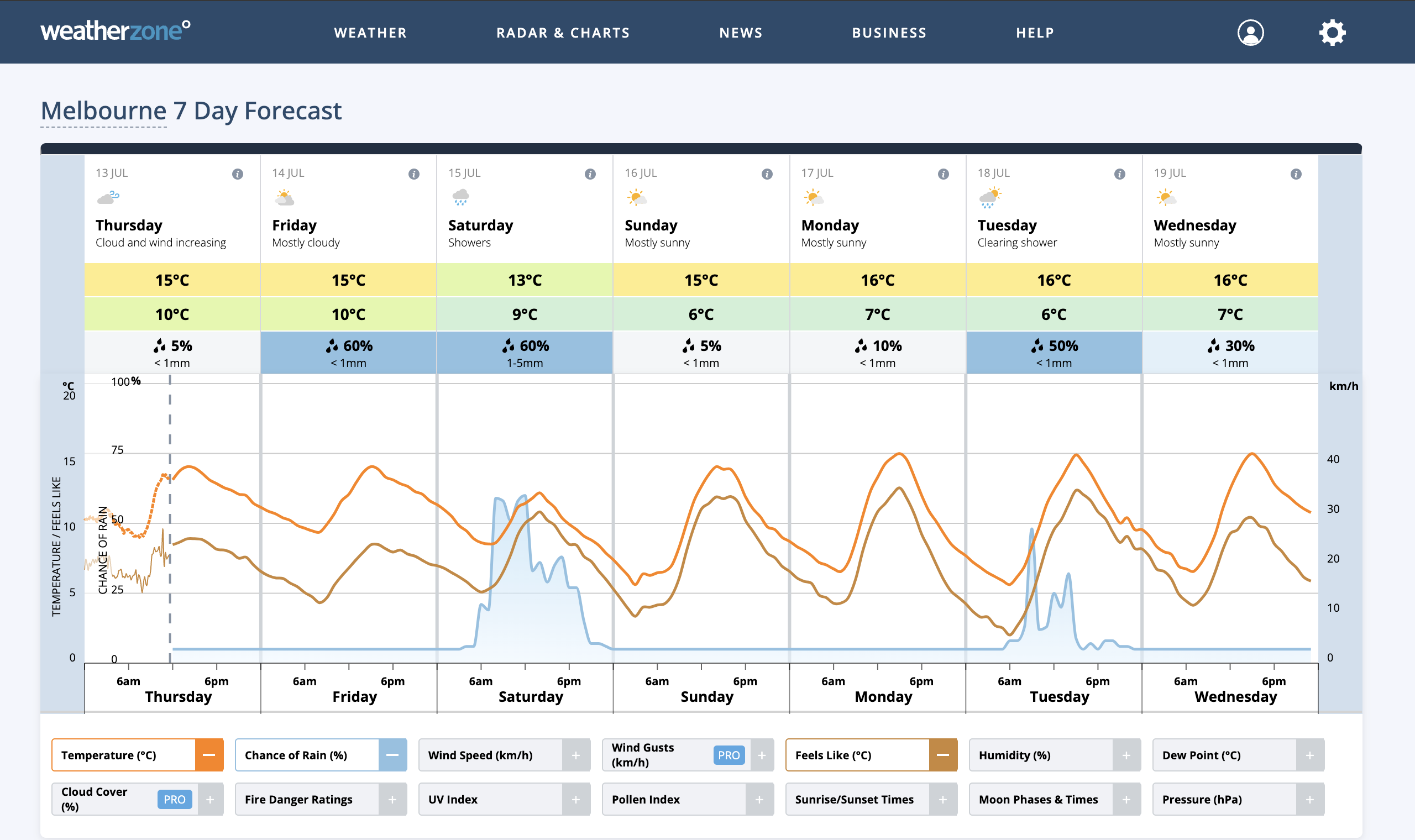
You can see a forecast of the ‘feels-like’ temperature for your location at Weatherzone.com.au. Just type your town or suburb in the search bar, scroll down to the 7-day forecast graph and select “Feels-Like”.
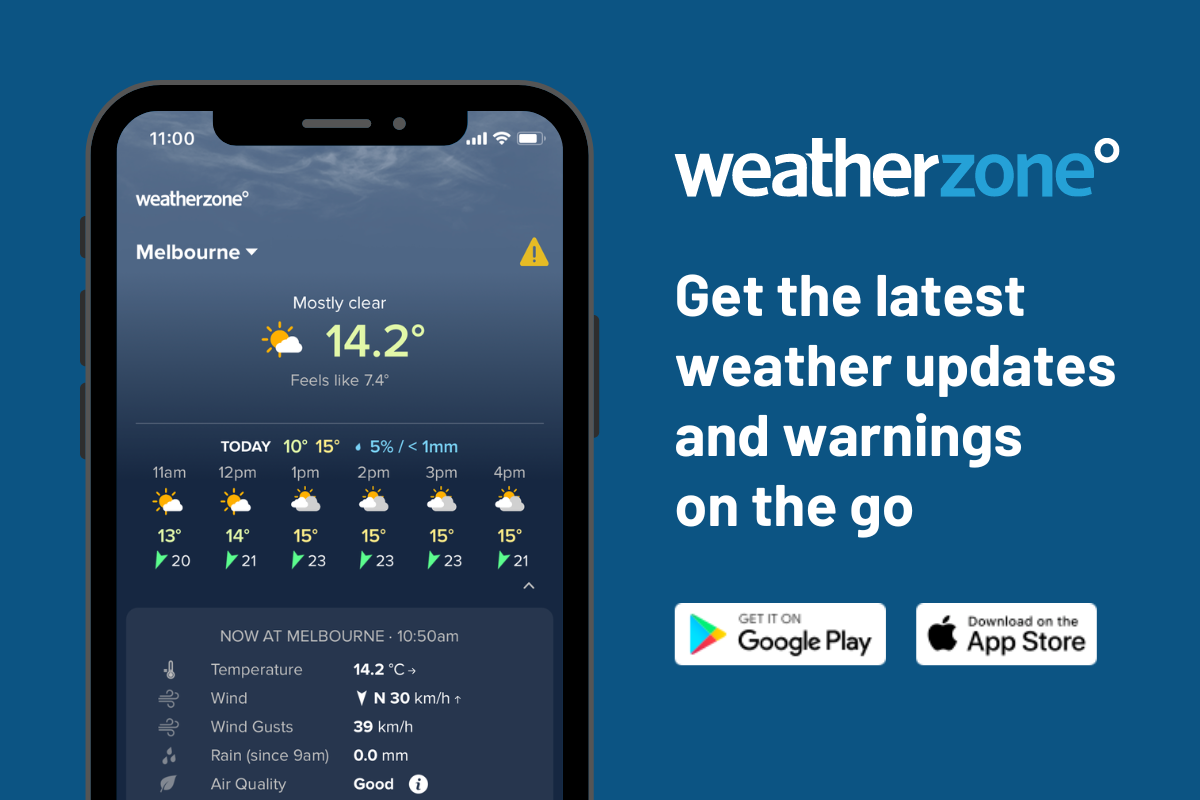
You can also see the ‘feels-like’ temperature on the go with our app.
*Note: an interesting consequence of how the feels-like temperature is calculated means it is calibrated for humans. Other animals such as dogs and cats moderate their internal temperatures differently, so they can feel quite comfortable in the same weather conditions that you find unpleasant and vice versa.
Our Weatherzone meteorologists closely monitor the ‘feels-like’ temperature to communicate how the forecast temperature will result in energy demand changes. To find out more please visit our website or email us at apac.sales@dtn.com.




