Prosper in a dynamic world
Search

At last, snow!


It’s been a while, but heavy snow has fallen in the alpine regions of New South Wales and Victoria in Australia.

The not-so-great news is that Tuesday’s flakes appear to have been a relatively quick burst. But some snow is better than no snow after an almost totally snowless midwinter spell from early July to early August – with rain and unseasonably warm temps thrown into the mix.

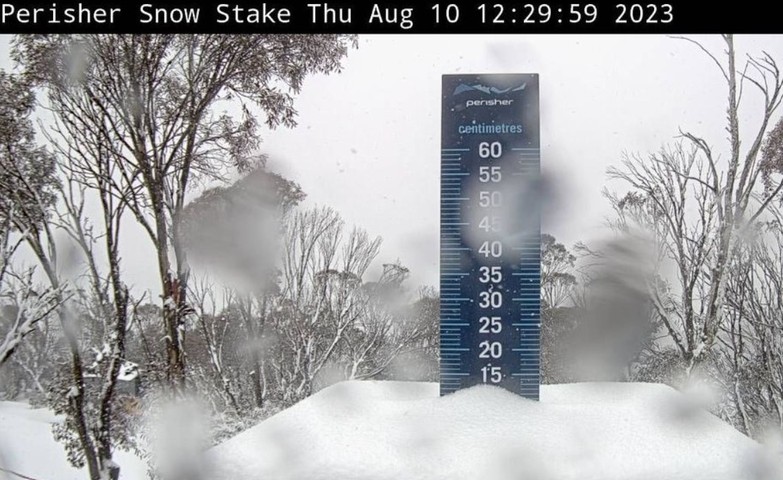
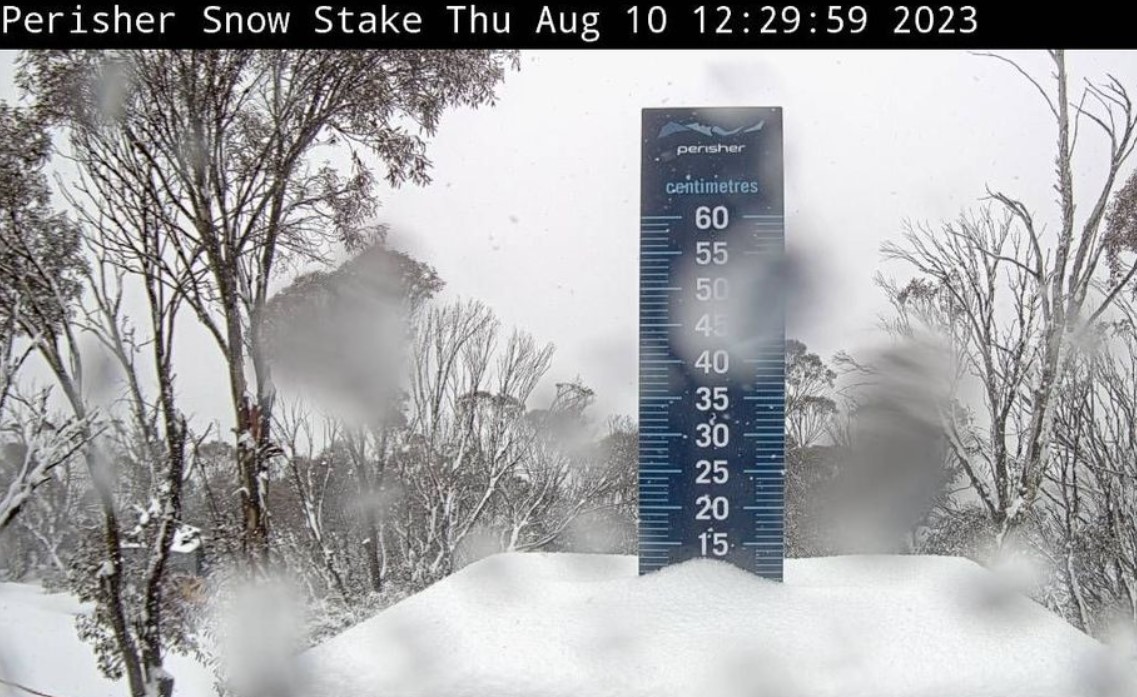
This is what the Perisher snow stake looked like at 12:30 pm Thursday. As you can see, there’s around 10 cm of accumulated snow.
At last snow!

Image: That’s our favourite kind of stake for lunch. Source: ski.com.au.

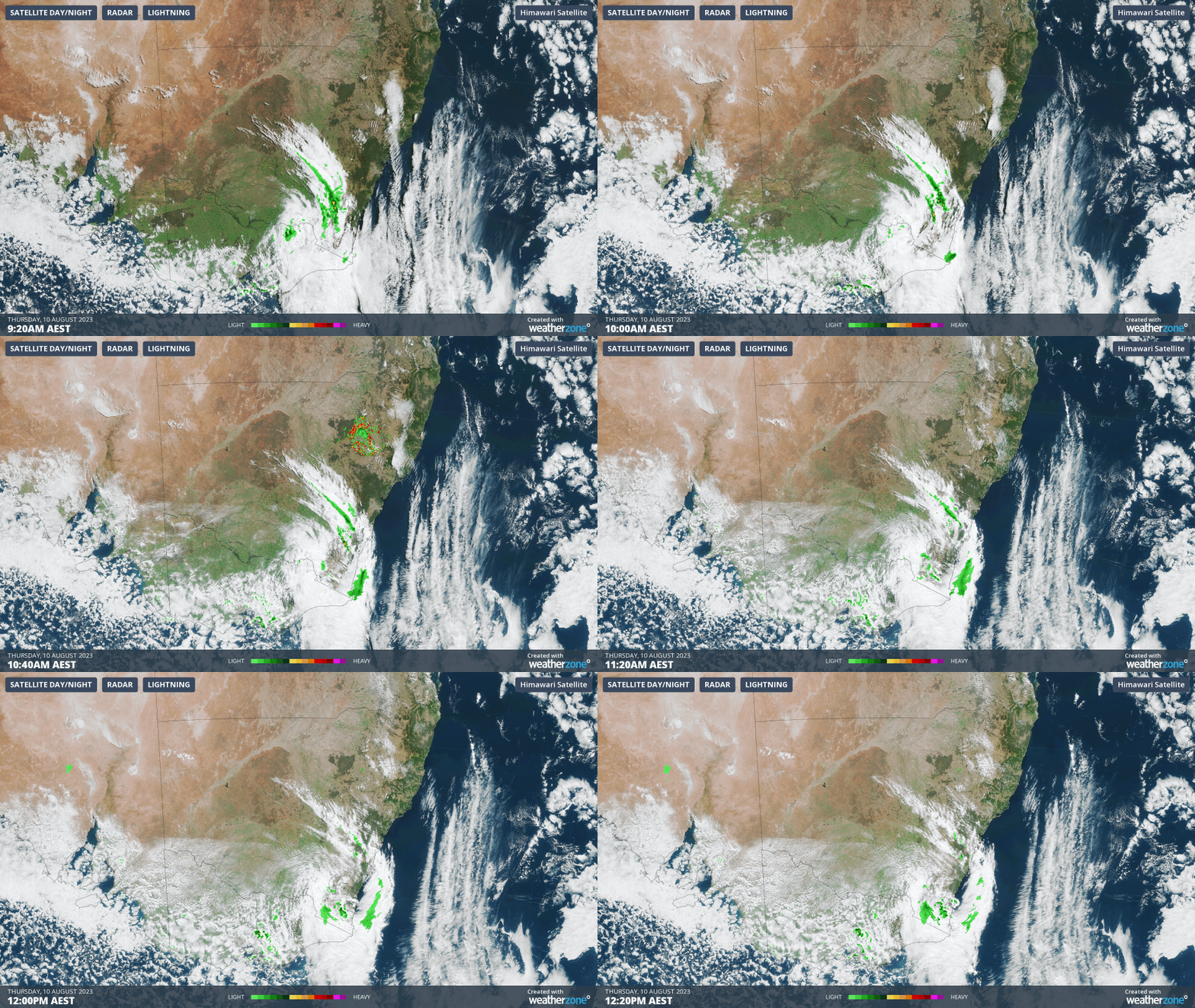
Below is a three-hour loop showing what the cloudband associated with the cold front looked like as it crossed the alpine region on Thursday morning.

As you can see, the main band of moisture was pretty narrow and short-lived. Perisher received 5.8 mm of precipitation in its official weather station between 9 am and 12:30 pm, which generally translates to roughly the same amount of snow in centimetres, or sometimes a little more when the snow is wettish Aussie “cement”.
At last snow!

You can also see cold air pushing northwards from Bass Strait on the loop above, and that should generate a few more snow showers throughout the day, especially at the southernmost Victorian resorts Mt Buller and Mt Baw Baw where snow is desperately needed.

So Thursday’s snowfall is far from a game changer in terms of repairing the damage of the last month of weather, which dramatically reduced the snowpack and the amount of water running off into the hydro dams.

For more information on Weatherzone’s snow and hydro forecasts, please contact us at apac.sales@dtn.com.
Latest news

Satisfy your weather obsession with these news headlines from around the nation, and the world.

Australia’s warmest winter on record pushed gas to a 22-year low

Australia just had its warmest winter on record across large parts of the country, and the mild weather produced the lowest gas output since 2004 and cut wholesale electricity prices nearly in half. Despite the unusually warm winter, demand hit a new NEM-wide winter record of 24,220 MW — but ample rooftop and grid solar meant the […]

Remote WA mining regions hit with nearly 300,000 lightning strikes over past days

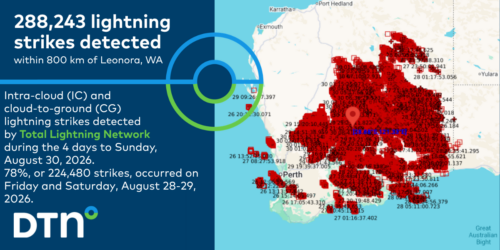
WA’s remote mining regions have been impacted by thunderstorm, lightning and heavy rainfall only detectable using remote sensing methods. Nearly 300,000 lightning strikes detected across WA DTN Total Lightning Network (TLN) detected over 288,000 lightning strikes above Western Australia between Wednesday and Sunday, August 26-30, 2026. A vast majority of this lightning was observed over […]

A warm, light wind spring ahead for the NEM

A strong El Niño and an unusually stable Antarctic polar vortex are setting up a spring signal of light winds, elevated solar output, and a real risk of high-intensity heatwaves for the NEM.   This forecast could be a major flip to what the National Electricity Market (NEM) has experienced so far during Winter 2026. On 1 July 2026, the NEM […]

Habagat and successive typhoons trigger widespread flooding in the Philippines

Three consecutive weeks of enhanced southwest monsoon (Habagat) and back-to-back typhoons have flooded Luzon and the Visayas, grounding flights, triggering distribution power outages, cutting off transport corridors, and raising landslide risk across mining-dense provinces like Benguet and the Cordillera. The disruption is far from over with PAGASA expecting the monsoon to remain in place until […]