Prosper in a dynamic world
Search

Tropical Cyclone Freddy possible over Coral Sea

The low pressure system that caused flooding in central QLD earlier this week could soon become a tropical cyclone over the Coral Sea.

The sequence of satellite images below shows a tropical low located around 500 km to the east of the Qld coast this morning, near Willis Island.
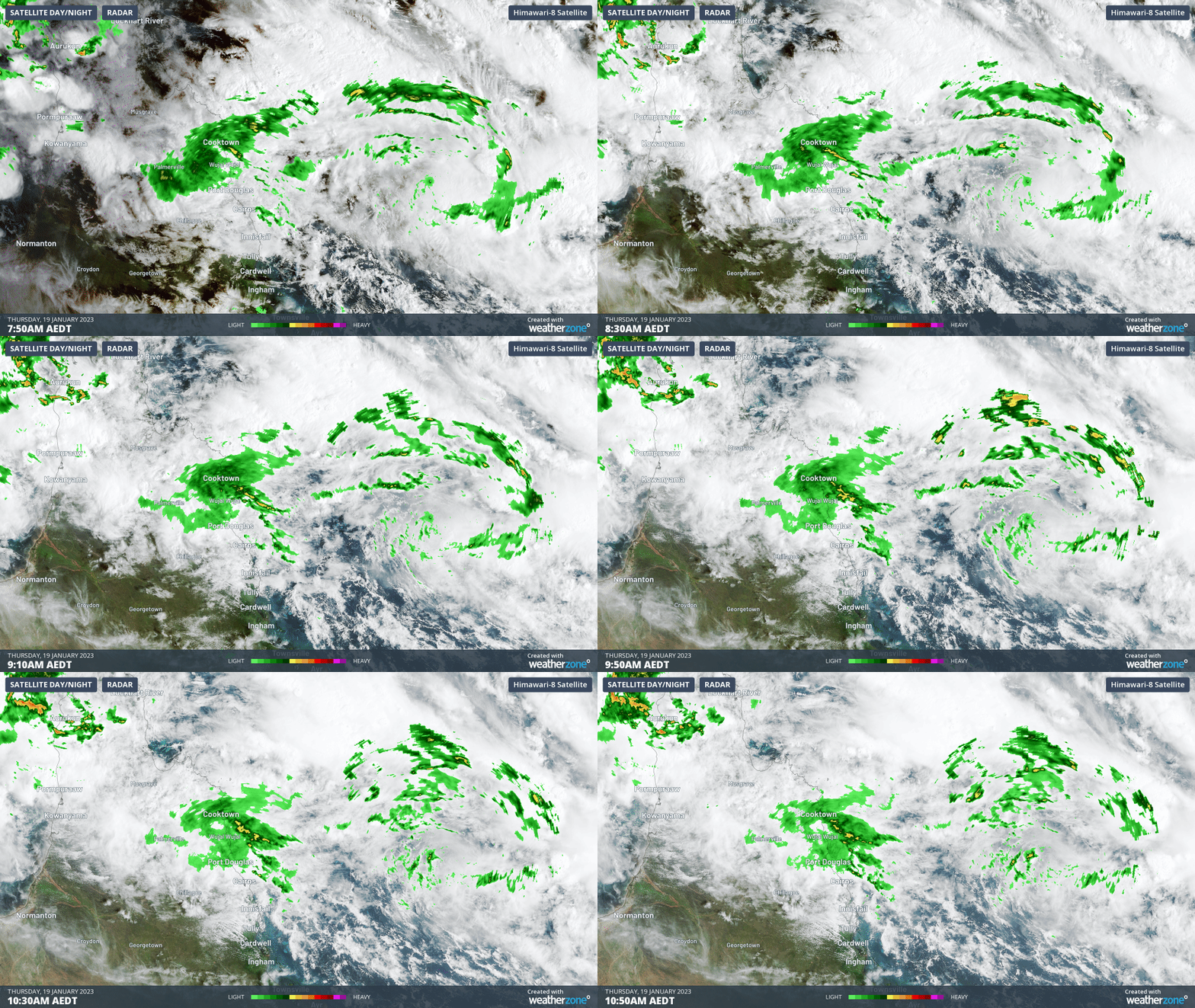
Tropical Cyclone Freddy possible over Coral Sea

Earlier this week, this low helped produce more than one metre of rain in parts of central eastern Qld, resulting in major flooding in some areas. Proserpine Airport picked up more than 800 mm of rain during this event and is already having its wettest January since 1974.

But with the tropical low now 500 km offshore and moving further away from Qld, rain has eased along the state’s east coast and floodwaters are receding.

Looking ahead, the low is likely to gain strength as it moves further away from the Qld coast over the next few days, drawing energy from the warm surface of the Coral Sea.

Based on current model guidance, the low has a moderate to high chance of becoming a tropical cyclone between now and Saturday. If it does reach tropical cyclone strength while still inside Australia’s area of responsibility (west of longitude 160º E), it will be named Freddy and become the third system named by Australia so far this season.

This tropical low/cyclone is not expected to have any direct impact on mainland Australia from now on. However, a monsoon trough extending towards its west will cause heavy rain over far northern Qld in the coming days.

Latest news

Satisfy your weather obsession with these news headlines from around the nation, and the world.

Australia’s warmest winter on record pushed gas to a 22-year low

Australia just had its warmest winter on record across large parts of the country, and the mild weather produced the lowest gas output since 2004 and cut wholesale electricity prices nearly in half. Despite the unusually warm winter, demand hit a new NEM-wide winter record of 24,220 MW — but ample rooftop and grid solar meant the […]

Remote WA mining regions hit with nearly 300,000 lightning strikes over past days

WA’s remote mining regions have been impacted by thunderstorm, lightning and heavy rainfall only detectable using remote sensing methods. Nearly 300,000 lightning strikes detected across WA DTN Total Lightning Network (TLN) detected over 288,000 lightning strikes above Western Australia between Wednesday and Sunday, August 26-30, 2026. A vast majority of this lightning was observed over […]

A warm, light wind spring ahead for the NEM

A strong El Niño and an unusually stable Antarctic polar vortex are setting up a spring signal of light winds, elevated solar output, and a real risk of high-intensity heatwaves for the NEM.   This forecast could be a major flip to what the National Electricity Market (NEM) has experienced so far during Winter 2026. On 1 July 2026, the NEM […]

Habagat and successive typhoons trigger widespread flooding in the Philippines

Three consecutive weeks of enhanced southwest monsoon (Habagat) and back-to-back typhoons have flooded Luzon and the Visayas, grounding flights, triggering distribution power outages, cutting off transport corridors, and raising landslide risk across mining-dense provinces like Benguet and the Cordillera. The disruption is far from over with PAGASA expecting the monsoon to remain in place until […]