Prosper in a dynamic world
Search

Tropical Cyclone Freddy possible over Coral Sea

The low pressure system that caused flooding in central QLD earlier this week could soon become a tropical cyclone over the Coral Sea.

The sequence of satellite images below shows a tropical low located around 500 km to the east of the Qld coast this morning, near Willis Island.
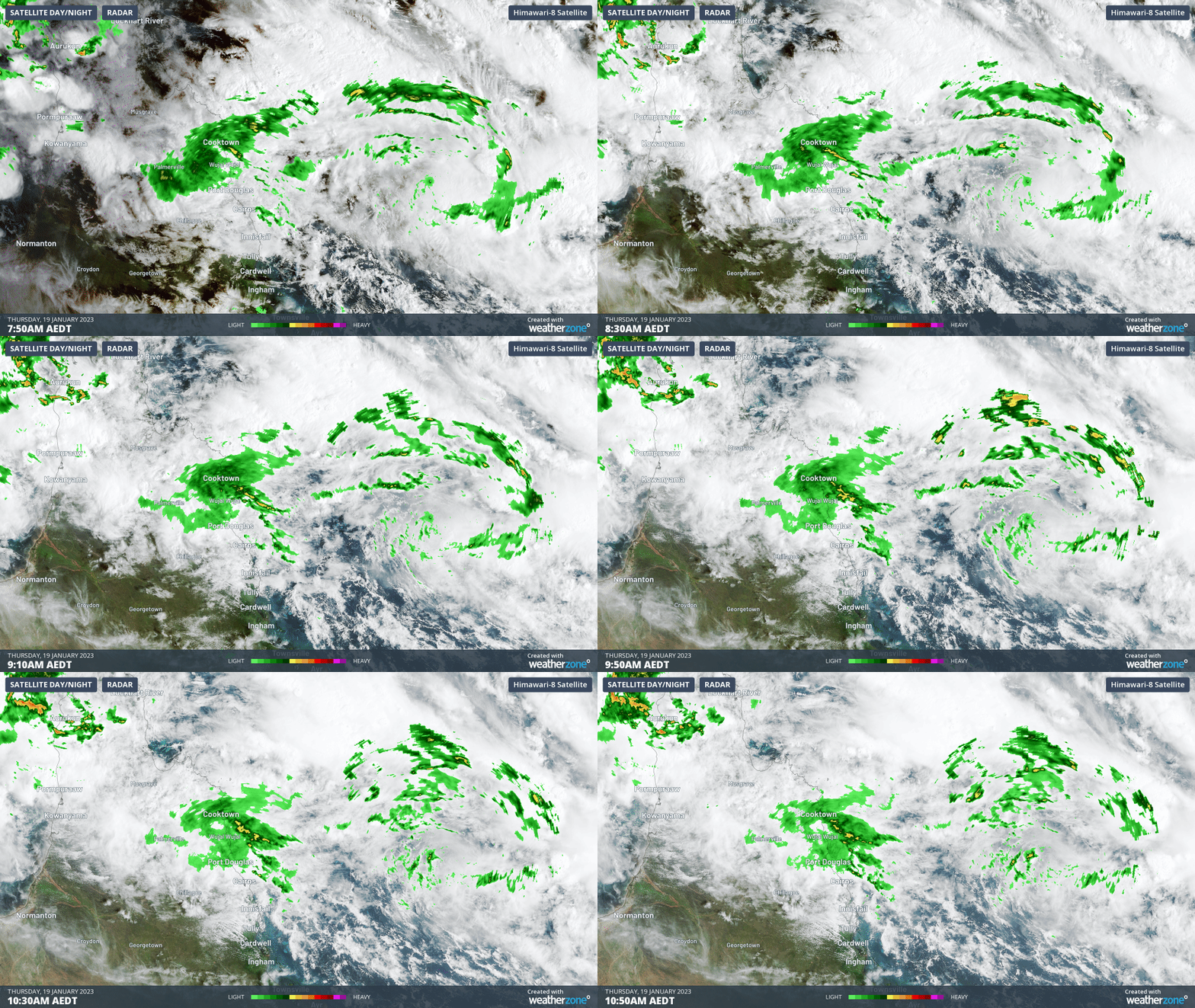
Tropical Cyclone Freddy possible over Coral Sea

Earlier this week, this low helped produce more than one metre of rain in parts of central eastern Qld, resulting in major flooding in some areas. Proserpine Airport picked up more than 800 mm of rain during this event and is already having its wettest January since 1974.

But with the tropical low now 500 km offshore and moving further away from Qld, rain has eased along the state’s east coast and floodwaters are receding.

Looking ahead, the low is likely to gain strength as it moves further away from the Qld coast over the next few days, drawing energy from the warm surface of the Coral Sea.

Based on current model guidance, the low has a moderate to high chance of becoming a tropical cyclone between now and Saturday. If it does reach tropical cyclone strength while still inside Australia’s area of responsibility (west of longitude 160º E), it will be named Freddy and become the third system named by Australia so far this season.

This tropical low/cyclone is not expected to have any direct impact on mainland Australia from now on. However, a monsoon trough extending towards its west will cause heavy rain over far northern Qld in the coming days.

Latest news

Satisfy your weather obsession with these news headlines from around the nation, and the world.

Rapid El Niño signal accelerating risk for Australian businesses

El Niño–favourable conditions are gathering pace across the tropical Pacific, with key ocean indicators approaching threshold levels and early atmospheric responses emerging.  While uncertainty remains around final El Niño strength, historical analogues show that even weak events can generate widespread impacts, including reduced rainfall, warmer daytime temperatures, increased frost risk, elevated fire danger, reduced tropical cyclone activity, and more. Industries including […]

Australia’s 2025–26 Cyclone Season: Slightly Above Average, Dominated by Severe Systems

Australia has just experienced a highly impactful tropical cyclone season, with more than 60% of systems reaching severe intensity, causing widespread disruption and damage to communities and multiple industries across northern Australia.  The 2025–26 Australian tropical cyclone season officially ran from 1 November 2025 to 30 April 2026. During this six-month period, Australia saw 11 tropical cyclones, with nine […]

What does a ‘super El Niño’ mean for Australia’s businesses?

There are signs that a very strong, or ‘super’ El Niño could develop in the tropical Pacific Ocean later this year. So, what does this mean for Australia’s weather during the second half of 2026? El Niño on the horizon The tropical Pacific Ocean is currently in a neutral state, meaning neither El Niño nor […]

How does DTN help businesses monitor bushfire induced pyrocumulonimbus thunderstorms that ignite more fires?

Intense heat from bushfires during elevated fire danger days can trigger fire-induced pyrocumulonimbus thunderstorms that ignite additional fires. In early January 2026, an extreme heatwave sweeping over southeastern Australia brought catastrophic fire danger to Victoria. Intensely hot bush and grass fires spread erratically and quickly in hot, dry and gusty winds, with pyrocumulonimbus generating lightning, […]