An outbreak of severe wintry weather will affect southeastern and eastern Australia this week, with damaging winds, heavy rain, thunderstorms, flooding, widespread snow and hail.
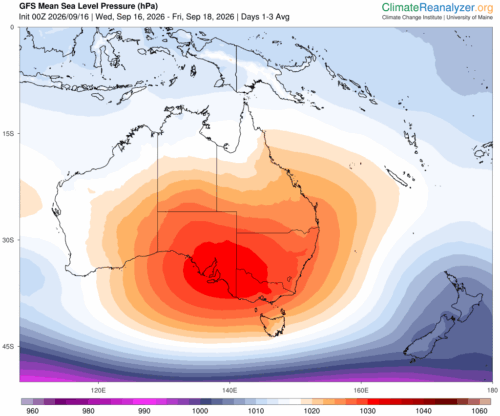
A strong cold front will impact southern Australia on Monday and Tuesday, leading to widespread rain and damaging winds. The front will then create a cut-off low over NSW, which will move slowly east and produce rain, storms, snow and hail in parts of Victoria, NSW and Queensland.
WIND
The cold front will cause powerful winds in SA, Tasmania and Victoria on Monday and Tuesday. Severe weather warnings have been issues for damaging gusts in some areas.
Parts of SA and Victoria may experience northwesterly wind gusts above 25 m/s, which may exceed cut-off speeds and lead to a reduction in wind power.
From Wednesday, a developing low pressure system will cause wind to strengthen over eastern Tasmania, eastern Victoria and southern NSW.
There is a risk of sustained winds exceeding 20 knots from Wednesday afternoon and the weekend along the coastline of NSW, with the strongest winds most likely on Thursday and Friday. However, this will depend on the position and strength of the low pressure system.
The passage of the front and low pressure system will cause widespread rain across SA, Tasmania, Victoria, NSW, the ACT and southern Queensland between Monday and the weekend.
The focus of the rain and cloud on Monday and Tuesday will be in SA, Victoria and Tasmania. This rain may cause localised flooding in some areas, most likely in Tasmania.
Heavy rain and thunderstorms are then likely to affect eastern Victoria and southeastern NSW on Wednesday and Thursday, as the low pressure system moves over Tasman Sea. Accumulated totals over these two days are a good chance of reaching 100-200mm and may exceed 300mm in some areas, which brings a high risk of flooding in this region (figure 1).
Sydney’s best chance of rain and thunderstorms will be on Wednesday and Thursday.
FREEZING TEMPERATURES
One of the main features of this weather event will be widespread, abnormally cold weather for several days and nights.
A large pool of cold air that originated near Antarctica will spread across Australia’s southeastern states between Monday and Friday. This frigid polar air will send shivers across multiple states and see a surge in heater use across multiple states.
All of the NEM cities are forecast to be 3-4 degrees below average for at least two days this week, beginning in Adelaide on Tuesday and then spreading across the rest of the NEM on Wednesday and Thursday (figure 2)
SNOW
Widespread and low-level snow will fall across several states this week. Unlike regular cold fronts, these cut-off lows typically cause snow-bearing cold air to venture further north into NSW and sometimes southern Queensland.
There is still some uncertainty between forecast models regarding when, where and how much snow will fall from this system. At this stage, there is a good chance of snow in the mainland Alps from Tuesday. Snow will also extend up ranges and tablelands in central and northern NSW on Wednesday and Thursday, with a chance of some snow in southern Queensland late Wednesday or on Thursday.
There is a chance that snow will tend to rain in Victoria and southern NSW from Thursday and warmer air moves in from the southeast. This may erode some of the newly-layed snowpack, especially for lower slopes in the mountains. Runoff from this snow melt may reach the hydro lakes later this working week.
As the cold air pushes north, it may coincide with a surge of moisture and deliver a period of sustained and heavy snow in central or northern NSW on Wednesday or Thursday.
For more information, please take a look at your dashboard or contact us at apac.sales@dtn.com.