
One industry was left feeling salty after rain hit WA this week. Salt is one of the most widely used substances on earth and Australia is home to some of the largest salt lakes in the world.
The Dampier, Port Hedland and Lake MacLeod salt lakes in Western Australia have the capacity to collectively produce approximately 10.3 million tonnes of salt a year.
Much of the sea salt produced in these lakes is exported, making Dampier Salt Limited (DSL) the largest exporter of salt in the world.
What are salt lakes?
Evaporation salt lakes are shallow evaporation ponds, which are filled with sea water. The ponds are huge, typically expanding over hectares of land.
To give you an idea of the scale, Dampier Salt’s salt lakes are equivalent to 168,000 Olympic sized swimming pools (figure 2).
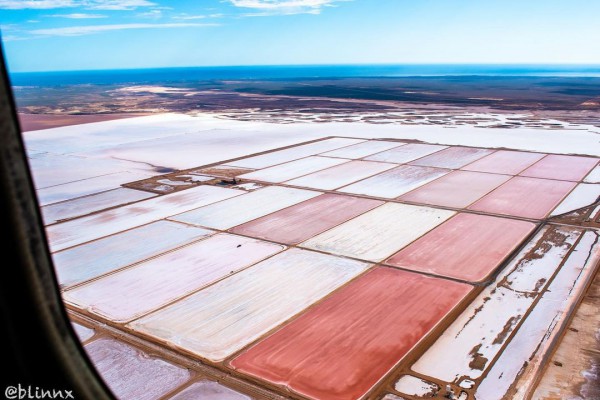
Figure 2: Lake MacLeod salt lakes, June 4, credit: @blinnx from @norwestairwork / Instagram.
The sun evaporates the shallow sea water, leaving salt behind and ready to be harvested, washed and transported to the nearby port.
Usually, two types of ponds are used. The first pond is where the salty water from the ocean or Salt Lake is evaporated. The second, called the ‘crystallizing pond’, is where the salt crystallizes and dries, before it’s harvested.
This is the oldest method of salt production, which is sustainable and relies entirely on the sun and the wind. These ponds can effectively mine salt indefinitely.
Of course, there are other methods of mining salt, such as mining underground, however this is not prominent in Australia.
Where are the salt lakes located in Australia? Why are they located there?
Western Australia does the heavy lifting for the Australian salt industry, particularly in the Pilbara, Gascoyne and Goldfield regions.
This is because the salt lakes require a hot, dry climate and low rainfall, which enable the businesses to harness the power of the sun and wind.
The Dampier and Port Hedland operations are located next to the vast Indian Ocean, which enables sea water to be easily transported to the lakes.
South Australia also has some evaporation salt lakes in Whyalla, Lake MacDonell and Lochiel.
Weather impacts on salt mines.
For evaporation salt mines, clear skies, a warm climate, and steady prevailing winds are necessary to produce enough evaporation to make salt.
However, heavy rainfall across the lakes, which introduces fresh rainwater, will dilute the salt concentration of the lake, and reduce evaporation rates.
Rainfall rates exceeding 20mm in 24 hours and 5mm in 1 hour are both issues for salt lakes, as it dilutes the salt and could contaminate the water.
A deep low-pressure system and cold front on Monday generated around 20mm of rainfall in the Lake MacLeod region on Monday, July 12. This rainfall was enough to have an impact on lakes in this region.
Weatherzone provides heavy rainfall, large swell, prevailing winds and heat stress warnings to several businesses in the WA region. For more information, please contact us at apac.sales@dtn.com.




