Satellites have spotted lava spilling down the side of Big Ben, one of only two active volcanoes located on Australian territory.
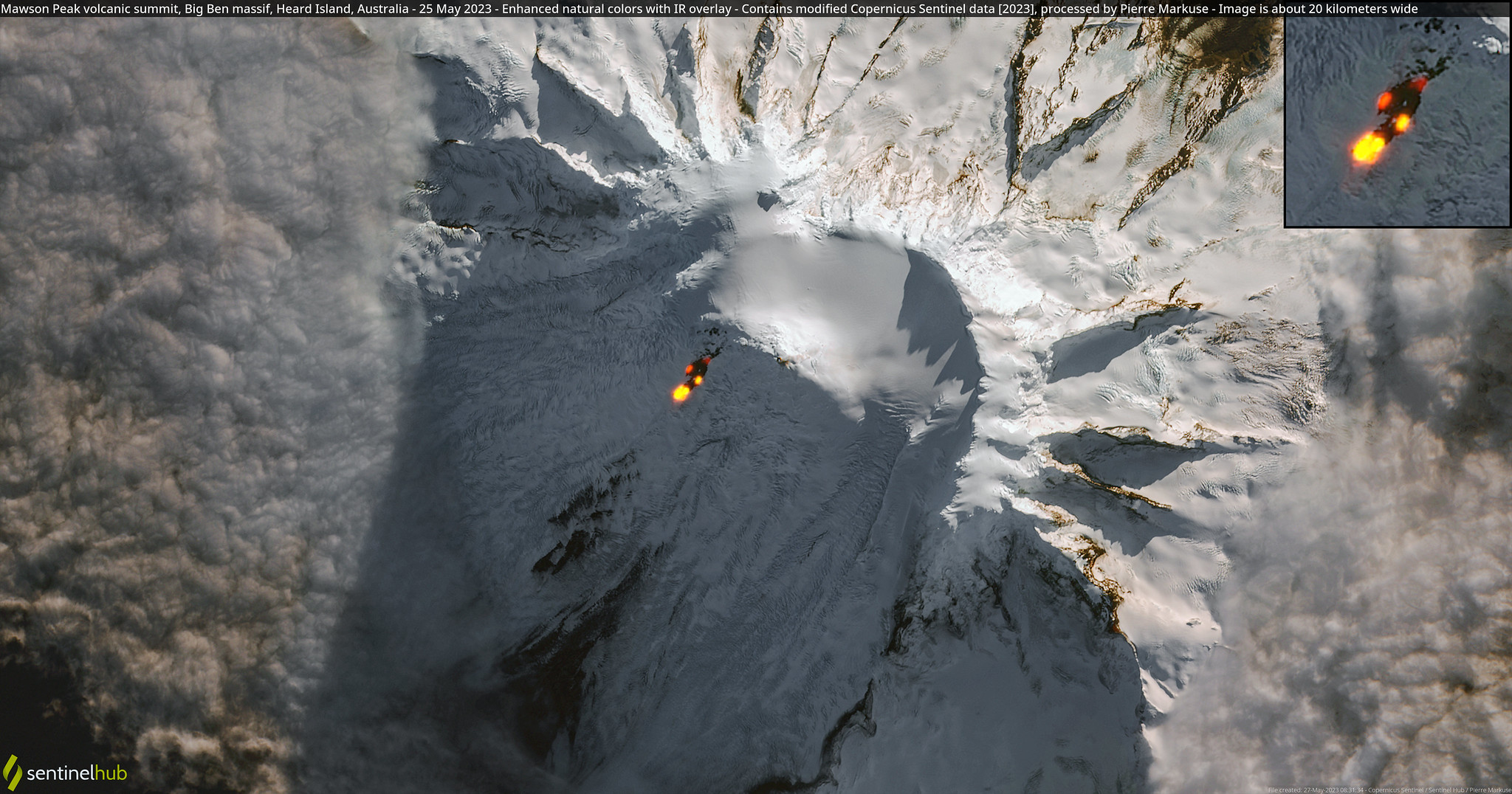
The image below shows a clear view of Heard Island captured by a Sentinel-2 satellite on May 25, 2023. The stunning picture – a composite of visible and infrared satellite images – shows lava spilling down the side of Big Ben, a 20 km-wide volcano located at the centre of Heard Island, roughly 4000 km to the southwest of WA.
While these orbital views provide breathtaking perspectives of volcanic eruptions, the same satellite-derived infrared data is critical for wildfire risk modeling, allowing agencies to monitor thermal anomalies and enhance their emergency response and disaster management capabilities.
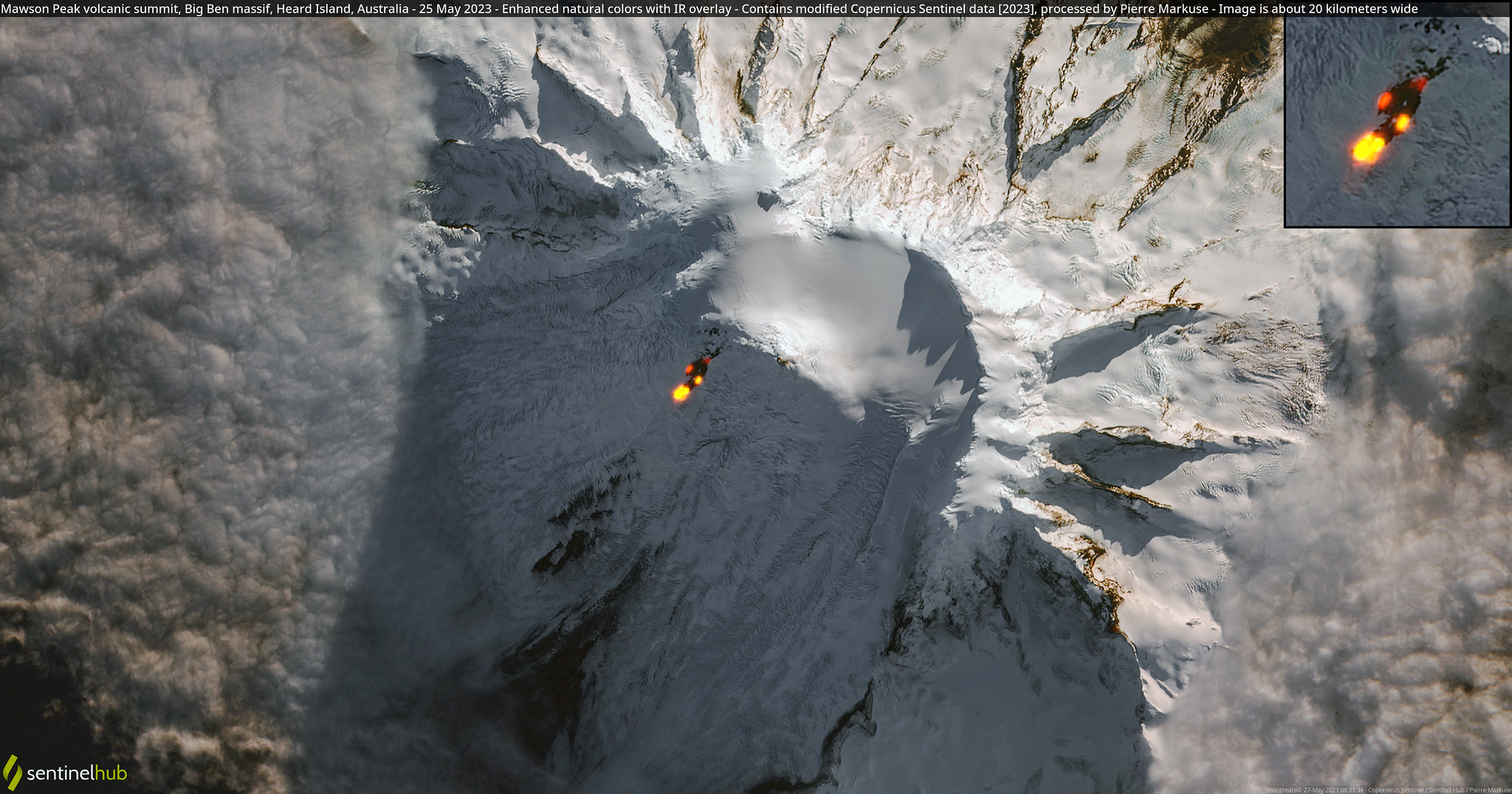
Image: Composite satellite image of the Mawson Peak volcanic summit on Big Ben, Heard Island, Australia – 25 May 2023. Source: Modified Copernicus Sentinel data [2023], processed by Pierre Markuse
The lava flow seen at Big Ben on May 25 was still visible on May 28, despite being partially obscured by clouds. Satellite imagery suggests that these are the latest in a flurry of small eruptions, which have been occurring at the volcano during the last 18 months.
While there are no actively erupting volcanoes on mainland Australia, the Territory of Heard Island and McDonald Islands is home to Australia’s only two active volcanoes: Big Ben (Mawson Peak) and McDonald Island.
Volcanoes and earthquakes in one week
The latest eruption of Big Ben came just days before some people living in Melbourne, Vic were woken by a magnitude 3.8 earthquake on Sunday night.
The quake occurred near Sunbury at 11:41pm on May 28, at a depth of 2 km. Despite being a relatively weak earthquake, Geoscience Australia received more than 25,000 felt reports stretching from Bendigo and Albury in the north to Hobart in the south.
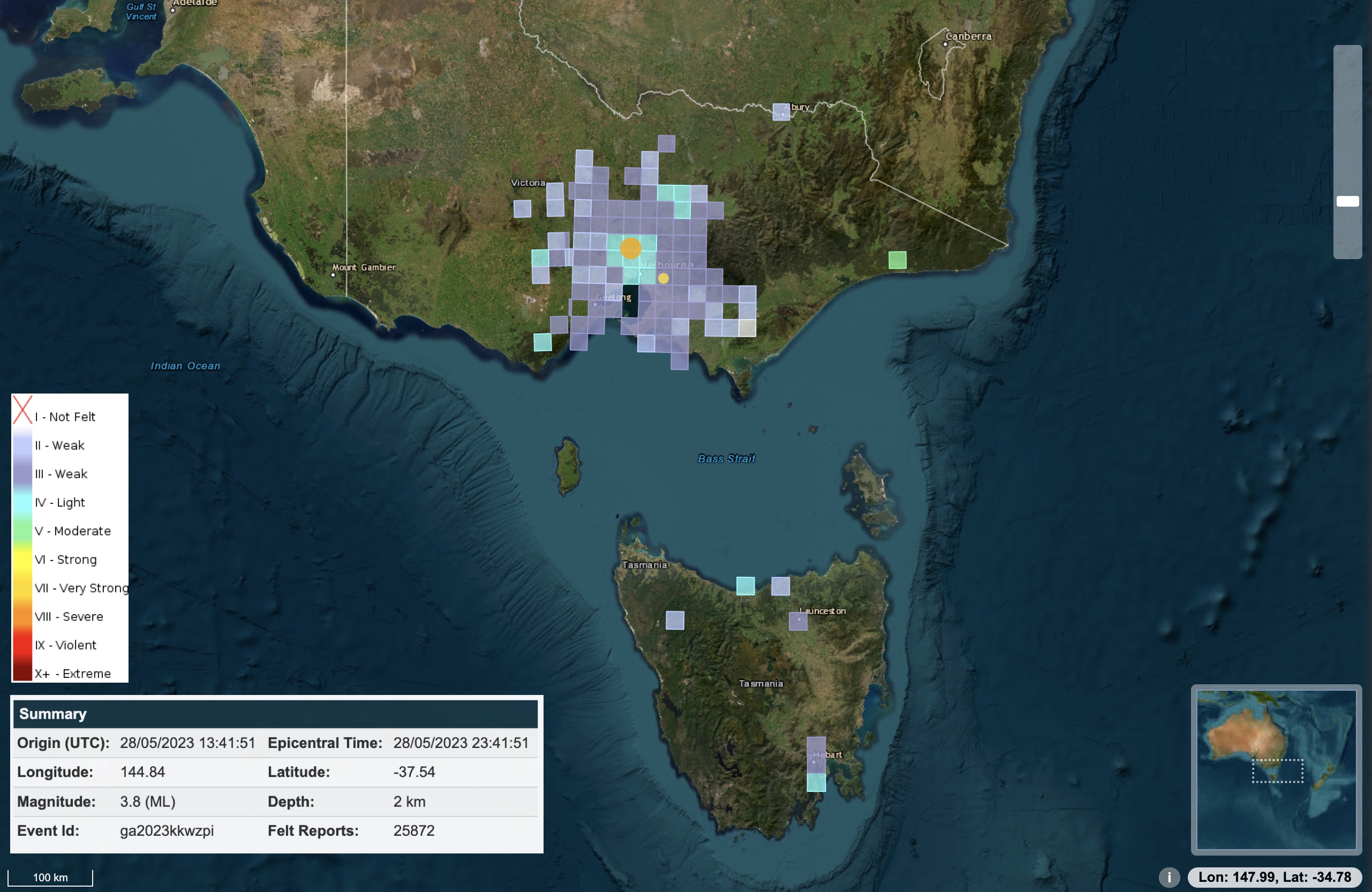
Image: Felt reports received by Geoscience Australia following a 3.8 magnitude earthquake on Sunday night, May 28. Image: Geoscience Australia
While it is interesting to see an active volcano and a noticeable earthquake in Australia at the same time, these two events are not directly linked.
Australia experiences around 100 earthquakes of magnitude 3.0 or greater each year, on average. Stronger earthquakes measuring magnitude 5.0 or higher only happen once every one-or-two years, while magnitude 6.0 quakes or stronger are only seen about one every ten years.
While Weatherzone does not forecast earthquakes and volcanoes, we have all weather and climate forecasts covered to support the insurance industry during some of Australia’s most extreme events. To find out more, please visit our website or email us at apac.sales@dtn.com.