
Prosper in a dynamic world
Search

An active tropical cyclone season was promised, but has this been delivered?

Coming into the 2020/21 tropical cyclone seasons, all signs were pointing towards an above-average number of cyclones in the Australian region.

So far this season, this hasn’t eventuated. So what happened?

The tropics have actually been very active this season with 17 tropical lows generating widespread rainfall and strong winds across northern Australia. At times, the rainfall moved to the south of the country, with the whole country recording its third wettest December on record.

Despite the high number of tropical lows that have formed, only six have developed into tropical cyclones. This falls well below the average of nine to eleven a season.

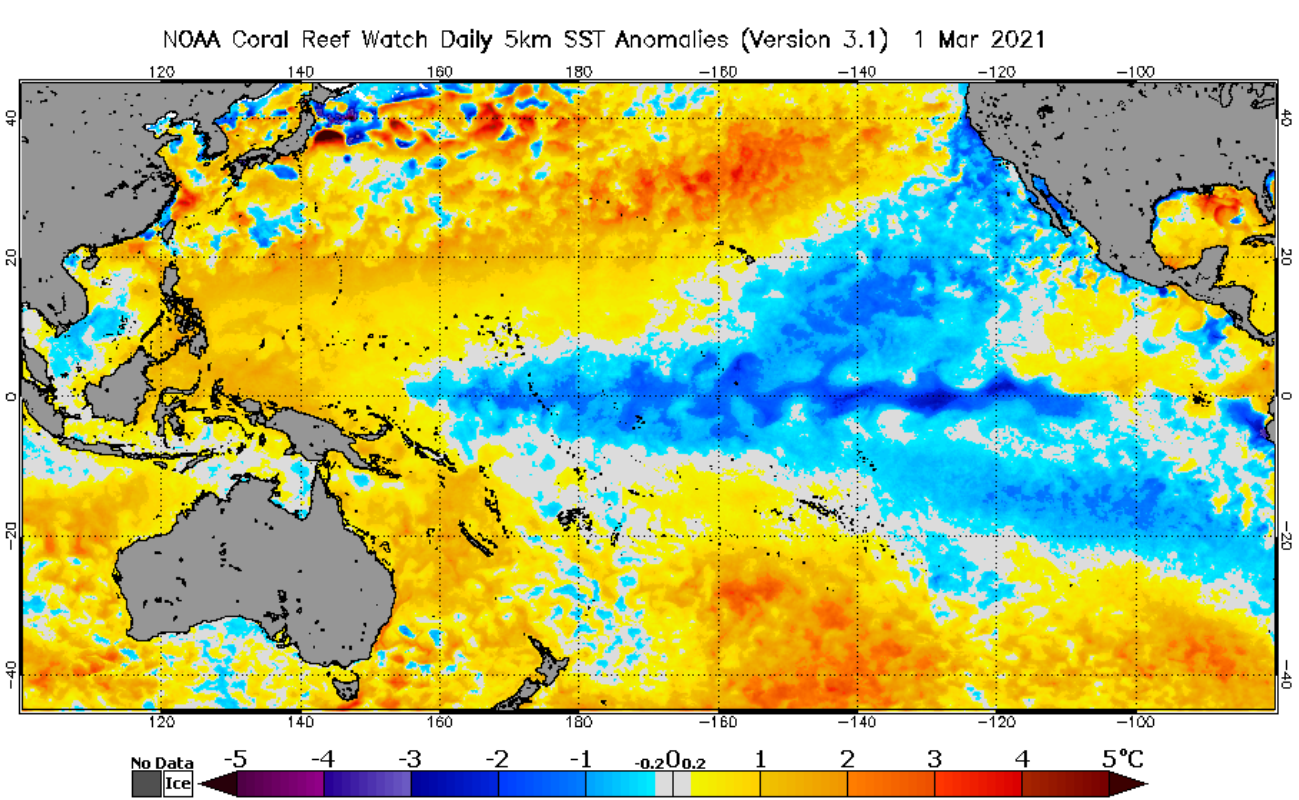
This went against expectations because we were primed for an above normal tropical cyclone season owing to La Niña and warm oceans across northern Australia (figure 1). The warm oceans are one of the ingredients cyclones need to develop  – think of the oceans as their energy source or fuel.
Active tropical cyclone season promised but not delivered

Figure 1: NOAA Sea Surface Temperature (SST) anomalies on the 1st of March 2021.

So why have there been so few cyclones this season?

Firstly, many of the low pressure systems have developed on or near the coastline, which has deprived them of their ‘fuel’ (warm ocean) that they need to develop.

Secondly, the wind setup has not been quite right, with opposing winds at different heights in the atmosphere, breaking the storm apart and working against each other.

Finally, the season is not over, we have a few months to go and March is usually the most active month. Never fear our meteorologists will be watching any tropical low development in the next few months. https://business.weatherzone.com.au

Latest news

Satisfy your weather obsession with these news headlines from around the nation, and the world.

El Niño Is Here: What a Potential Record Event Means for Southeast Asia and Australia

  El Niño was officially declared in June 2026, raising the prospect of widespread impacts across Southeast Asia, from extreme heat and water shortages to higher energy demand and agricultural stress.   The World Meteorological Organization has warned countries to “prepare for it to be severe”, while several global forecast models suggest the event could rank among […]

How El Niño will shape Australian port operations in winter-spring 2026

Australian ports and marine pilots can expect a season of shifting wind and swell patterns through winter and spring 2026, as a developing El Niño brings the likelihood of drier conditions and more variable operating windows across the country’s coastline.  Will El Niño develop in 2026?  There are clear signs that an El Niño pattern is becoming […]

From Kimberley to northern NSW: Bushfire outlook flags risk for resources sector this winter

Bushfire risk doesn’t usually make headlines in June, but AFAC’s winter seasonal outlook is putting mining and resources operators on alert from the Kimberley to the NSW.  Australia’s official seasonal bushfire outlook for winter 2026 was released by AFAC on Thursday, May 28. The outlook predicts increased fire risk across the northern parts of the Great Sandy Desert and surrounds […]

The signal was there weeks earlier: forecasting one of the year’s biggest wind events

In mid-May 2026, DTN APAC meteorologists flagged a strengthening Southern Ocean pattern in model guidance, signalling an extended run of record-challenging wind conditions across the NEM.  Nearly three weeks later, NEM wind generation climbed from around 1.5GW to more than 9GW, supplying roughly one-third of the grid and coming within 1GW of the all-time generation record.  The event highlighted […]



