
Prosper in a dynamic world
Search

222 mm in three hours triggers flash flooding in NSW, QLD

Parts of northeast NSW and southeast QLD were inundated by torrential rain on Thursday night, with some places collecting more than 300 mm during a barrage of thunderstorms.

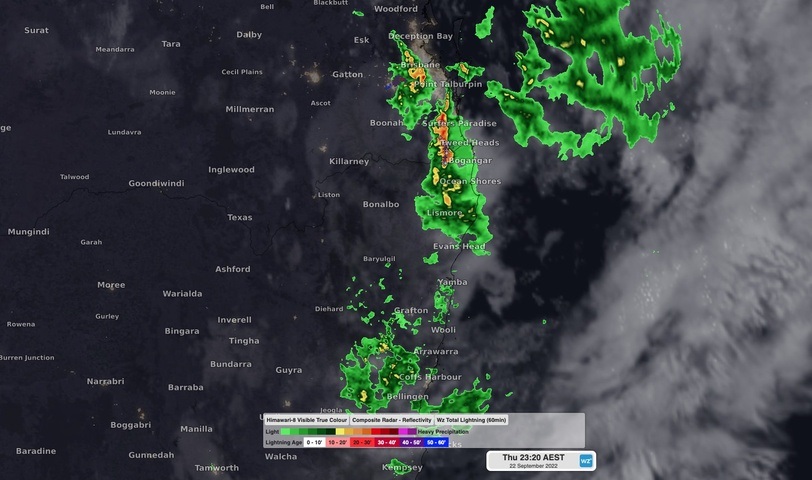
A deepening low pressure system interacting with copious moisture and an unstable atmosphere produced a sustained period of heavy rain and thunderstorms over northeast NSW and southeast QLD on Thursday night into Friday morning.

The heaviest rain occurred in the hinterland region near the QLD/NSW border, where near-stationary thunderstorms delivered several hours of torrential rain that caused flash flooding.

Rain gauges at Upper Springbrook in QLD and Couchy Creek in NSW collected a whopping 222 mm in just three hours late on Thursday night. By 9am on Friday, Couchy Creek had amassed 291 mm during the past 24 hours and Upper Springbrook had collected 317 mm.

Another rain gauge near Clagiraba in QLD received 104 mm in just one hour on Thursday night.
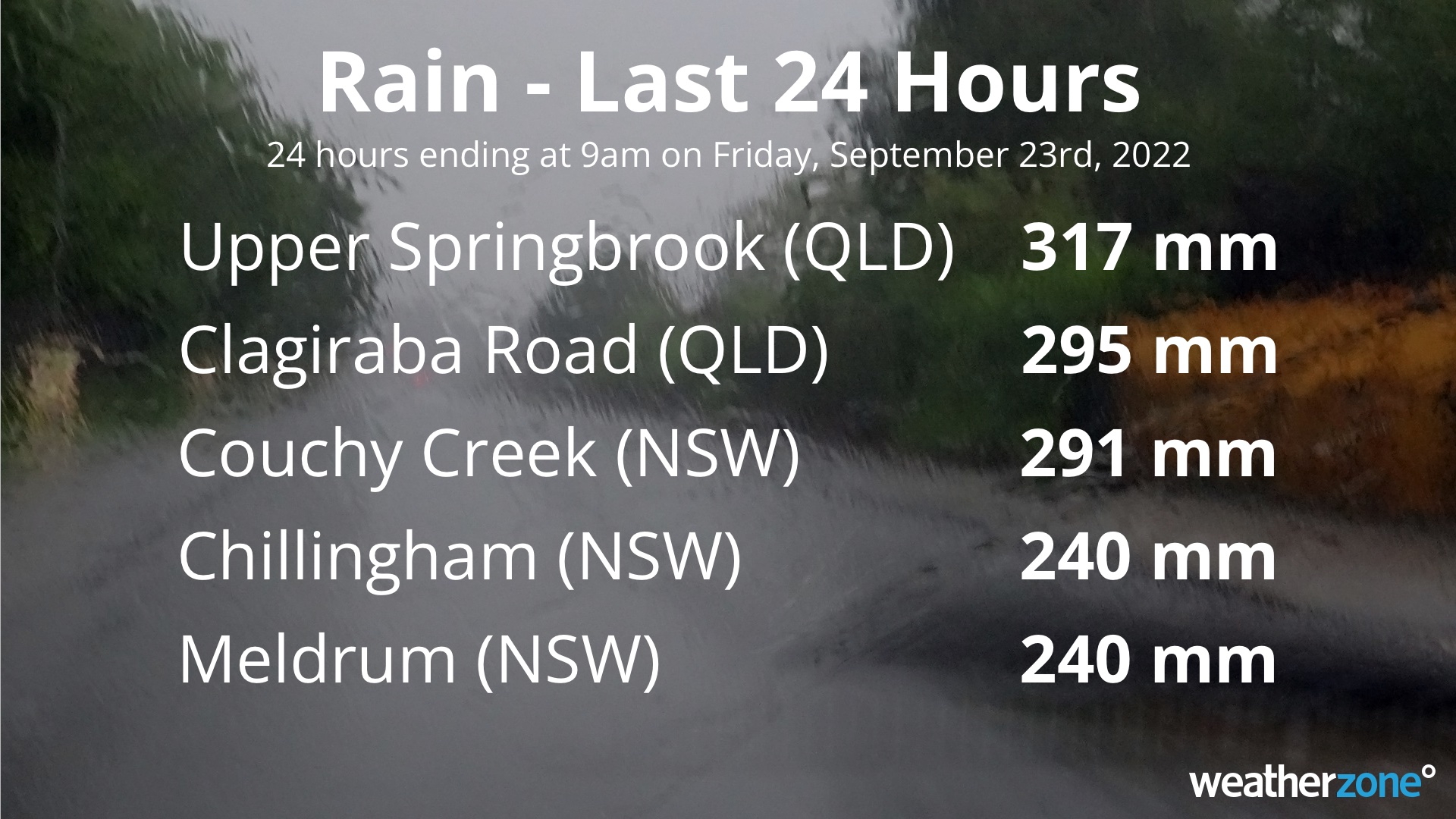
This intense rainfall caused minor to moderate flooding in some areas and triggered numerous warnings for flooding, heavy rain and severe thunderstorms.

Heavy rain and storms will remain a threat in northeast NSW and southeast QLD on Friday morning, before rain eases into the afternoon as the low pressure system moves offshore.

This weather system has also caused flooding over other areas of NSW and southern QLD during the last two to three days. Check the latest warnings for the most up-to-date information on current and future flooding.

For more information on our products or how we can help you with your business needs, please contact us at apac.sales@dtn.com. 

Latest news

Satisfy your weather obsession with these news headlines from around the nation, and the world.

Signs of a positive Indian Ocean Dipole, but it may not follow the textbook

Waters off Indonesia have cooled in recent weeks, an indication that a positive Indian Ocean Dipole (IOD) event could be developing. It’s an important climate driver for Australia, and it could shape rainfall and temperatures heading into summer, with flow-on effects for farmers, energy and other industries.  What is the Indian Ocean Dipole?  The IOD […]

1.3 million lightning strikes and a record September downpour: the storms testing WA’s Goldfields

Leonora, WA, had its wettest September day on record earlier this month. Three weeks later, more than 1.3 million lightning pulses were detected within 800 km of the town in 48 hours. Why is a stalled trough delivering storms to mining country, and what it could mean for operations?  The DTN Total Lightning Network detected […]

A very low wind power week, likely to continue

A stubborn blocking high over southern Australia will make for a very quiet week for wind generation and the pattern behind it isn’t a one-off.   It’s the seasonal signature of a super (very strong) El Niño combined with a positive Southern Annular Mode (SAM), and both the historical record and the current seasonal forecast suggest it’s likely to keep recurring through spring before a potential switch from November.  The setup right […]

Fastest strengthening El Niño on record: Impacts on Australian monsoon timing and wet season planning

Australia’s Mining and Resources sectors are bracing for a wet season shaped by one of the most rapidly developing El Niño events on record.    Looking back at how the strongest El Niño events in Australian history have played out, it becomes apparent that mining operations in Australia should be planning for a later monsoon […]


