Renewable energy is fast becoming a major source of energy across Australia and this revolution is affecting the mining industry.
Energy is one of the biggest expenses for mining companies. This is being compounded by the current cost and volatility of energy amid the surging price of gas and a complex mix of international and domestic events.
These factors are forcing many mining companies to ‘green’ to reduce costs and emissions, because renewable energy is largely immune to these volatile prices, making it easier to budget for energy costs.
Weatherzone’s Energy Sales Specialist Manfred Fussi says, ‘Mining sites are switching to renewable energy because it is cheaper (no fuel has to be purchased and shipped to the site), safer (no fuel has to be stored at site) and it cuts down CO2 emissions (carbon credits can be traded or used within the company).’
Major mining companies have unveiled plans to invest in wind turbines and solar panels on site to capitalise on these benefits.
Fortunately, wind and solar are both vast potential resources of renewable energy in Australia.
According to Geoscience Australia, ‘The Australian continent has the highest solar radiation per square metre of any continent and consequently some of the best solar energy resource in the world’
The map below shows the regions with the highest solar resource are the desert regions in the northwest and centre of the continent.

Image: Solar availability. Good 1,200–1,600MWh/m2, very good 1,600–2,000MWh/m2, and excellent 2,000– 2,400MWh/m2. Source: Australian Renewable Energy Agency ARENA
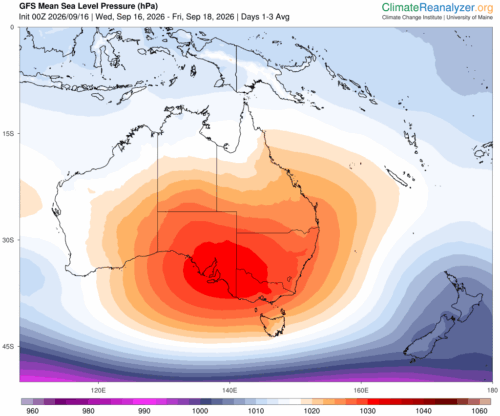
Wind is also an abundant but variable source of renewable energy in Australia. The map below shows that winds are strongest across southern Australia where fronts regularly sweep the region.

Image: Wind availability. Good 6–7m/s, very good 7–8m/s, and excellent 8–9m/s. (Wind speed measured at 100m. Source: Australian Renewable Energy Agency ARENA
Given the variability of wind and the numbered daylight hours, mining companies are installing hybrid plants which generate both wind and solar power. This ensures that renewable energy can be harnessed all day, every day.
This is important for mines, as they run around the clock and need uninterrupted power supplies. For this reason, batteries are being used as back up when the wind isn’t blowing, or the sun isn’t shining.
Companies will also use wind and sunlight to generate hydrogen which can be used to fuel vehicles or stored to later generate electricity when wind and solar is low.
Given the variability of wind and solar, accurate forecasting is becoming more important than ever in the transition to renewable energy.
On site windfarm forecasts
Whether you have an existing windfarm, or looking for an optimal wind farm location, we provide crucial data to give you greater awareness of your generation capacity. From vertical wind profiling, to identifying alternative scenarios and RAMP events, we have you covered. We can assist with:
Rapid Update Forecasting– 5-minute forecasting up to 72 hours and hourly forecasting out to 10 days for full awareness.
RAMP Event Prediction- Understand when significant generation impacts will occur so you can mitigate risk.
Advanced Generation Forecasting-Multi-level wind profiles, meta-data management and input data QC ensures precision.
We work closely with you, pushing the boundaries of science and technology, to identify and fulfil your individual business needs. A tailored and consolidated solution, making your everyday more effective.
How can Weatherzone keep your assets safe and efficiency high?
We also offer lightning and weather alert services to mine sites, which ensure safety and reduce site risks and costs. Our lightning detection system is the best in the country and often used for planning necessary works in the O&M sector.
Stormtracker, Weatherzone’s fully visualised Geographic Information System (GIS), plots ‘live’ lightning strikes, aged to 60 mins and mapped over your farm. This provides enhanced spatial awareness and understanding of the potential threat of storm activity to your operations and valuable assets.
Our proactive alerting systems can be configured to your requirements, aligning with local site needs, procedures and legislation. Our team of meteorologists and data scientists are there, every step of the way, to provide you with tailored insights.
Accurate and timely forecasts allow critical decisions to be made such as when to send out maintenance crews to solar or wind farms, reducing the potential for infrastructure damage and safety risk to personnel.
There are things that can be done before a storm arrives at a wind farm. If strong winds are predicted, wind turbines can be turned off to reduce structural damage to the turbine. Also, the tracker angle at a solar farm can be changed to minimise damage and capture the most sunlight during a storm event.
Solar forecasts
Solar power is becoming increasingly important in the Australian energy markets; however, the variable nature of solar generation poses significant challenges for integration into the electricity industry.
Weatherzone, in partnership with Solcast, provides solar power forecasting and solar irradiance data, for both large-scale solar farms and small-scale PV systems, plus their grid or regional aggregates
Your weather intelligence needs are as individual as your renewables business, and we collaborate with you to bring ease to your day to day. Together we can improve safety and achieve optimal efficiency. For more information, please contact us at apac.sales@dtn.com.