
Rain and a few storms are on their way to the Pilbara as the official start to the wet season looms for some.
A northwest cloudband is starting to develop over the Pilbara region as moisture is drawn in from tropical activity occurring near Indonesia.
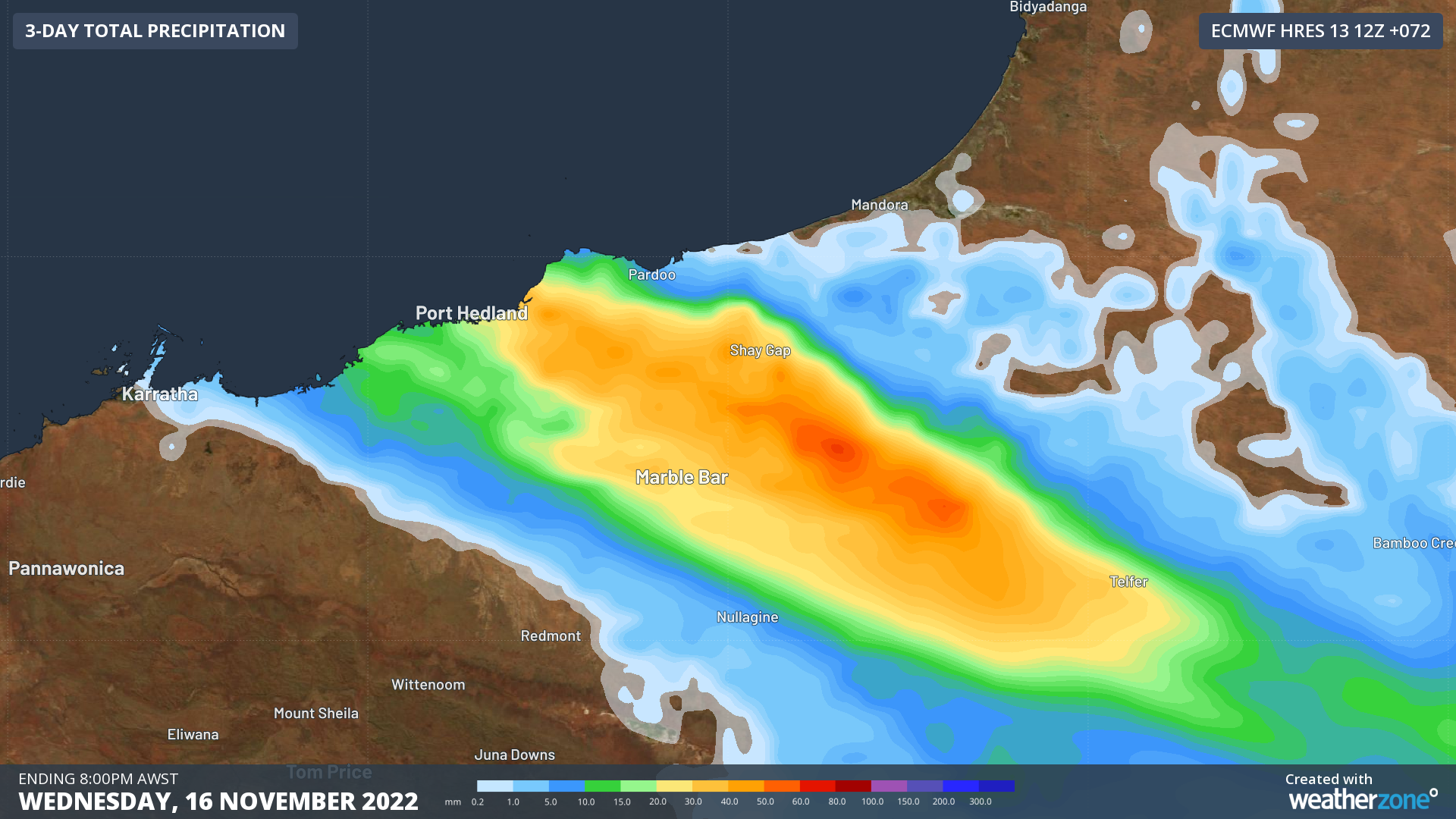
Over Tuesday afternoon and Wednesday, widespread falls of 10-30mm are expected over the eastern Pilbara, including Port Hedland and Marble Bar. Isolated falls of more than 50mm are also expected, most likely with thunderstorms.

Image: Rainfall expected over the next few days over the Pilbara
The Pilbara is one of the few large regions left in northern Australia to have not started the wet season. The wet season onset is officially defined as when a location receives more than 50mm accumulated since September 1st.
So far this season, most of the Pilbara is well below the 50mm threshold. Port Hedland has collected 9mm, Karratha 12mm and Marble Bar has had 25mm. While it is normal for this region not to collect too much until the final weeks of the year, the rest of northern Australia has reached their onset much earlier than normal.

Image: Days difference from average onset date of the wet seasons. All coloured regions have received more than 50mm
All the green shaded regions in the above map are locations that have started the wet season earlier than normal. That covers basically all the Kimberley, the Top End and throughout Queensland. The only area that have been late so far is the southern Gulf of Carpentaria.
This rain comes at the tail-end of this year’s negative Indian Ocean Dipole (IOD) that has brought record-breaking rain to the southeast over winter and spring. While oceans have cooled off the northwest shelf, the atmosphere is still reminiscent of a negative IOD. So, rainbands like this one are a higher-than-normal chance for the next few weeks while it lingers.
DTN APAC provides detailed forecasts and lightning detection so that your personnel and assets can be as prepared for whatever weather comes your way. To find out more, please email us at apac.sales@dtn.com.




