
Prosper in a dynamic world
Search

Northwest cloudband to bring welcome rain

There’s a feature on this week’s weather charts which we haven’t seen for many months in Australia and which is a sign that winter is almost upon us: a northwest cloudband.

  • Northwest cloudbands are vast layers of cloud that flow over Australia from the northwest. Once fully developed, the cloudband stretches across the country like a sash from the northwest to the southeast.
  • Northwest cloudbands form when humid and warm tropical air over the Indian Ocean moves towards the southeast. As this warm and humid air moves further south, it rises over cooler air in the mid-latitudes and produces clouds.

READ MORE: WHAT IS A NORTHWEST CLOUDBAND?

Usually, northwest cloudbands produce rain – sometimes light, sometimes quite heavy – but usually rain of the steady, soaking variety rather than the bursts of showers which typically lash southern Australia from southwesterly cold fronts.
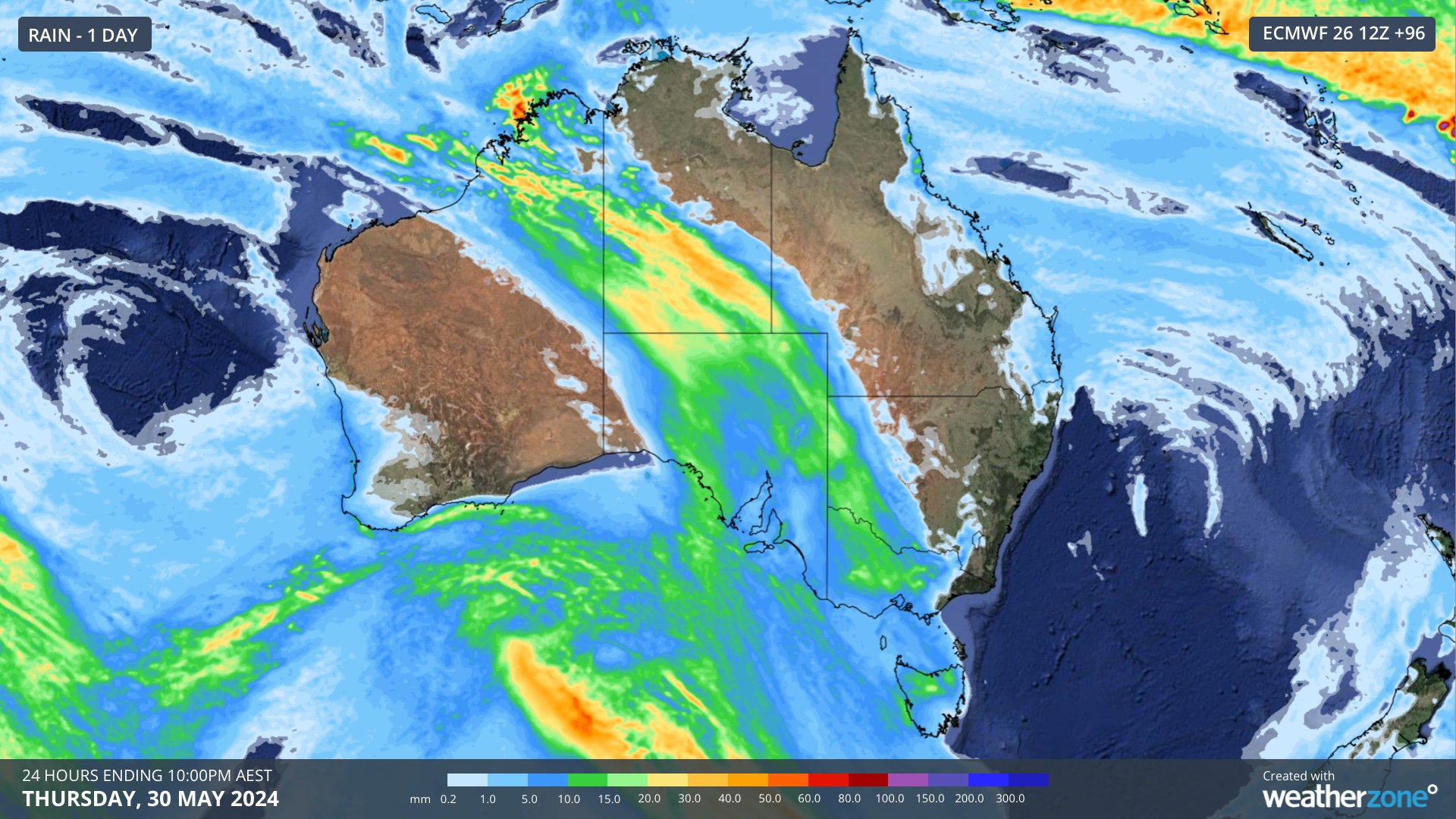
The chart above shows one prognosis for rain produced by this week’s northwest cloudband in the 24 hours to 10 pm this coming Thursday.

For parched parts of Western Australia, South Australia, Victoria and inland NSW, this is a welcome forecast.

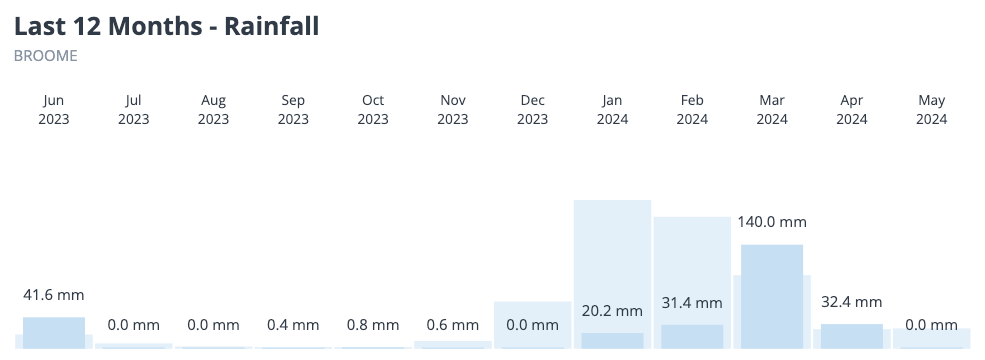
Coastal parts of northwest WA had very little rain during the wet season this year. Broome has recorded 228mm so far in 2024, 310mm short of average. Port Hedland has had a measly 35mm, compared to its January to May average of 246mm.
 

For now, it appears that at least some rain is coming to areas of SA, Vic, NSW and Tas that desperately need it and we’ll keep you updated on this system throughout the week.

Miningzone, by DTN APAC, is the only weather tracking and alerting solution purpose-built for the resources sector. To find out more, please visit our website or email us at apac.sales@dtn.com.


Latest news

Satisfy your weather obsession with these news headlines from around the nation, and the world.

Rapid El Niño signal accelerating risk for Australian businesses

El Niño–favourable conditions are gathering pace across the tropical Pacific, with key ocean indicators approaching threshold levels and early atmospheric responses emerging.  While uncertainty remains around final El Niño strength, historical analogues show that even weak events can generate widespread impacts, including reduced rainfall, warmer daytime temperatures, increased frost risk, elevated fire danger, reduced tropical cyclone activity, and more. Industries including […]

Australia’s 2025–26 Cyclone Season: Slightly Above Average, Dominated by Severe Systems

Australia has just experienced a highly impactful tropical cyclone season, with more than 60% of systems reaching severe intensity, causing widespread disruption and damage to communities and multiple industries across northern Australia.  The 2025–26 Australian tropical cyclone season officially ran from 1 November 2025 to 30 April 2026. During this six-month period, Australia saw 11 tropical cyclones, with nine […]

What does a ‘super El Niño’ mean for Australia’s businesses?

There are signs that a very strong, or ‘super’ El Niño could develop in the tropical Pacific Ocean later this year. So, what does this mean for Australia’s weather during the second half of 2026? El Niño on the horizon The tropical Pacific Ocean is currently in a neutral state, meaning neither El Niño nor […]

How does DTN help businesses monitor bushfire induced pyrocumulonimbus thunderstorms that ignite more fires?

Intense heat from bushfires during elevated fire danger days can trigger fire-induced pyrocumulonimbus thunderstorms that ignite additional fires. In early January 2026, an extreme heatwave sweeping over southeastern Australia brought catastrophic fire danger to Victoria. Intensely hot bush and grass fires spread erratically and quickly in hot, dry and gusty winds, with pyrocumulonimbus generating lightning, […]

