

It’s the sort of stormy day in large parts of New South Wales and Queensland this Wednesday that reminds you that spring is just around the corner.
You can see the storms moving across the central and eastern parts of the eastern states on Wednesday afternoon on the loop below, many of them tracking directly towards the east coast’s largest cities Sydney and Brisbane.
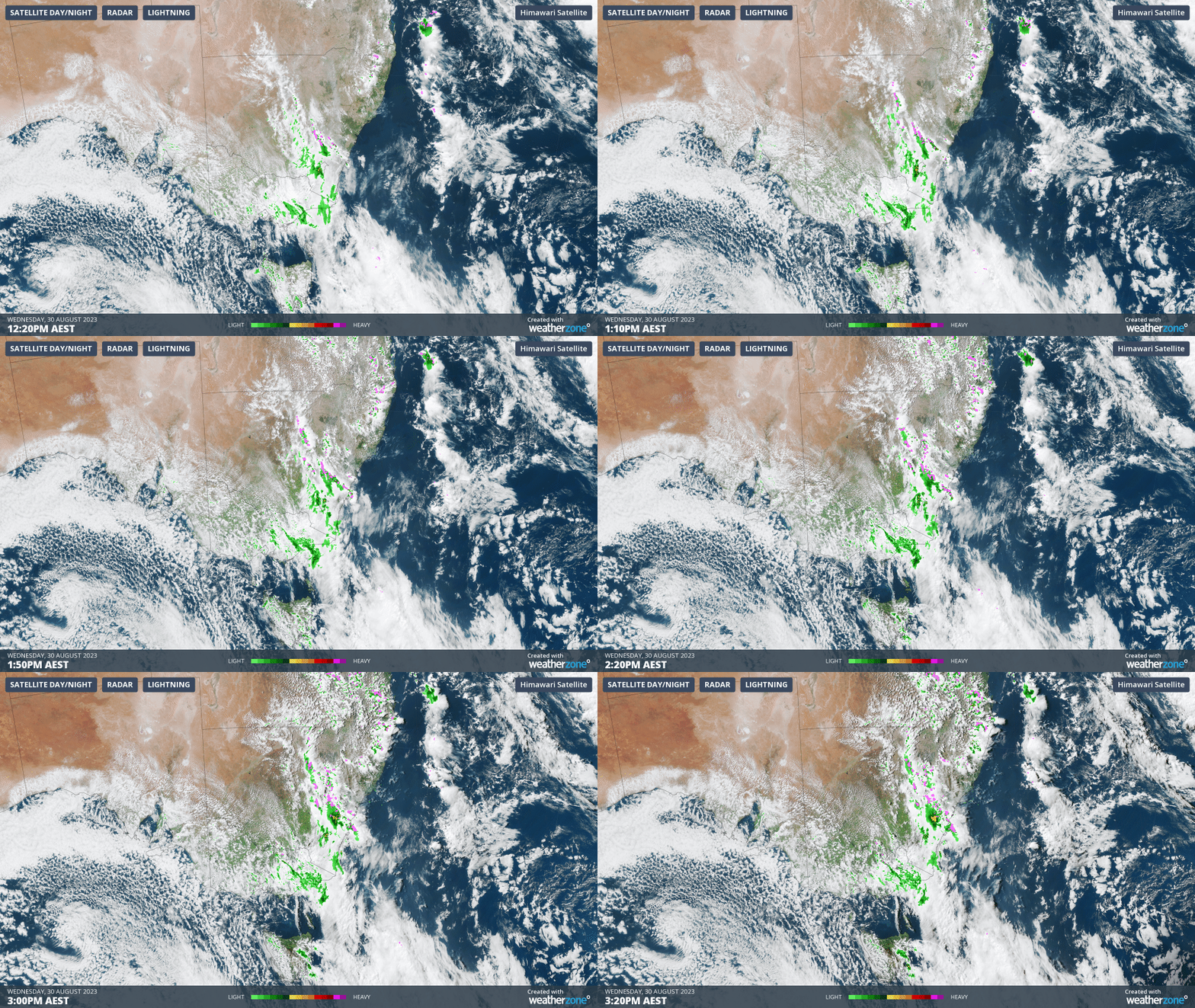
The pink blobs on the loop represent lightning – the pink actually captures the heat generated by the lightning. For a view of the multiple individual lightning strikes at a single moment in time, see the image below.
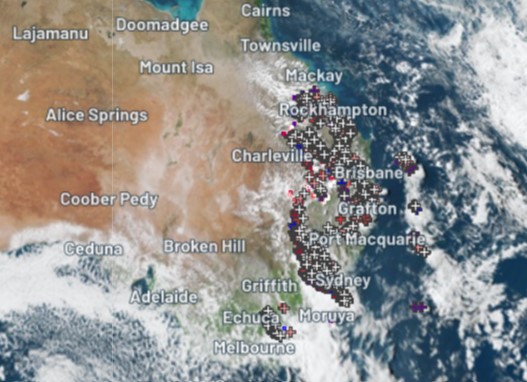
The storms haven’t brought widespread heavy falls, but there have definitely been one or two spots recording sizeable totals in a brief period between 9 am and 3 pm Wednesday, especially in northeastern NSW/southeastern Qld, including:
- Brisbane: 12.4 mm
- Murwillumbah (NSW Northern Rivers): 38 mm
Wednesday’s storms are moving across eastern Australia along the line of a trough, which you can see on the 3 pm synoptic chart below.
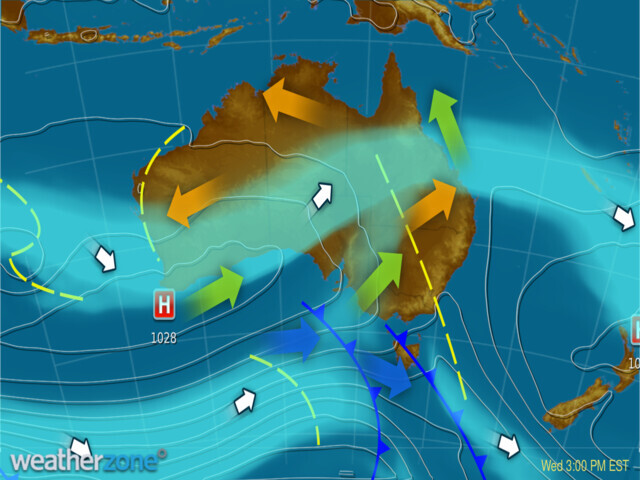
As mentioned earlier, this is a classic spring pattern, and it’s no surprise to see it on a day with some very warm, springlike air, especially to the east of the trough.
- Temperatures reached 27.5°C in Sydney on Wednesday afternoon, the warmest reading of a very warm Sydney winter by more than two degrees.
- Brisbane didn’t get quite as warm, with a brief stormy downpour around 2 pm capping the max at 25.7°C
As we write this story around 4 pm on Wednesday, there are some relatively severe storms just south of Sydney, so we’ll update this story if any severe weather warnings are put in place, or if any extremely heavy rainfall with the risk of localised flash flooding is recorded.
Severe Thunderstorm Warnings are in place for parts of southeast Queensland.
Meanwhile in far southern NSW, Victoria, Tasmania, and South Australia, it has been a much cooler day, however the chilly air associated with a cold front has not penetrated much further north than the NSW/Victoria border.
By Thursday the storm activity will have largely cleared and the cool air will make its way slightly further north, with Sydney going for a top of 19°C for the last day of winter. That will still be a degree above the long-term average.
Given weather affects your business at all levels of operation, from risk assessment to sales and claim management, it’s worth gaining the foresight of our industry-leading, comprehensive weather services.
DTN APAC, a DTN company, offers you trusted weather intelligence, alerting and analytics to support your business, bringing ease to your risk and claims management.
Severe weather and conditions alerting
Weatherzone’s alerting allows your organisation to mitigate severe weather insurance claims and protect policy holders from lightning, hail, bushfires and other natural disasters. Address specific SMS alerts are sent up to 30 minutes prior to a severe storm’s impact, giving your customers time to prepare themselves, protecting both assets and life. Our alerting system combines the proven technology of TITAN Tracks, with our own Dangerous Thunderstorm Alerts (DTAs) and Total Lightning Network, so you are protected by the most precise service available.
Historical severe weather reporting
StormQuery creates storm reports based on historical data from the Bureau of Meteorology and lightning strike information from our own Total Lightning Network. You can draw historical lightning and severe weather reports – geo-tagged to any address and postcode – to quickly and accurately verify severe weather insurance claims. StormQuery is seamlessly embedded within the Weatherzone interface and is easy to visualise and utilise.
Long-range forecasts
Long-range forecasts enable you to prepare for the seasons ahead – whether it’s tropical cyclone risk, La Niña’s above average rainfall or the bushfire seasons of El Niño. With that foresight, you can equip your customers with the strategies they need to mitigate loss due to fire, flood and severe weather. Nurture your relationship with your customers by providing them with the tools to protect themselves and their assets from increasingly volatile conditions. Data from the forecast reports can also be incorporated into your reinsurance negotiations.
Rain, hail or shine: we are there for you, and your customers. For more information, please contact us at apac.sales@dtn.com.




