Renewable energy is booming in Australia and it is showing no signs of slowing down in 2021.
More than a quarter of Australia’s electricity generation came from renewables last year. Australia has come a long way since 2016, when renewable energy made up 17 percent of the country’s electricity.
Back in 2016, hydro power in New South Wales and Tasmania was one of the main renewable sources.
What is renewable energy?
Renewable energy is any electricity that’s generated by natural sources, such as wind, solar and hydropower.
According to the Australian Renewable Energy Agency (ARENA), “Renewable energy is produced using natural resources that are constantly replaced and never run out.”
Renewables are a sustainable long-term solution for electricity generation in Australia and they are becoming cheaper and more abundant.
Where does renewable energy come from?
Australia is rich in renewable energy resources, with generation spread across all states and territories (figure 1).
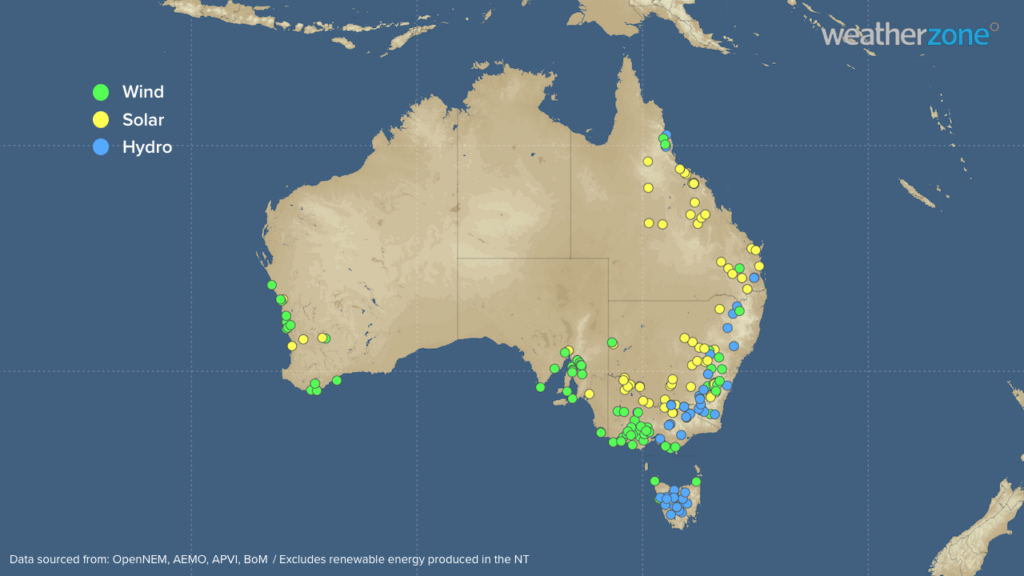
Figure 1: Locations of wind, solar and hydro facilities across much of Australia
While wind and solar resources are abundant across most states and territories, Geoscience Australia points out that “hydro energy is derived from water within areas of high rainfall and elevation (mostly in New South Wales and Tasmania).”
How much of Australia’s energy comes from renewables?
In 2020, 27.7 percent of Australia’s electricity generation came from renewable energy sources. Data from OpenNEM.org shows that renewables have contributed close to 29 percent of Australia’s total energy production so far this year.
Of this 29 percent, around one-third came from wind and one-third from solar (rooftop and utility).
The market share of renewable energy is increasing as industries and governments in Australia pivot towards solutions which reduce greenhouse gas emissions.
Renewable energy in 2021 to date has increased by around 2 percentage points since 2020, with wind farms attributing around half of the percentage point increase (figure 2).
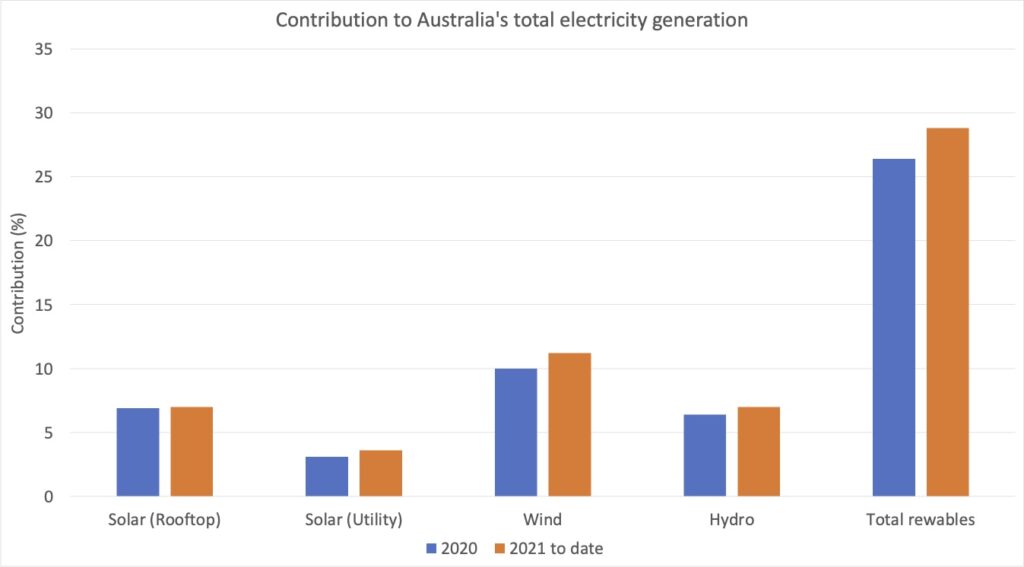
Figure 2: Renewable contribution to Australia’s total electricity generation during 2020 and 2021 to date, data sourced from OpenNEM.org.au
Which state or territory is leading the way?
Tasmania continues to be Australia’s renewable leader in 2020, with the state nearing 100% renewable (figure 3). Hydro electricity or hydro power is the largest source of electricity in Tasmania, followed by wind power.
In 2020, nearly 60 percent of South Australia’s electricity was renewable, with large amounts of this power being generated by wind farms (figure 3).

Figure 3: Renewable Energy Penetration by State as a proportion of generation in 2020, Source: Clean Energy Australia Report 2021
As Australia continues to move towards renewable energy, reliable and accurate wind, solar and hydro forecasting will become even more important.
Weatherzone provides 14-day energy forecasts of these factors and provides detailed seasonal presentations 6 months out to our energy clients. For more information, please contact us at apac.sales@dtn.com.