Solar output across large areas of Australia should peak this week, with many areas not expected to receive a drop of rain.
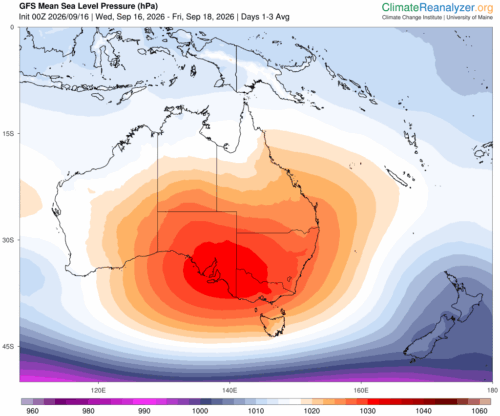
The dry week across WA, parts of the NT, SA and Vic this week comes as blocking high pressure systems prevent any major cold fronts from impacting the regions this week.
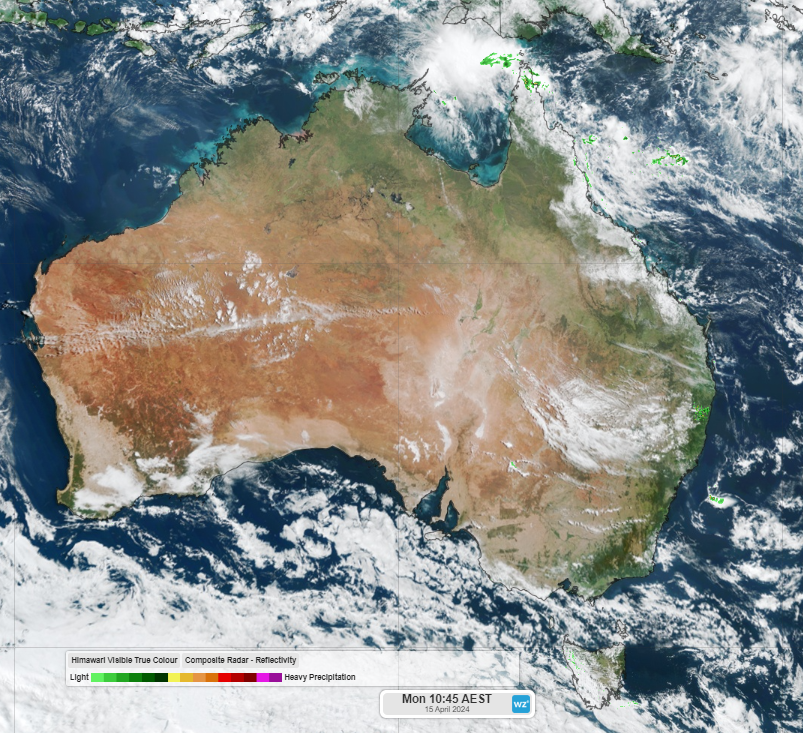
The satellite image below shows that most of Australia is experiencing a sunny Monday morning.
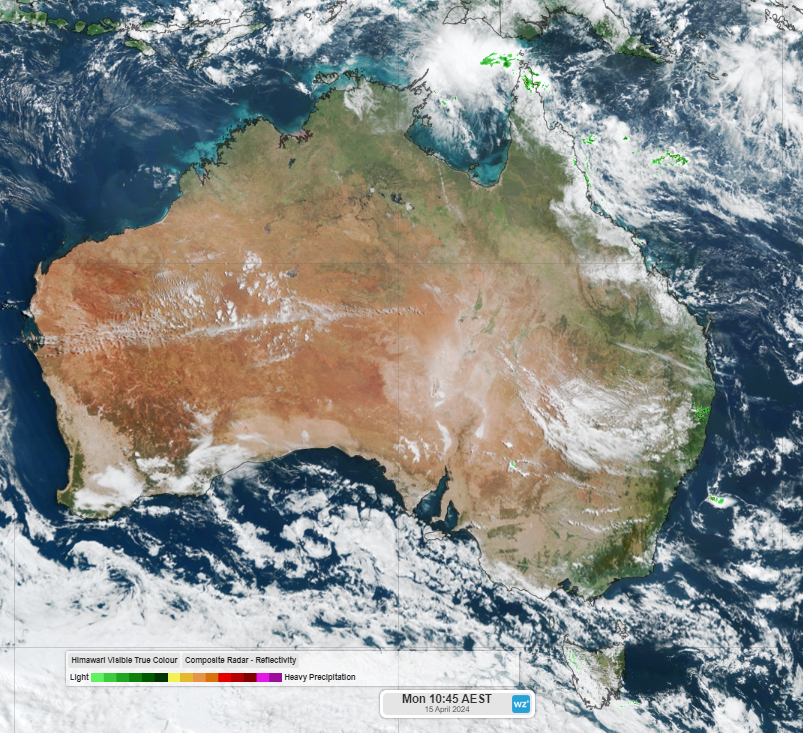
Image: Himawari-9 satellite image at 10:45am on Monday, April 15
During the next seven days large parts of the country will not receive a millimetre of rain.
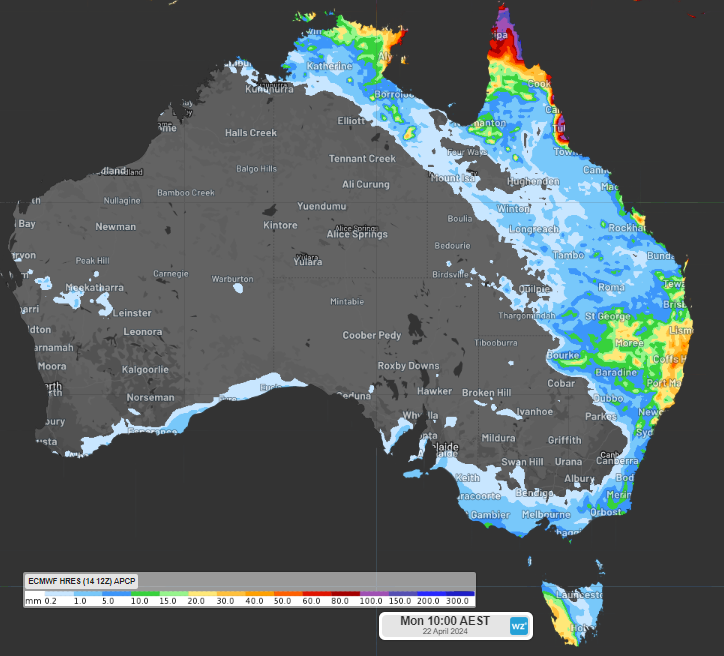
Image: Accumulated rain to 10am on Monday, April 22, according to ECMWF
However, large totals are expected in Far North Qld as a trough develops in the region later this week.
Northeast NSW will also see some decent rainfall this week, with a coastal trough and potentially a low forming offshore during the middle of the week.
Most of Australia with the exception of parts of Qld, eastern NSW, western Tas and the Top End should see above average solar output this week in response to the lack of cloud.
While solar output will be higher, winds on average over southern Australia will be lighter this week due to the lack of strong cold fronts sweeping across the country.
Weatherzone Business and Solcast are a market-leading partnership delivering highly specialised solar data to the Australian renewable energy industry.
Designed for utility scale solar sites, we offer you a globally proven solution.
With low upfront CAPEX and powerful cloud-based information systems, you can access a complete suite of irradiance and weather data to ensure forecast accuracy and improve site efficiency.
Solcast is the world leader in real-time actuals and rapid-update solar forecasts. This solution utilises Solcast’s centralised Amazon Web Services’ (AWS) cloud infrastructure for all complex algorithmic processes and data plumbing. You will gain the power of AWS to interpret and deliver your data at top speed, providing real-time, historical and forecasting estimates direct to your API.
Receive monitoring and support from the Weatherzone and Solcast teams, 24/7. For more information, please contact us at apac.sales@dtn.com.