Prosper in a dynamic world
Search

Extreme heatwave intensifying in southern Australia

Parts of southern Australia, including Adelaide, are in the grip of the worst February heatwave in years, with temperatures set to get even hotter over the coming days.

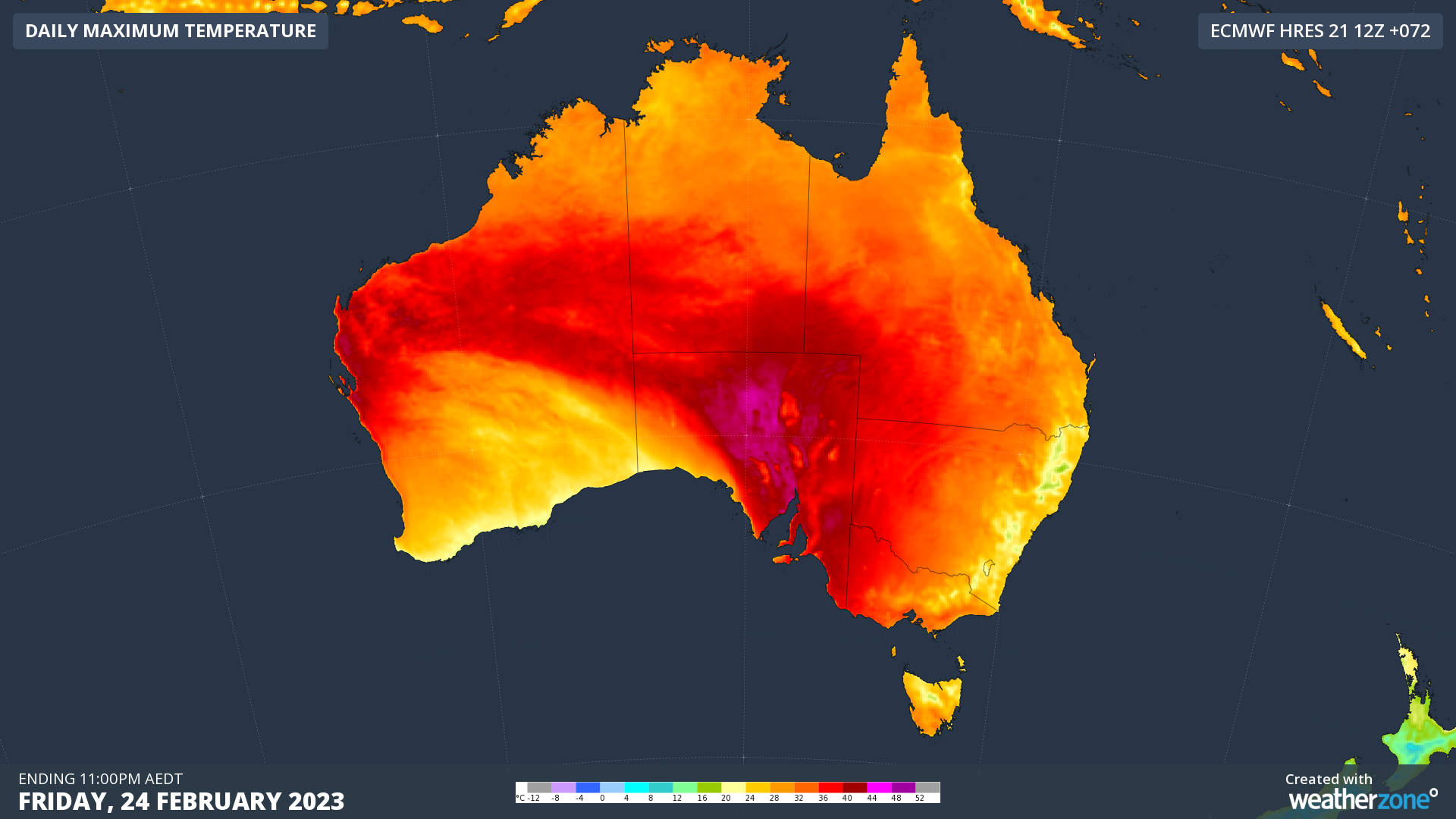
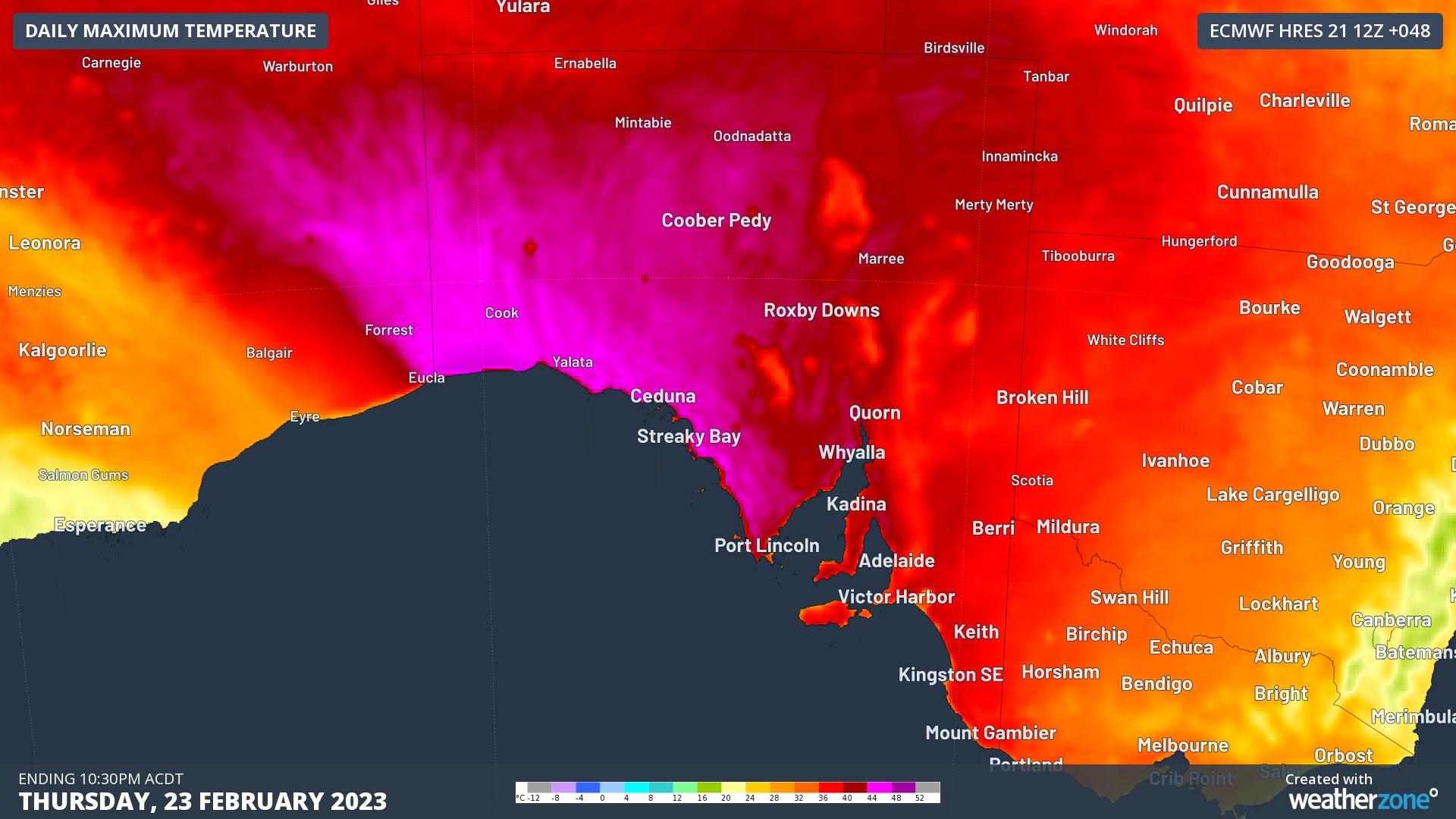
A hot air mass that built up over northwestern Australia in the past week is now spilling into southern Australia ahead of a cold front and associated low pressure trough. This heat can be clearly seen on the three maps below, which show the eastward progression of hot air across southern Australia during the next three days.
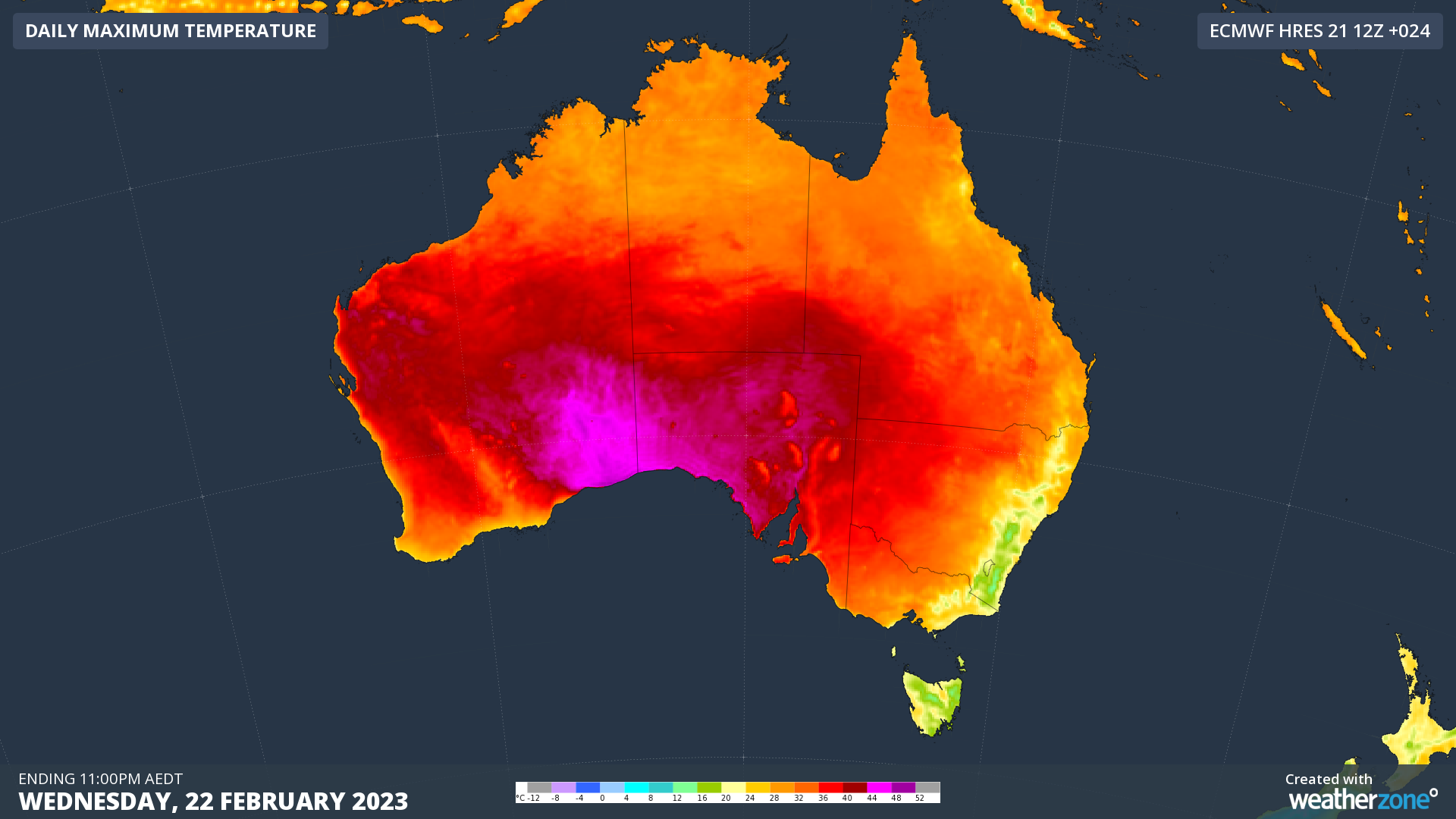
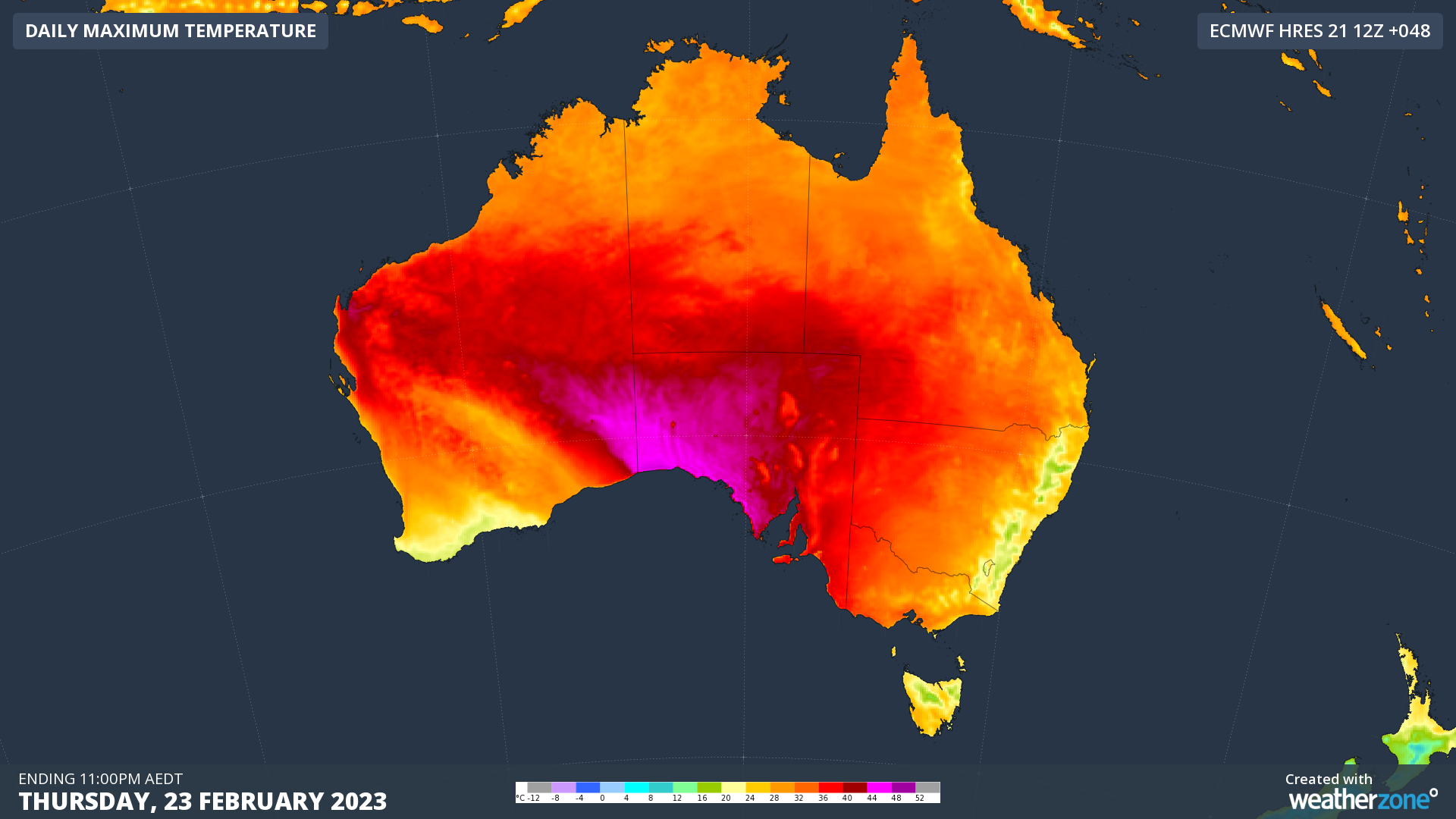
Image: Forecast daily maximum temperatures on Wednesday (top), Thursday (middle) and Friday (bottom), according to the ECMWF-HRES model.

On Wednesday, temperatures soared to 46.8ºC at Eucla in the far southeast corner of WA, which is an incredible 20ºC above average for this time of year. This was the equal highest February temperature observed anywhere in Australia for four years, and Eucla’s hottest February day since 2015.

Across the border in SA, Nullarbor hit 44.9ºC, also its hottest February day in eight years, while Adelaide rose to 38.7ºC, a five-year high for the month.

Temperatures will remain at hazardous levels in and around SA during the next two days and nights, qualifying for a Severe to Extreme heatwave on the Bureau of Meteorology’s scale.
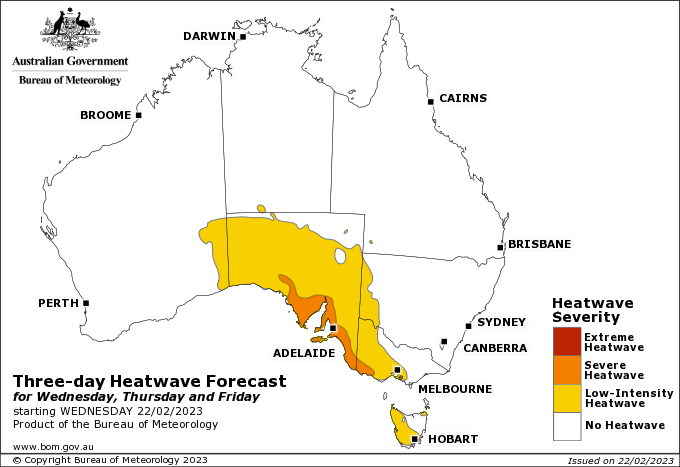
Image: Heatwave forecast for the three-day period from Wednesday to Friday this week. Source: Bureau of Meteorology

In Adelaide, minimum temperatures should be up around 26 to 27ºC on Thursday and Friday mornings, while daytime temperatures should rise to about 39 to 40ºC as well. This would be Adelaide’s hottest run of February days in about five years.

This week’s heatwave will also spread into parts of Vic and Tas during the second half of this week.

You can check which areas of Australia are likely to be impacted by this heatwave here, and the latest heatwave warnings are available here.

To find out about Weatherzones temperature and heatwave forecasts, visit our website or email us at apac.sales@dtn.com.


Latest news

Satisfy your weather obsession with these news headlines from around the nation, and the world.

Australia’s 2025–26 Cyclone Season: Slightly Above Average, Dominated by Severe Systems

Australia has just experienced a highly impactful tropical cyclone season, with more than 60% of systems reaching severe intensity, causing widespread disruption and damage to communities and multiple industries across northern Australia.  The 2025–26 Australian tropical cyclone season officially ran from 1 November 2025 to 30 April 2026. During this six-month period, Australia saw 11 tropical cyclones, with nine […]

What does a ‘super El Niño’ mean for Australia’s businesses?

There are signs that a very strong, or ‘super’ El Niño could develop in the tropical Pacific Ocean later this year. So, what does this mean for Australia’s weather during the second half of 2026? El Niño on the horizon The tropical Pacific Ocean is currently in a neutral state, meaning neither El Niño nor […]

How does DTN help businesses monitor bushfire induced pyrocumulonimbus thunderstorms that ignite more fires?

Intense heat from bushfires during elevated fire danger days can trigger fire-induced pyrocumulonimbus thunderstorms that ignite additional fires. In early January 2026, an extreme heatwave sweeping over southeastern Australia brought catastrophic fire danger to Victoria. Intensely hot bush and grass fires spread erratically and quickly in hot, dry and gusty winds, with pyrocumulonimbus generating lightning, […]

Active seas to the north and east of Australia disrupting port and maritime operations

Seas to the north and east of Australia are experiencing periods of increased activity this week, leading to disruptions to port, maritime and offshore operations. Intense and hazardous Tasman Sea Ocean conditions across NSW’s South Coast rapidly deteriorated last Friday as a deep feed of easterly winds whipped up large and dangerous seas. The Batemans […]