All of Australia’s southeastern and eastern capital cities just had their coldest start to winter in decades amid a two-week procession of cold fronts.
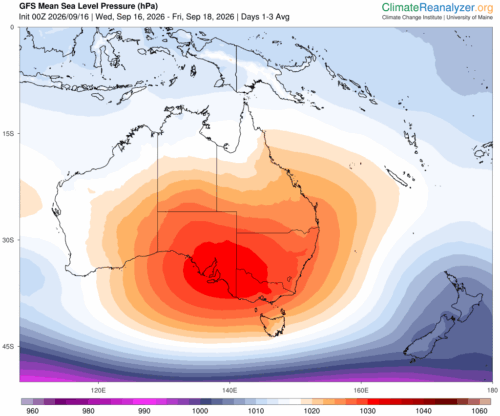
A series of slow-moving long-wave troughs caused a persistent stream of cold air over southeastern Australia during the first two weeks of June. This weather pattern caused a prolonged run of below-average temperatures and cold blustery winds across several states and territories.
Every Australian capital city except for Perth and Darwin had its coldest first fortnight of winter in more than a decade, in some cased more than 70 years:
- Canberra stayed below 13ºC during the first 14 days of winter, its coldest start to the season since 1964.
- Sydney Airport (below 19.2ºC) and Bankstown (19.4ºC) both had their coldest first fortnight of winter since 2006.
- Melbourne failed to reach 15ºC during the first fortnight of June, the city’s coldest start to winter since 1949
- Brisbane remained below 23ºC over the first two weeks of winter for the first time since 2000. The city only reached as high as 22.8ºC, making it the coldest first fortnight of winter since 1990.
- Adelaide stayed below 17.5ºC in the first 14 days of June, the city’s coldest first two weeks of winter since 2007
- Hobart only got as high as high as 13.7ºC in the first two weeks of June, its coldest start to winter since 1982
The unusually cold start to winter caused a spike in energy demand across Australia’s National Electricity Market (NEM) as building occupants tried to escape the chill.
Data from OpenNEM.org shows that energy demand during the week ending on June 12 was higher than any other week in the past 12 months.

Image: Weekly energy demand across the NEM during the last 12 months, showing a noticeable increase in energy demand during the cold weather of this last fortnight. Source: OpenNEM.org
Interestingly, while the past fortnight’s windy weather caused uncomfortable levels of wind chill, it also boosted wind power production. During the fortnight ending on June 12, wind produced around 17 to 18 percent of the NEM’s total energy demand. These were also the highest and third highest weekly values in the past 12 months, with wind power typically contributing around 9 to 13 percent of the overall energy generation.
The unusually cold weather during the first fortnight of winter has driven up energy demand across the NEM. This increased demand has exacerbated issues being faced by the energy sector amid the surging price of gas and a complex mix of international and domestic events.
Weatherzone’s Energy services are designed to put the power back in your hands. Our principle value proposition to the energy industry is the timely delivery of highly accurate weather information, to allow intelligent and effective decision making, reducing weather risk and maximizing profit. Weatherzone leads the energy industry with a wide range of products and systems that allow better visibility on forecast generation (such as wind and solar) as well as demand.
No matter how volatile the market is, Weatherzone’s energy services are designed to give you the tools to understand risk and make quick and correct decisions. For more information, please contact us at apac.sales@dtn.com.