

Prosper in a dynamic world
Search

BoM declares La Nina officially over

It’s over. La Niña and the wetter-than-usual weather it typically brings to large parts of Australia is officially behind us.

Last week, the U.S. Climate Prediction Center (CPC) declared that the 2022/23 La Niña had ended, paving the way for a return of drier and warmer weather in Australia.

Today Australia’s Bureau of Meteorology came to the party.

“La Niña has ended in the tropical Pacific Ocean. The El Niño–Southern Oscillation (ENSO) is now neutral (neither La Niña nor El Niño) with oceanic and atmospheric indicators having returned to neutral ENSO levels,” the BoM announced on Tuesday.

The BoM went on to say that neutral conditions are expected to persist through autumn, however there are signs that El Niño could form later in the year.

Indeed the BoM has issued an El Niño Watch, which means a 50% chance of an El Niño in 2023.

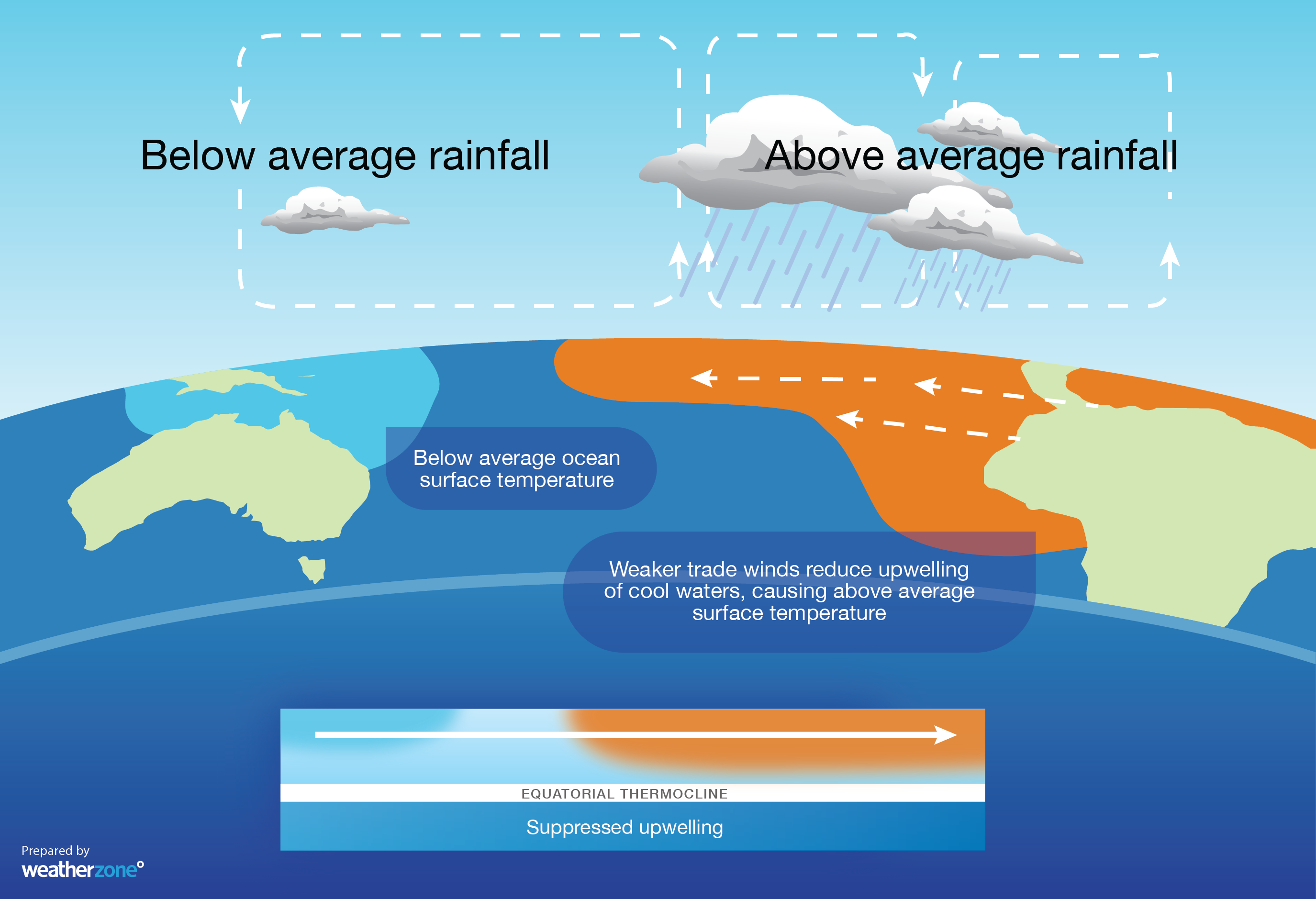
El Niños typically bring drier, warmer weather than usual across Australia, and in the past have contributed to some of the country’s worst droughts.

READ MORE: WHAT IS LA NIÑA AND HOW DOES IT IMPACT OUR WEATHER?
 

BoM declares La Nina officially over

Image: The graphic shows how El Niño impacts Australian weather.

DTN APAC can provide tailored climate briefings to your business to alert you of the most likely weather conditions and hazards to look out for during the upcoming season. Now is a good time to get a good look at the forecast for autumn and an early look at winter. To find out more or to book a presentation, please email apac.sales@dtn.com.


Latest news

Satisfy your weather obsession with these news headlines from around the nation, and the world.

Rapid El Niño signal accelerating risk for Australian businesses

El Niño–favourable conditions are gathering pace across the tropical Pacific, with key ocean indicators approaching threshold levels and early atmospheric responses emerging.  While uncertainty remains around final El Niño strength, historical analogues show that even weak events can generate widespread impacts, including reduced rainfall, warmer daytime temperatures, increased frost risk, elevated fire danger, reduced tropical cyclone activity, and more. Industries including […]

Australia’s 2025–26 Cyclone Season: Slightly Above Average, Dominated by Severe Systems

Australia has just experienced a highly impactful tropical cyclone season, with more than 60% of systems reaching severe intensity, causing widespread disruption and damage to communities and multiple industries across northern Australia.  The 2025–26 Australian tropical cyclone season officially ran from 1 November 2025 to 30 April 2026. During this six-month period, Australia saw 11 tropical cyclones, with nine […]

What does a ‘super El Niño’ mean for Australia’s businesses?

There are signs that a very strong, or ‘super’ El Niño could develop in the tropical Pacific Ocean later this year. So, what does this mean for Australia’s weather during the second half of 2026? El Niño on the horizon The tropical Pacific Ocean is currently in a neutral state, meaning neither El Niño nor […]

How does DTN help businesses monitor bushfire induced pyrocumulonimbus thunderstorms that ignite more fires?

Intense heat from bushfires during elevated fire danger days can trigger fire-induced pyrocumulonimbus thunderstorms that ignite additional fires. In early January 2026, an extreme heatwave sweeping over southeastern Australia brought catastrophic fire danger to Victoria. Intensely hot bush and grass fires spread erratically and quickly in hot, dry and gusty winds, with pyrocumulonimbus generating lightning, […]

