Prosper in a dynamic world
Search

Another deluge continues Sydney’s record wet year


An exceptionally wet start to July that produced 1.5 months’ rain in just four days has continued Sydney’s wettest year-to-date on record.

A stream of moisture-laden air feeding into a coastal trough and East Coast Low produced a lengthy spell of heavy rain over central eastern NSW during the last four days.

This multi-day soaking was further enhanced by moisture evaporating off a pool of abnormally warm water sitting off the southern half of the NSW coastline.

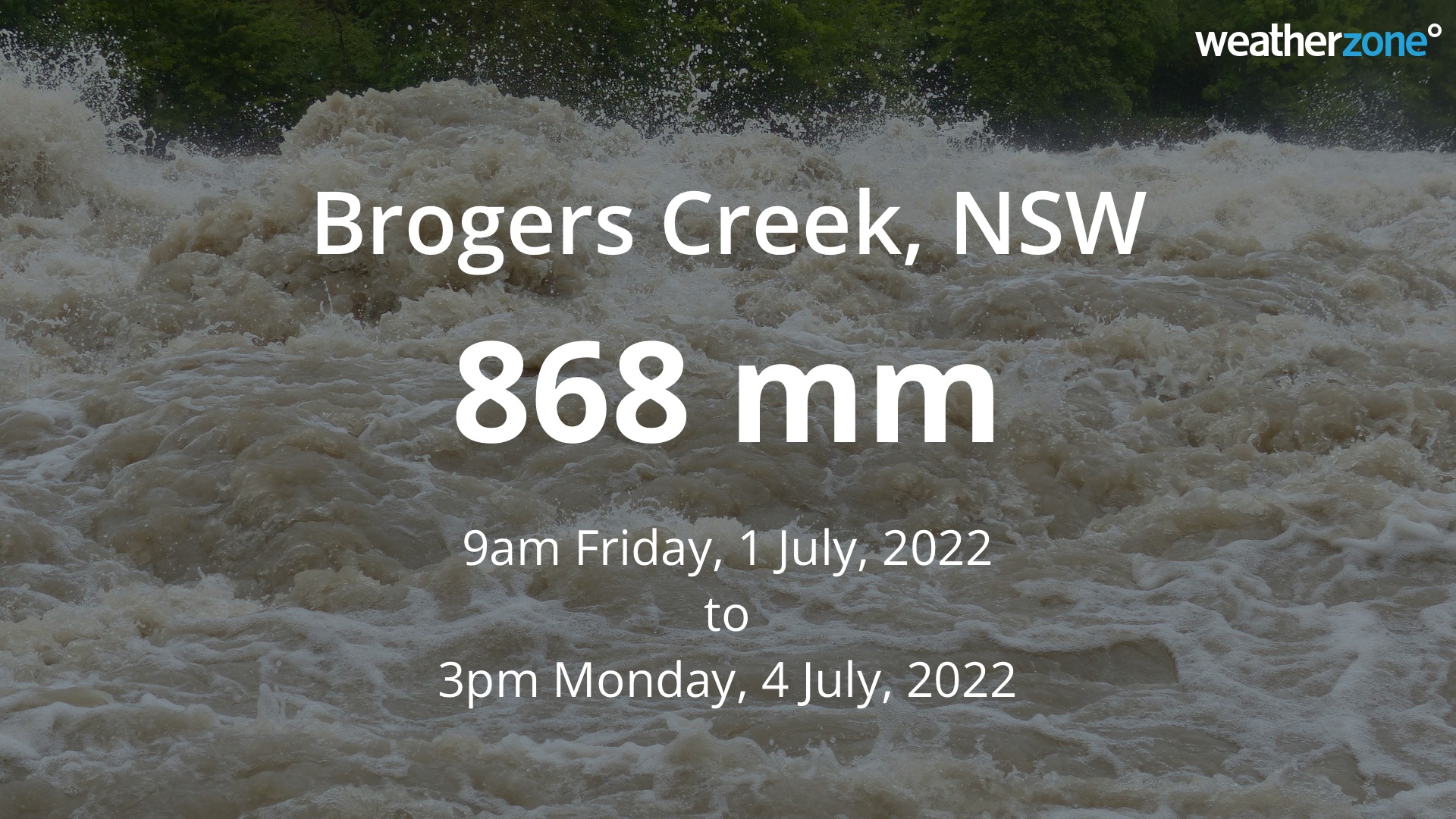
These features all combined to deliver some huge rainfall totals over the last four days, including a whopping 868 mm in 78 hours at Brogers in the Kangaroo Valley.
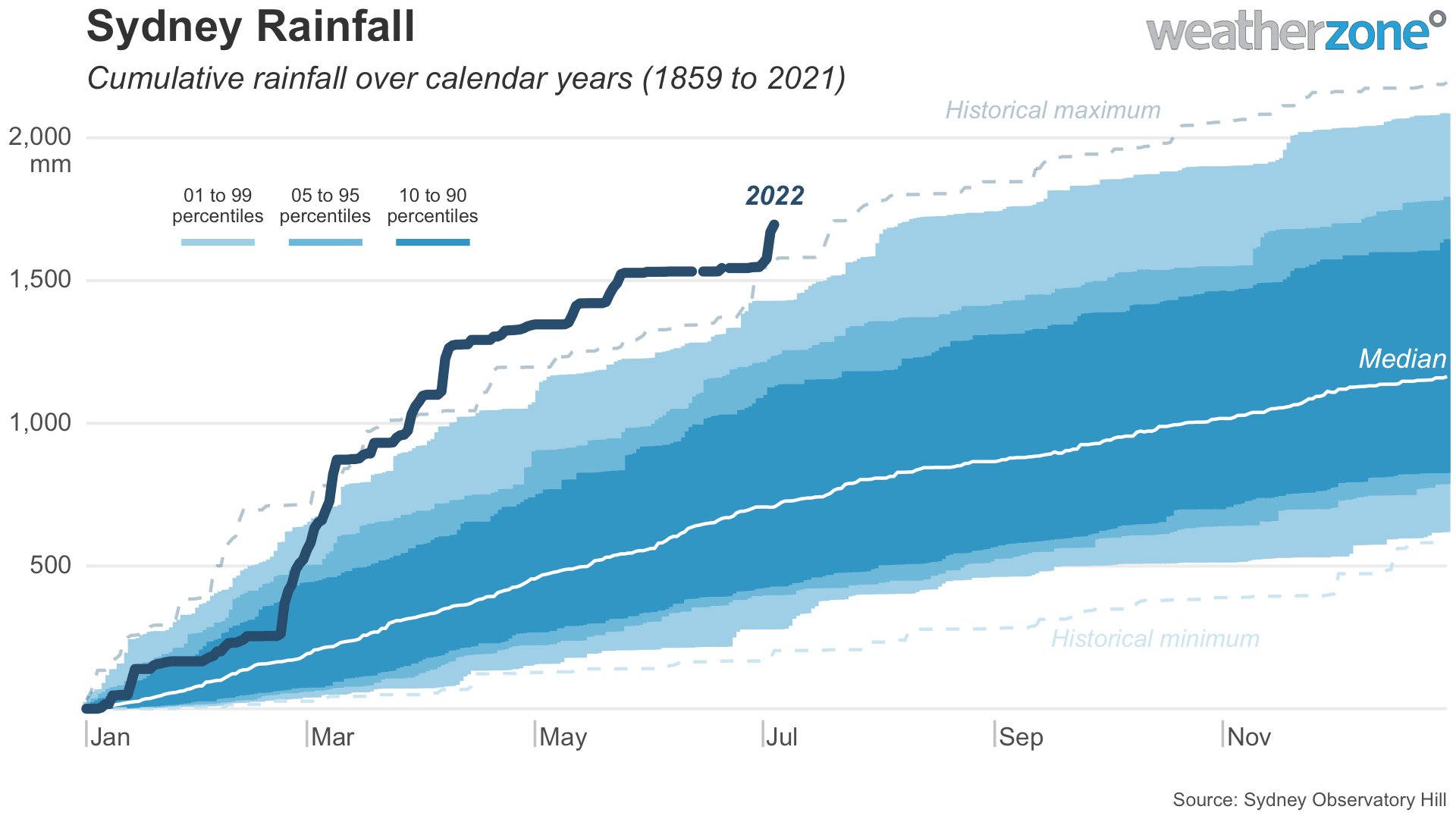
Further north, Sydney’s Observatory Hill weather station amassed 148.6 mm of rain during the four days ending at 9am on Monday. This is more than 1.5 times the city’s July monthly average of 96mm, and a huge turnaround from Sydney’s driest June since 1986.

In any other year, this early-July deluge may have stood out as unusual. Not in 2022.

The 148.6mm that fell in the last four days brings Sydney’s running annual total for 2022 up to 1696mm. This is the city’s wettest year-to-date in records dating back to 1859, beating 1569mm to the same date in 1890. Impressively, this is already Sydney’s wettest year since 1990, despite only being four days into July.
Unfortunately, this latest deluge has caused the third major flood event of the year in western Sydney, as water from a saturated landscape flows into already full rivers and dams.

The latest warnings for this ongoing flood event in NSW can be found at https://www.weatherzone.com.au/warnings. For more information, please contact us at apac.sales@dtn.com.
Latest news

Satisfy your weather obsession with these news headlines from around the nation, and the world.

El Niño Is Here: What a Potential Record Event Means for Southeast Asia and Australia

  El Niño was officially declared in June 2026, raising the prospect of widespread impacts across Southeast Asia, from extreme heat and water shortages to higher energy demand and agricultural stress.   The World Meteorological Organization has warned countries to “prepare for it to be severe”, while several global forecast models suggest the event could rank among […]

How El Niño will shape Australian port operations in winter-spring 2026

Australian ports and marine pilots can expect a season of shifting wind and swell patterns through winter and spring 2026, as a developing El Niño brings the likelihood of drier conditions and more variable operating windows across the country’s coastline.  Will El Niño develop in 2026?  There are clear signs that an El Niño pattern is becoming […]

From Kimberley to northern NSW: Bushfire outlook flags risk for resources sector this winter

Bushfire risk doesn’t usually make headlines in June, but AFAC’s winter seasonal outlook is putting mining and resources operators on alert from the Kimberley to the NSW.  Australia’s official seasonal bushfire outlook for winter 2026 was released by AFAC on Thursday, May 28. The outlook predicts increased fire risk across the northern parts of the Great Sandy Desert and surrounds […]

The signal was there weeks earlier: forecasting one of the year’s biggest wind events

In mid-May 2026, DTN APAC meteorologists flagged a strengthening Southern Ocean pattern in model guidance, signalling an extended run of record-challenging wind conditions across the NEM.  Nearly three weeks later, NEM wind generation climbed from around 1.5GW to more than 9GW, supplying roughly one-third of the grid and coming within 1GW of the all-time generation record.  The event highlighted […]