This week’s IPCC Report, “Climate Change 2021: The Physical Science Basics”, is a big deal which you’ll be hearing plenty about here at Weatherzone and in the wider media – so what’s it all about?
Let’s start at the beginning. What is the IPCC?
The IPCC, or Intergovernmental Panel on Climate Change, was established in 1988, right around the time the dangers of human-caused climate change were becoming starkly apparent. The best climate scientists in the world collate all their rigorously peer-reviewed research and data into one big report that comes out every few years.
The latest report states that ‘’Human-induced climate change is already affecting many weather and climate extremes in every region across the globe.’’
UN Secretary General Antonio Guterres said Monday’s release of the Working Group I Report was “a code red for humanity”.
“The alarm bells are deafening, and the evidence is irrefutable: greenhouse gas emissions from fossil fuel burning and deforestation are choking our planet and putting billions of people at immediate risk,” he said in statement.
We have already observed changes in extremes across Australia such as heatwaves, heavy rainfall, droughts, and tropical cyclones, which impact some Australian businesses.
Unfortunately, with climate change the frequency and intensity of some of these extremes are likely to increase, as well as a reduction in sea ice and snow.
Whether it be that your business is affected by heatwaves or tropical cyclones, we have provided a brief overview of the potential global warming impacts below.
Temperature extremes and heatwaves
The most optimistic scenario, where the world reduces emissions now, is that the global mean temperature rises to somewhere between 1.5°C and 2°C during the 21st century. If we let emissions rise further, global warming could reach anywhere between 2.7ºC and 4.4ºC towards the end of the century.
Unless we reduce our carbon dioxide and other greenhouse gas emissions, temperatures will continue to increase, causing the warmer seasons to grow in length.
Most of Australia has already warmed by at least 0.1°C per decade since 1960, and much faster in recent decades.
In addition to the mean temperature increase, there is likely to be a shift towards heat extremes and a decrease in cool extremes. Many extreme heat events that have occurred in recent years would have been far less likely in the absence of global warming.
Wind
Average wind speeds are projected to increase in parts of northeastern Australia as our planet continues to warm. However, the remainder of Australia was not mentioned in the report in relation to wind.
Fire weather
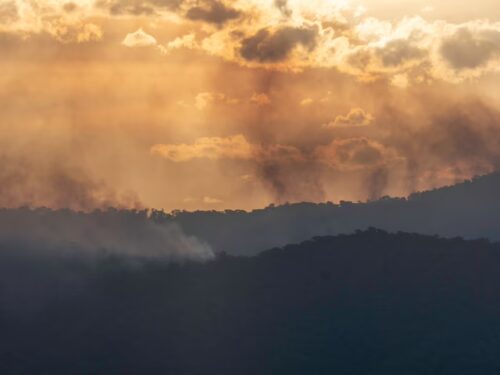
Fire weather is projected to increase throughout Australia, driven by the increase in extreme heat and in some areas, a reduction in rainfall. An increase in the mean wind speeds over northeastern Australia, combined with extreme heat, may increase the fire danger further in this region.
Rainfall, droughts and flooding
The warming of the planet changes the water cycle variability, with changes in the global monsoon and severity of wet and dry events.
A significant decrease in April to October rainfall has already been observed in recent decades over southwest Western Australia. This drying trend is highly likely to continue in the future in southwest WA and eastern Australia, according to the IPCC report
Droughts have increased over southern Australia and decreased over northern and central Australia. The frequency of droughts will likely rise in southern and eastern Australia, particularly if the global warms to 2°C or more.
In the future, heavy rainfall and flooding is likely to increase over northern and central Australia first. However, for the rest of Australia, it’s more likely to increase if the global warming temperature exceeds 2°C.
Tropical cyclones
The number of Tropical cyclones (TCs) across northeastern and north Australia are predicted to decrease, however the intensity of the cyclones that form is set to increase.
Snow
Observations in Australia show that snow season lengths have already decreased by five percent in the last five decades. As well as this reduction in the snow season length, there is likely to be a reduction in the amount of snowfall across our alpine peaks as Australia warms.
Overall, global warming and climate extremes are predicted to continue to increase in the future. Weatherzone is here to support businesses with accurate weather forecasts tailored to your business. Please contact us at apac.sales@dtn.com.