
Prosper in a dynamic world
Search

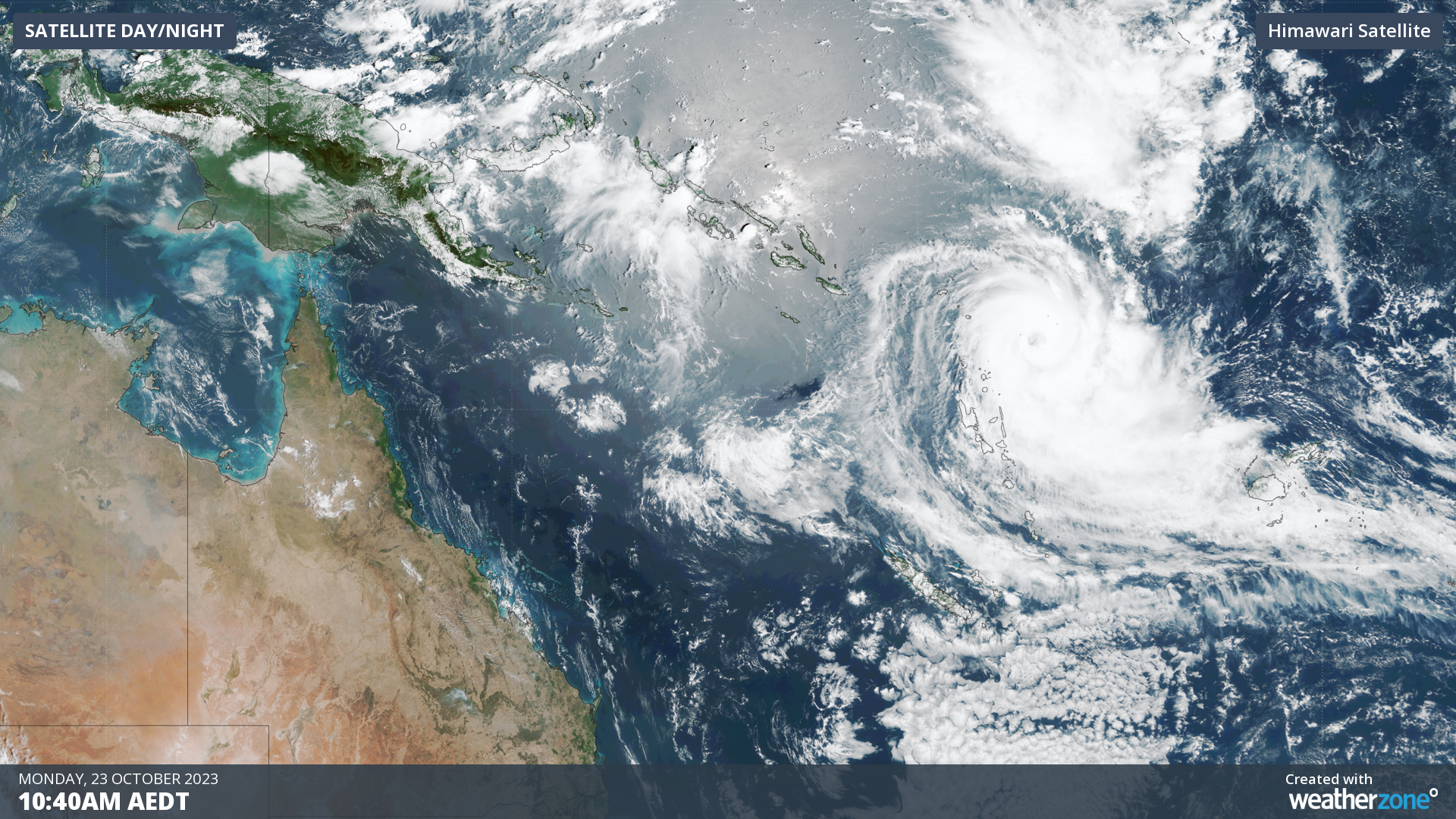
Tropical Cyclone Lola gaining strength near Vanuatu

The first tropical cyclone to form near the Australian region this season is about to unleash a burst of severe weather in Vanuatu.

Tropical Cyclone Lola formed to the northeast of Vanuatu on Sunday. As it developed outside the eastern boundary of Australia’s area of responsibility, Lola was named by the Fiji Meteorological Service.

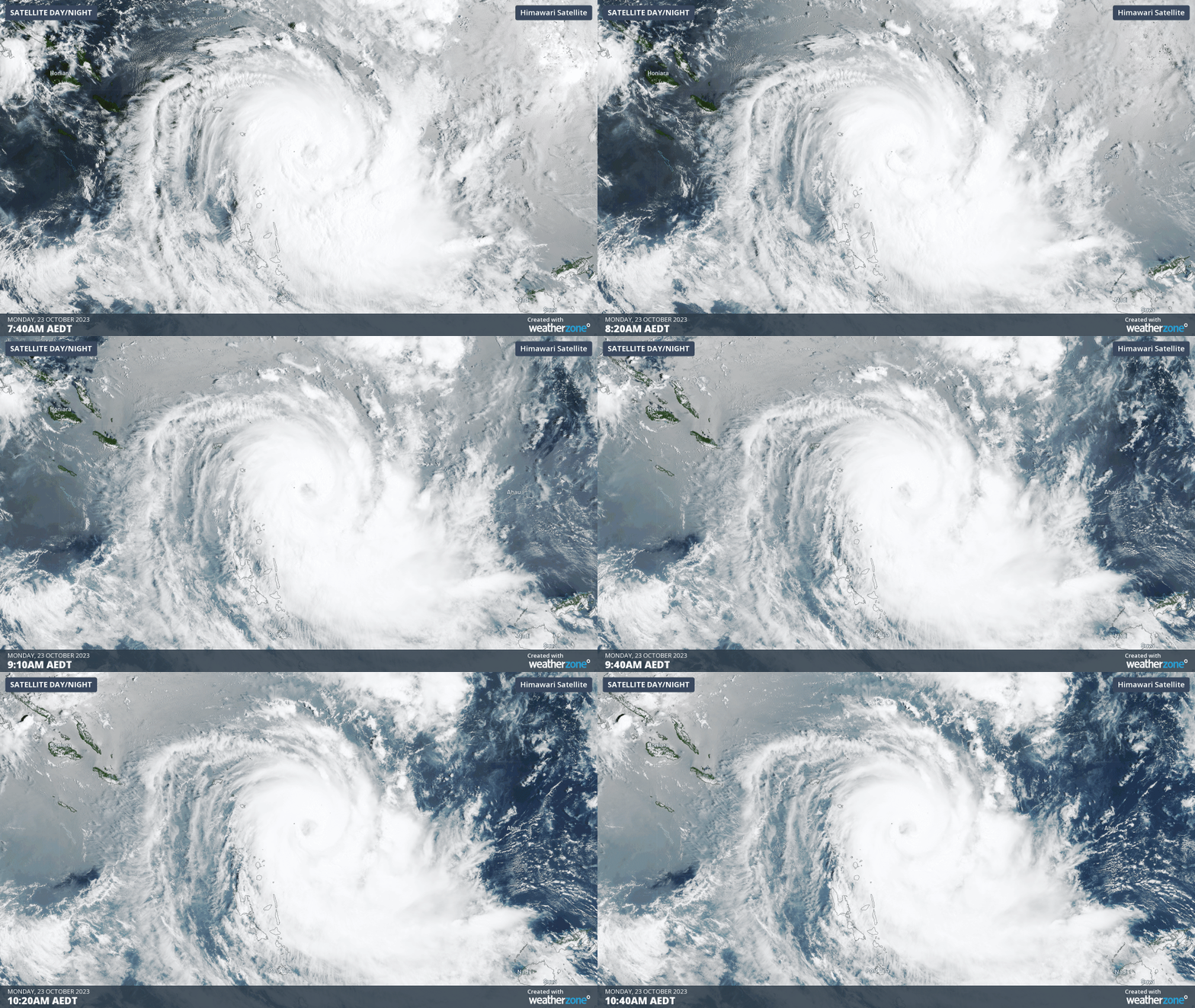
Lola has gained strength over the last 24 hours and was up to category two strength as of 5:00 am AEDT on Monday, October 23 (1800 UTC on October 22), and had become a dangerous category three storm by mid-afternoon.

The Fiji Met Service predicts that Lola will become a category four severe tropical cyclone later on Monday as it turns towards the southwest and heads towards Vanuatu.
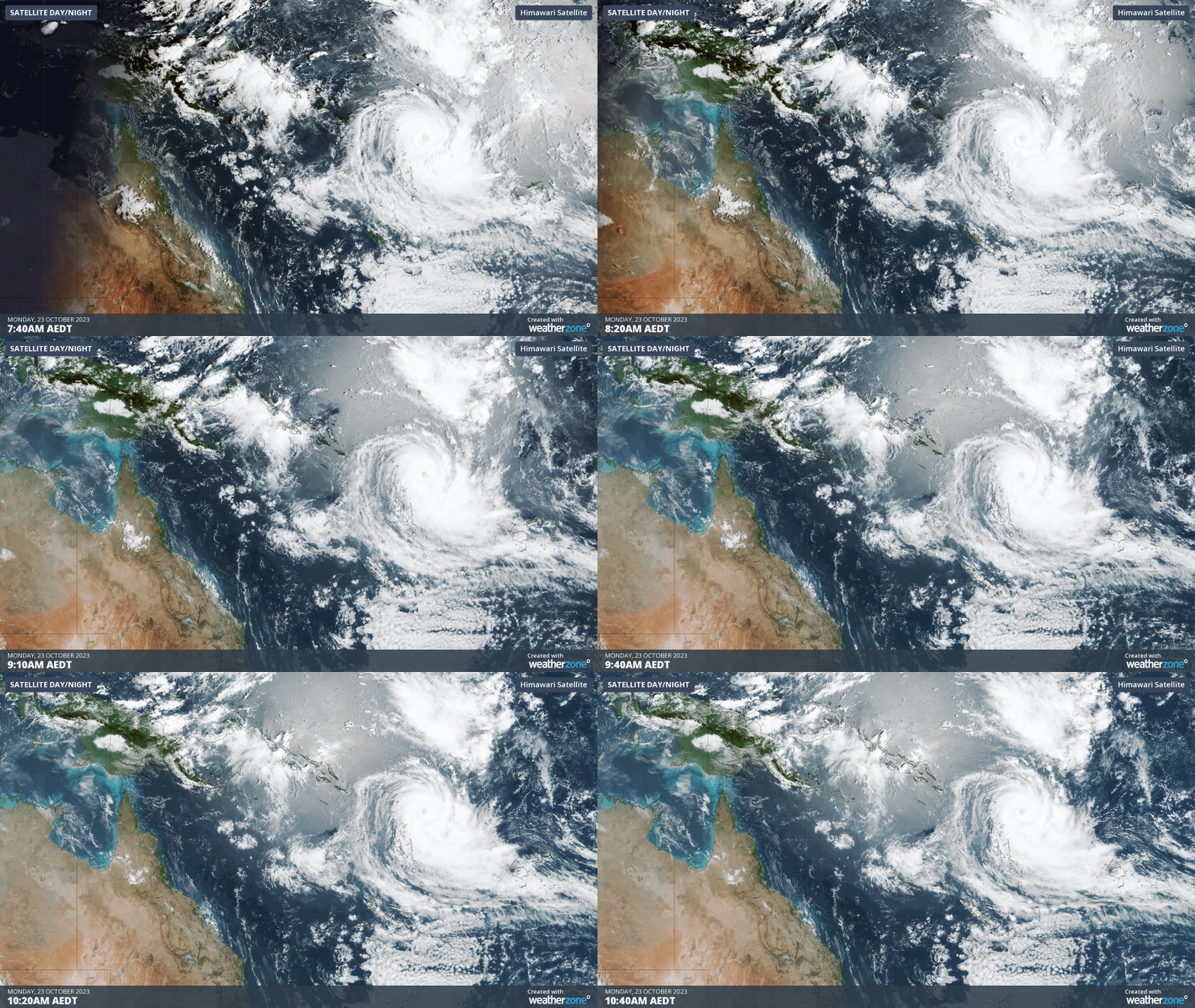
While there is some uncertainty with Lola’s future track, models suggest it will hit Vanuatu as a category three system on Tuesday into Wednesday. According to the Vanuatu Meteorology and Geohazards Department, destructive winds, heavy rain, flooding and rough seas are likely to impact parts of Vanuatu between today and Wednesday.

After crossing Vanuatu, Lola is expected to weaken as it tracks towards New Caledonia on Wednesday and Thursday. The system should continue moving towards the south or southeast later in the week.
There have only been two out-of-season Cat 4 or Cat 5 tropical cyclones in the southern Pacific since 1970: Donna in May 2017 and Xavier in Oct 2006.

Will it affect Australia?

Cyclone Lola will most likely stay outside of Australia’s area of responsibility as it moves towards the south in the coming days. Forecast models suggest that its core will remain at least 1,200 km away from the Australian mainland, far enough to prevent it from having any direct impact on Australia.

Lola is a sign that the Southern Hemisphere’s tropics are waking up after winter, with Australia’s 2023-24 tropical cyclone season officially kicking off on November 1.

The first tropical cyclone to form in Australia’s area of responsibility this season will be named Jasper.

For more information about our tropical cyclone forecasts and alerting, please contact us at apac.sales@dtn.com


Latest news

Satisfy your weather obsession with these news headlines from around the nation, and the world.

From Kimberley to northern NSW: Bushfire outlook flags risk for resources sector this winter

Bushfire risk doesn’t usually make headlines in June, but AFAC’s winter seasonal outlook is putting mining and resources operators on alert from the Kimberley to the NSW.  Australia’s official seasonal bushfire outlook for winter 2026 was released by AFAC on Thursday, May 28. The outlook predicts increased fire risk across the northern parts of the Great Sandy Desert and surrounds […]

The signal was there weeks earlier: forecasting one of the year’s biggest wind events

In mid-May 2026, DTN APAC meteorologists flagged a strengthening Southern Ocean pattern in model guidance, signalling an extended run of record-challenging wind conditions across the NEM.  Nearly three weeks later, NEM wind generation climbed from around 1.5GW to more than 9GW, supplying roughly one-third of the grid and coming within 1GW of the all-time generation record.  The event highlighted […]

The 2026 Indian Southwest Monsoon onset is expected in the next two weeks

The Indian Southwest Monsoon will reach India in the next two weeks, but a developing El Niño could signal a drier than normal monsoon for businesses and major industries across the country. Southwest monsoon onset over southern India in the next two weeks The Indian Meteorological Department (IMD) is responsible for tracking the advance and […]

Rapid El Niño signal accelerating risk for Australian businesses

El Niño–favourable conditions are gathering pace across the tropical Pacific, with key ocean indicators approaching threshold levels and early atmospheric responses emerging.  While uncertainty remains around final El Niño strength, historical analogues show that even weak events can generate widespread impacts, including reduced rainfall, warmer daytime temperatures, increased frost risk, elevated fire danger, reduced tropical cyclone activity, and more. Industries including […]

